Ετικέτες

Δευτέρα 9 Μαΐου 2016

Είναι ο Χριστός ο Θεός-Λόγος ή απλώς ένας κοινωνικός επαναστάτης;


jesusΚώστας Ν.Μπαραμπούτης

Ο λόγος του Ιωάννη, όπως μάλιστα εκφράζεται από τις πρώτες σειρές του Ευαγγελίου του, είναι απολύτως διαφωτιστικός για την κατανόηση του Θεού-Λόγου. Μεταφέρει λοιπόν ο Χριστός στους ανθρώπους με τη ζωή Του και τον λόγο Του ένα τρόπο υπάρξεως διαμετρικά αντίθετο από εκείνον που η ατελής φύση τους έχει καθιερώσει.  
Πρόκειται για τον τρόπο της αγάπης που υποδεικνύει τη συναλληλία μεταξύ των ανθρώπων, την οικοδόμηση μεταξύ τους σχέσεων εμπιστοσύνης και ανοχής, με τελική τους επιδίωξη να ζουν σε κοινωνίες διατεταγμένες εσωτερικά με όρους συνοχής, ελευθερίας και ευρηματικότητας, απαραίτητους για επιτυχείς απαντήσεις στις προκλήσεις της ζωής. Επίσης και οι σχέσεις που διαμορφώνουν οι κοινωνίες αναμεταξύ τους να διέπονται από τις ίδιες αρχές, αποκλειομένης της βίας με σκοπό ιδιοτελείς υλικές επιδιώξεις, που συνήθως περιβάλλονται τη λεοντή ψευδών και προβληματικών ιδεολογιών.

Κυριακή 8 Μαΐου 2016

This Week in Military History: Famous Military Deaths for the Week of May 1-7


Famous Military Deaths for the Week of May 1-7
Portrait of Leonardo da Vinci, date and artist unknown
Image courtesy of http://www.leonardodavinci.net/
(Unless otherwise indicated, all illustrations are courtesy of Wikipedia)

May 2, 1519 – Leonardo da Vinci, artist, engineer, inventor, "Renaissance Man"; age 67
Iron rusts from disuse; water loses its purity from stagnation... even so does inaction sap the vigor of the mind. – Leonardo da Vinci
Leonardo; most historians, scientists, and art historians will know of whom you speak when you say that one name. Leonardo da Vinci was the illegitimate son of a Florentine official and a peasant woman. He studied art, sculpture, painting, anatomy, mechanics, botany, and just about anything that struck his fancy.
After apprenticeship with Italian artist Verrocchio, Leonardo journeyed to Milan in 1482, on a mission for Florentine ruler Lorenzo de' Medici. He met the Milanese ruler Ludovico Sforza. After completing his assigned mission, he asked Sforza for a job.
In his letter to the future Duke of Milan (Sforza), Leonardo barely mentioned his considerable talents as an artist and instead touted his more marketable skills as a military engineer. Using his inventive mind, da Vinci sketched war machines such as a war chariot with scythe blades mounted on the sides, an armored tank propelled by two men cranking a shaft, and even an enormous crossbow that required a small army of men to operate. He would work for Sforza for the next 17 years.
Modern reconstruction of armored battle vehicle designed by da Vinci; On the grounds of the Chateau d'Amboise, France
Modern reconstruction of armored battle vehicle designed by da Vinci
On the grounds of the Chateau d'Amboise, France
Like many leaders of Renaissance humanism, da Vinci did not see a divide between science and art. He viewed the two as intertwined disciplines rather than separate ones. He believed studying science made him a better artist.
Da Vinci kept copious notebooks on many subjects, writing many in a secret code. Some of his most famous artworks included the "Mona Lisa," "The Last Supper," and the "Vitruvian Man." He died in the town of Amboise, France, supposedly in the arms of French monarch Francis I.
Josif Broz Tito (1893-1980), date of photo unknown; Photo courtesy of the Digital Library of Slovenia
Josif Broz Tito (1893-1980), date of photo unknown
Photo courtesy of the Digital Library of Slovenia
May 4, 1980 – Josif Broz Tito, soldier, statesman, Yugoslav dictator; age 87
Josif Broz was born in 1893, a subject of the Austro-Hungarian Empire. He apprenticed to a locksmith, and later worked in various factories in Austria and Germany. During this time he was exposed to socialist writings.
Tito was drafted into the Austro-Hungarian army in 1913, to serve a compulsory two-year military commitment. He served first on the Serbian front, then his unit was sent to the Russian front, where he was captured and sent to a Russian POW camp in Siberia. He became involved in the Russian Revolutions, and was influenced by the tenets of Communism. He even fought with the Russian Red Guard during the chaos of the Revolutions.
Tito returned to his native Croatia in late 1920, with a young and pregnant Russian wife. He continued to work toward the supremacy of Communism/socialism in the newly created Kingdom of the Slavs, Croats, and Serbs (later to be renamed Yugoslavia). During this time he adopted the pseudonym of "Tito" which he used during his underground Communist work.
When Germany invaded Yugoslavia in 1941 – as a prelude to its invasion of Russia – Tito called on Yugoslavs to resist the Nazi occupation. He organized two brigades of Partisans to drive the Germans out of his native land. Tito was recognized as the leader of the resistance in Yugoslavia by F.D. Roosevelt, Winston Churchill, and Joseph Stalin at the Tehran Conference in late 1944. He began receiving military aid from the Allies, and Russian troops were helpful in removing Nazis from Yugoslavia.
In November of 1945, a popular election recognized Tito's party as the rulers of Yugoslavia. He was appointed the prime minister and minister of foreign affairs. For the next 35 years, Tito was the leader of the Socialist Federal Republic of Yugoslavia.
However, in the post-war period, Tito and Stalin were constantly at loggerheads over Yugoslavia's independent path of its socialist political and industrial programs. It got so bad that at one point Stalin sent some assassins to take out the Yugoslav leader. This prompted a rather frank letter from Tito to Stalin, which included this: "Stop sending people to kill me. We've already captured five of them, one of them with a bomb and another with a rifle...If you don't stop sending killers, I'll send one to Moscow, and I won't have to send a second."
Tito's stand against Soviet domination helped spur the development of the Non-Aligned Movement, which included such countries as India, Ghana, Egypt, and Indonesia. Tito also suppressed nationalistic feelings among the disparate ethnic groups which comprised Yugoslavia. He died in 1980, and within a decade Yugoslavia, without the iron hand of its President for Life, began dissolving.
Douglas Fairbanks, Jr., photo courtesy of U.S. Navy
May 7, 2000 – Douglas Fairbanks, Jr., actor, soldier; age 90
He was the son of one of early Hollywood's icons of the Silver Screen, born in New York City in December of 1909. Very early in his life he developed a taste for the arts as well and became a painter and sculptor. Not content to limiting himself to just one field, he became involved in business, in fields as varied as mining, hotel management, owning a chain of bowling alleys and a firm that manufactured popcorn.
He was given his first contract by Paramount Pictures at age 14, mainly on the basis of his father's swashbuckling work in movies (especially the original silent-era films, The Mark of Zorro [1920], Robin Hood [1922], and The Thief of Bagdad [1924]).
Fairbanks appeared in a number of small roles in films of the 1920s and 1930s, perfecting his acting ability and receiving encouragement from his father, Mary Pickford, and Charlie Chaplin. He appeared opposite such stars as Greta Garbo, Joan Crawford, and Katherine Hepburn.
[Two of my favorite action films of the 1930s boasted Fairbanks in the cast: 1937's "Prisoner of Zenda," in which he plays the charming but thoroughly evil Rupert of Hentzau; and 1939's "Gunga Din," portraying Sergeant Tommy Ballantine. If readers are interested in information on "Gunga Din," read my BurnPit post from January of 2013: http://www.burnpit.us/gunga-din.]
Although celebrated as an actor, Fairbanks was commissioned a reserve officer in the U.S. Navy at the onset of the Second World War and assigned to Lord Louis Mountbatten's Commando staff in the United Kingdom. Having witnessed (and participated in) British training and cross-Channel harassment operations emphasizing the military art of deception, Lt. Fairbanks attained a depth of understanding and appreciation of military deception then unheard of in the United States Navy. As a result, Lt. Fairbanks help develop the "Beach Jumper" program.
The Beach Jumpers' mission would simulate amphibious landings with a very limited force. Operating dozens of miles from the actual landing beaches and utilizing their deception equipment, the Beach Jumpers would lure the enemy into believing that theirs was the principal landing. United States Navy Beach Jumpers saw their initial action in Operation Husky, the invasion of Sicily in 1943. Later, they participated in Operation Dragoon, the invasion of southern France in August of 1944. For his work in the Beach Jumper program, Fairbanks received a number of awards.
When he returned from the war, he resumed his acting career. His most famous post-war film was 1947's Sinbad the Sailor. He made a number of TV and stage appearance in the 1950's and generally retired to a life of leisure. He made his final film Ghost Story in 1981.
He died of a heart attack in 2000, and was buried in the same tomb as his father (who also died of a heart attack in 1939). Fairbanks Jr. has three stars on the Hollywood Walk of Fame: for motion pictures, TV, and radio.
 Siggurdsson's blog

Today in Military History: April 27, 1937:Death of Sergeant Major Daniel Daly, USMC, Recipient of 2 Medals of Honor

 
Death of Sergeant Major Daniel Daly, USMC, Recipient of 2 Medals of Honor
Sergeant Major Daniel Daly, USMC,
Displaying his two Medals of Honor and Navy Cross
Image courtesy of Dan Daly Collection at the Marine Corps Archives and Special Collections.
(Unless otherwise indicated, all illustrations are courtesy of Wikipedia)

Members of the military who receive the Medal of Honor are rare; but men who receive two MOHs are scarcer still (a total of 19, to be precise). Well, it's my honor to feature one of those men, Sergeant Major Daniel Daly, who died on this date in 1937.

Today in Military History: April 21, 1526:First Battle of Panipat: Babur's Moghuls defeat Delhi Sultanate

 
First Battle of Panipat: Babur's Moghuls defeat Delhi Sultanate
Delhi elephants recoiling from Moghul artillery fire
"Babur introduced field guns at Panipat"
Illustration from book, "Hutchinson's Story of the Nations"
(Unless otherwise indicated, all illustrations are courtesy of Wikipedia)

For today's lesson in military history, we travel to northern India and meet the military man who would defeat a numerically greater army, and establish a dynasty and political entity that survived until the early eighteenth century. This battle would destroy the ruling dynasty of Delhi and lay the foundation for the Moghul Empire.

Today in Military History: April 16, 1130:Battle of Inchbare: Royal Scots-Norman Army Defeats Rebel Clansmen


Battle of Inchbare: Royal Scots-Norman Army Defeats Rebel Clansmen
Battlefield of Inchbare, as it appears today
Photograph courtesy of http://www.geograph.org.uk/photo/1966405
(Unless otherwise indicated, all illustrations are courtesy of Wikipedia)

Longtime readers of my mini-history lessons will note that I have highlighted battles involving the Scots a number of times in the past. Today's narrative involves a fight between two groups of Scots – a rebellious group of northern Scots, and supporters of the Royal house, which had a little help from their Anglo-Norman neighbors.

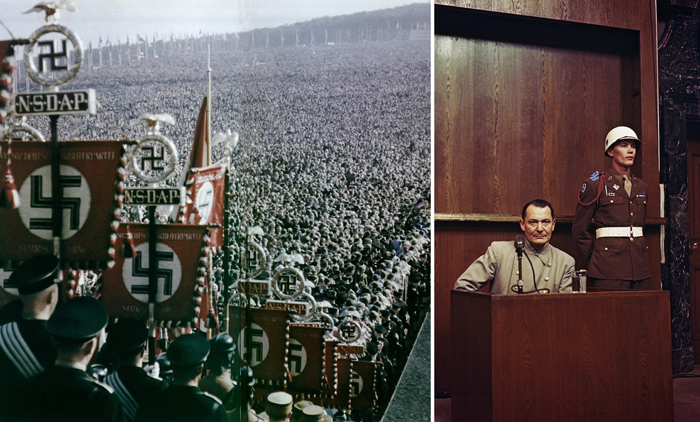
The Mixed Legacy of Nuremberg

This year commemorates the 80th anniversary of the notorious Nuremberg Laws, the Nazi racist enactments that formed the legal basis for the Holocaust. Ironically, it also marks the 70th anniversary of the Nuremberg Trials, which provided the legal basis for prosecuting the Nazi war criminals who murdered millions of Jews and others following the enactment of the Nuremberg Laws.
There is little dispute about the evil of the Nuremberg Laws. As Justice Robert H. Jackson, who was America's chief prosecutor at the Nuremberg Trials, put it: "The most odious of all oppressions are those which mask as justice."
There is some dispute, however, about the Nuremberg trials themselves. Did they represent objective justice or, as Hermann Göring characterized it, merely "victor's justice?" Were the rules under which the Nazi leaders were tried and convicted ex post facto laws, enacted after the crimes were committed in an effort to secure legal justice for the most immoral of crimes? Did the prosecution and conviction of a relatively small number of Nazi leaders exculpate too many hands-on perpetrators? Do the principles that emerged from the Nuremberg Trials have continued relevance in today's world?

Μπόμπι Σαντς: Το «γελαστό παιδί» του IRA που έγινε μύθος… Eφυγε στις 5 Μαϊου του 1981…


Μπόμπι Σαντς: Το «γελαστό παιδί» του IRA που έγινε μύθος…
Στις 5 Μαϊου 1981 πέθανε ο ηρωϊκός απεργός πείνας Μπόμπι Σαντς
Μολονότι ήταν φυλακισμένος, εξελέγη βουλευτής με 30.942 ψήφους! Καταρρακώθηκε έτσι, πλήρως, ο ισχυρισμός της κυβέρνησης Θάτσερ ότι οι απεργοί πείνας ήταν «περιθωριακοί» που «κανένα δεν εκπροσωπούσαν».
του Διονύση Ελευθεράτου
Χαράματα Τρίτης, 5 Μαΐου 1981, ένα δραματικό ηχητικό κράμα ξυπνά τους κατοίκους των καθολικών συνοικιών του Μπέλφαστ. Θρήνοι γυναικών, φωνές οργής αντρών, ρυθμικά κτυπήματα μεταλλικών σκουπιδοτενεκέδων. Η είδηση διαδίδεται τάχιστα: Πέθανε – ώρα 1.17- ο ηλικίας 27 ετών κοσμαγάπητος βουλευτής του IRA Ρόμπερτ (Μπόμπι) Σαντς, μετά από 66 ημέρες απεργίας πείνας στις φυλακές Μέιζ, κοντά στο Μπέλφαστ.

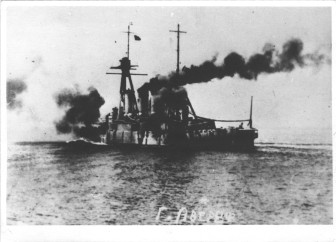
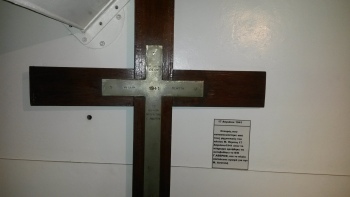
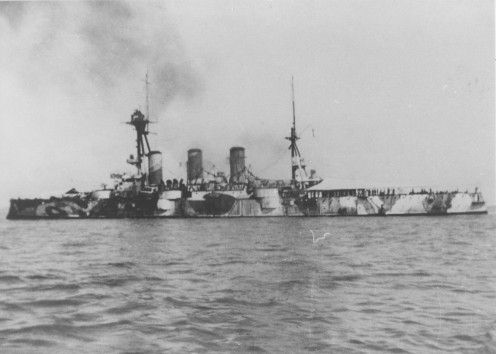
Θωρηκτό Αβέρωφ Πάσχα 1941 – Μια αληθινή ιστορία ανδρείας από τη Σαλαμίνα στην Αλεξάνδρεια


Την περίοδο 1941-1944 η Ελλάδα τέθηκε υπό ξένη κατοχή. Είναι αναρίθμητες οι περιπτώσεις ανθρώπων οι οποίοι αντιμετώπισαν τα χρόνια αυτά όχι μοιρολατρικά αλλά με το ρίσκο που πάντοτε εμπεριέχει το πνεύμα της αντίστασης απέναντι σε κάθε κατακτητή. Πολλές είναι οι περιπτώσεις κληρικών και Αρχιερέων οι οποίοι με αυταπάρνηση στάθηκαν δίπλα στον λαό, αγνοώντας τον κίνδυνο ακόμα και για την ίδια τη ζωή τους. Μια τέτοια περίπτωση είναι και ο μετέπειτα Ιεράρχης και τότε Αρχιμανδρίτης Διονύσιος, που έγραψε με τη γενναία στάση του μια από τις πιο λαμπρές σελίδες στην ιστορία του Ελληνικού Ναυτικού. Ας δούμε τι έχει καταγραφεί από την ημέρα αυτή, που συνέπεσε με τη Μεγάλη Πέμπτη του 1941.

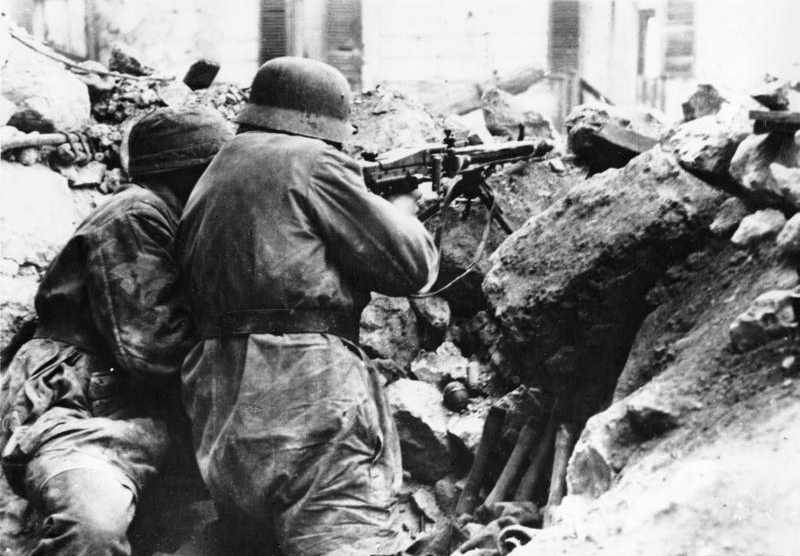
Monte Cassino – A Monument To German Bravery


German Paratroopers turn every ruin in Cassino into a fortress. Defending it with MG-42 machine guns, mortars and even tanks.


German Paratroopers turn every ruin in Cassino into a fortress. Defending it with MG-42 machine guns, mortars and even tanks.
On the 15th February, 1944, 1400 tons of high explosives were dropped by the Allied forces advancing upon Rome, on the Benedictine monastery of Monte Cassino.  The aerial bombardment marked the beginning of one of the most amazing episodes of World War II – the defense of Monte Cassino by a numerically and technologically inferior force against massive enemy firepower and manpower.

Σάββατο 7 Μαΐου 2016

1 Μάη 1944: Η σφαγή της Καισαριανής – 325 Έλληνες πατριώτες δολοφονούνται από γερμανούς και συνεργατες


With War in Afghanistan over (?), U.S. Army prepares to send Infantry Battalion to Helmand Province


With War in Afghanistan over, Army prepares to send Infantry Battalion to Helmand Province.
If the title of this post doesn’t make any sense to you whatsoever, you are in good company, because no one I’ve talked to understands it either.
Fox News:
Other publications are also talking about it.  Like the New York Times:

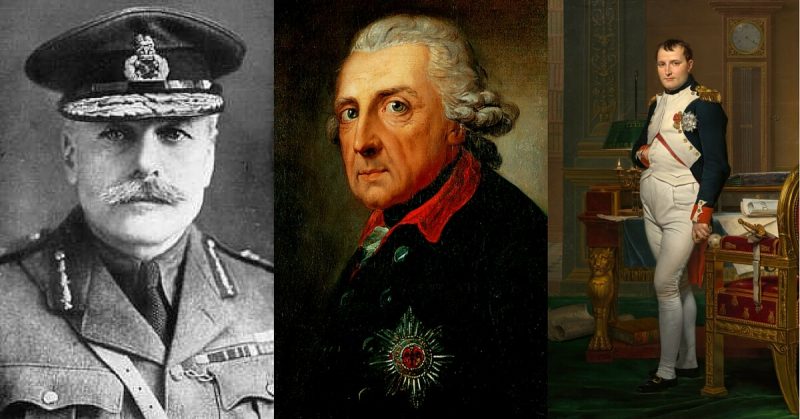
8 Leaders Whose Commands Got Their Own Men Slaughtered


Death is, sadly, an essential part of war. Unnecessary death is not, yet it remains a constant. Even the most capable commanders sometimes give orders that get their men needlessly killed, and when the incompetent take charge the slaughter can be boundless.

1. Frederick the Great

Prussian ruler Frederick the Great is rightly remembered as a daring, ambitious commander and a smart innovator. But he was also a leader who showed little regard for the lives of his men. Over the course of the Seven Years War, Prussia suffered 180,000 deaths in its armed forces, a staggering amount for any army in the 18th century, and especially for the smallest population participating in the war.

Τετάρτη 20 Απριλίου 2016

10 fascinating things you should know about the Varangian Guard


10_Varangian_Guard-facts_Byzantine
Exotic, ferocious and heavily armored – this in a nutshell defined the eminent presence of the Varangian Guard (Greek: Τάγμα των Βαράγγων, Tágma tōn Varángōn) in the ostentatious court of the Eastern Roman Empire (Byzantine Empire). Probably one of the most famous military units in the realm of history, the Varangian Guard at its height was responsible for the protection of the ‘Roman’ emperor; thus alluding to an incredible setup where the powerful ruler was personally dependent on a body of foreign fighters. However beyond their ‘guarding’ duties, the Varangians occasionally took the field – and in this fashion they carved out a fierce reputation for themselves in both European and Asian theaters of war. So without further ado, let us take a gander at ten incredible facts you should know about the Varangian Guard.

1) The Varangian question –

10_Varangian_Guard-facts_Byzantine_1
The Eastern Roman Empire was still the richest political entity of Europe in the middle ages, and as such its capital of Constantinople tended to attract invaders (in search of plunder) and mercenaries (in search of pay) alike. And as such, the warriors and adventurers of Rus were also enthralled by its riches. Now Rus in itself pertained to a loose federation of Slavic trading towns and villages spread across Russian and Ukraine, and these settlements were ruled by an originally Swedish elite (Vikings from Scandinavia), who had later mixed with the local populace. In any case, bands of these roving fighters gradually started to gravitate towards Constantinople (the Rus called it Miklagard – ‘City of Michael’), some for raiding purposes and others for trading. And by late 9th century AD, the Eastern Roman sources referred to them as the Varangians.
Interestingly, the very term Varangian (Old Norse: Væringjar; Greek: Βάραγγοι, or Varangoi) is open for etymological debate. Though most scholars tend to agree that it is derived from Old Norse væringi, which is a compound of vár ‘pledge or vow of fidelity’ and gengi ‘companion or fellowship’. Simply put, the term Varangian can be roughly translated to ‘sworn companion’ – which proved to be an apt categorization, as later history was witness to their glorious feats.

2) Forged by the civil war of the ‘Greeks’ –

10_Varangian_Guard-facts_Byzantine_2
Basil II flanked by his royal guards.
As with innumerable episodes of history, it was internal turmoil that brought about a significant change in the affairs of an empire. This time around, it was brought on by a civil war in the Eastern Roman Empire that pitted Emperor Basil II Porphyrogenitus against the rebel Vardhas Phokas – who audaciously marched on to Constantinople with his army by 987 AD. Desperate for reinforcements, the emperor called for aid from Vladimir the Great, the Grand Prince of Kievan Rus. Vladimir saw his opportunity in this deal, and promptly send away around 6,000 men to the Roman emperor’s aid. According to old sources (like the Russian Primary Chronicle, compiled in 1113 AD), these men were supposedly unruly and unpaid – and hence the Prince was rather happy to ‘ship’ them away to the ‘Greeks’ of the distant realm.
However on entering the service of Basil II, the group proved its mettle in various encounters, thus ultimately allowing the emperor the crush the rebel army and its commanders. On the political side of affairs, there was another significant development – Vladimir the Great converted to Orthodox Christianity (the state religion of Eastern Roman Empire) and even married Princess Anna of Byzantine. This paved the way for further ‘supply’ of warriors from Rus. So by the end of the 10th century (and beginning of 11th century), Basil II wholeheartedly made use of his ‘Varangians’, and successfully campaigned far and wide, ranging from Levant to Georgia. These success ratios tempered the ‘foreign’ Rus warriors into a disciplined body of troops who formed the core of the imperial guard. And so the famed Varangian Guard was forged – symbolizing the might of the Eastern Roman emperor himself.

3) Upholding the contrasting statuses of both mercenaries and royal guards –

10_Varangian_Guard-facts_Byzantine_3
Employing mercenaries was a trademark of Eastern Roman military stratagem even in the earlier centuries. But the recruitment of the Varangians (by Basil II) was certainly different in scope, simply because of the loyalty factor. In essence, the Varangians were specifically employed to be directly loyal to their paymaster – the Emperor. In that regard, unlike most other mercenaries, they were dedicated, incredibly well trained, furnished with the best of armors, and most importantly devoted to their lord. This sense of loyalty was manifested many times in the course of history, with one particular incident involving the great Alexios Komnenos. After revolting, Komnenos appeared before the gates of Constantinople with his superior army, while the capital itself was defended only by some imperial soldiers, including the Varangian Guard and a few other mercenaries. But in spite of their precarious situation, the Varangians stayed faithful to Emperor Nikephoros III Botaneiates till the last moment, before the ruler himself abdicated in favor of a bloodless coup. Suffice it to say, the guard was retained after Komnenos came to power.
On the other hand, it begs the question – then why was the Varangian Guard still branded as a mere mercenary group? Well the answer relates to practicality of court politics. Unlike other imperial guard regiments, the Varangian Guard was (mostly) not subject to political and courtly intrigues; nor were they influenced by the provincial elites and the common citizens. Furthermore, given their direct command under the Emperor, the ‘mercenary’ Varangians actively took part in various encounters around the empire – thus making them an effective crack military unit, as opposed to just serving ceremonial offices of the royal guards.

4) The Anglo-Saxon connection –

10_Varangian_Guard-facts_Byzantine_4
As we mentioned before, the Varangian Guard was initially formed mostly of warriors and adventurers from Rus who tended to have Swedish lineage. However by late 11th century, these ‘Scandinavians’ were gradually replaced by the Anglo-Saxons from Britain. There was a socio-political side to this ambit, since most of England was overrun by the Normans under William the Conqueror (post 1066 AD). As a result, the native Anglo-Saxon military elites of these lands had to look for opportunities elsewhere – thus kick-starting mini waves of migration from Britain to Black Sea coasts, and then ultimately to Eastern Roman Empire. Interestingly enough, many Byzantine commanders welcomed these refugees from the British Isles, with some even concocting propaganda measures that proclaimed the arrival of the ‘English’ Anglo-Saxons as being equal to the fealty of the Romano-British soldiers of ancient times (when Britain was a Roman province).
In fact, there are contemporary sources that talk about how English was actually spoken in the streets of Constantinople, thus alluding to the presence of many Anglo-Saxons mercenaries. And almost like a poetic justice, just fifteen years after the Battle of Hastings (where the Anglo-Saxons were decisively defeated by the Normans in 1066 AD), a group of ‘English’ veterans got the chance for a payback. This time around they formed the core body of the Varangian Guard (under Alexios Komnenos), while being pitted against the Normans from southern Italy (under Robert Guiscard). Unfortunately for the Anglo-Saxons, they were to too eager to challenge their enemy – and so by breaking their formation, the Varangians charged into the right wing of the Normans. Their initial impact was devastating to Guiscard’s army. But once the tide was stemmed, the Anglo-Saxons were surrounded and woefully outnumbered. Afflicted by weariness and their heavy armor, the group was mostly destroyed in a piecemeal manner by Norman counter-charging.

5) Ethnicity and the numbers game –

10_Varangian_Guard-facts_Byzantine_5
We have already talked about how the early members of the Varangian Guard mostly hailed from Rus, while by late 11th century they were gradually superseded by the Anglo-Saxons. But that doesn’t necessarily mean that the guard was exclusively composed of these two groups. In fact, from the initial times, the Swedish Varangians were often accompanied by their Norwegian brethren who arrived directly from Scandinavia (as opposed to Russia). Similarly, by 11th century, the Danes also arrived on Byzantine shores, along with the Anglo-Saxons. Moreover, according to contemporary sources (like that of Leo of Ostia), there are references to the ‘Gualani’ people serving in the Varangian Guard. Historians are not sure about their origins, with hypotheses identifying ‘Gualani’ as Welsh peoples and in some cases as the Vlachs (of Eastern Europe).
Beyond the melting pot of different nationalities, there is always the question of the actual numbers that were present in the Varangian Guard. During Basil II’s time, the figure was kept at more or less at 6,000 men. But the numbers, in accordance to sources, kept fluctuating after 11th century – though most of them dealt with the Varangians participating in battles, and these warriors were possibly only a part of the entire Varangian Guard in its full capacity. In any case, the figures range from 4,500 men to a paltry 540 men. By late 13th century AD, the numbers were (probably) officially dropped to 3,000 men. By then the Varangian Guard formed one-half of the Taxis (the core army of the Empire of Nicaea), while the other-half was formed by the Vardariotai, who were originally of Magyar (Hungarian) origin.

6) Mixed tactics and the Pelekys ax –

10_Varangian_Guard-facts_Byzantine_6
With so much talk about the Varangian Guard taking the fields – as mentioned in so many literary sources, there is surprisingly little knowledge about how they actually functioned in the battles in regard to tactics. Now given their penchant for wielding axes and wearing heavy armor, it can be credibly surmised that the Varangian Guard operated as an infantry formation in defensive positions by the emperor’s side. However there were instances when the Varangians were arrayed at the front of the army, while being backed by the Vardariotai, who operated as experienced horse archers during Alexios Komnenos’ time. In essence, this contrasting composition provided the nigh perfect tactical scope of shock and missile units. But there were also scenarios when the Varangian Guard was deployed at the back to protect the precious baggage train, while they supported other heavy infantry formations of the Eastern Roman army. Simply put, such changing positions on the field possibly mirrored the adaptable ‘mixed’ tactics preferred by the Varangians – thus confirming their elite military status. In that regard, it was almost customary to allow the Varangians to take the first plunders from a conquered settlement.
In any case, the popular imagery of a Varangian guardsman generally reverts to a tall, heavily armored man bearing a huge ax rested on his shoulder. This imposing ax in question entailed the so-called Pelekys, a deadly two-handed weapon with a long shaft that was akin to the famed Danish ax. To that end, the Varangians were often referred to as the pelekyphoroi in medieval Greek. Now interestingly, while the earlier Pelekys tended to have crescent-shaped heads, the shape varied in later designs, thus alluding to the more ‘personalized’ styles preferred by the guard members. As for its size, the sturdy battle-ax often reached to an impressive length of 140 cm (55-inch) – with a heavy head of 18 cm (7-inch) length and blade-width of 17 cm (6.7-inch).

7) Countering piracy and policing streets –

10_Varangian_Guard-facts_Byzantine_7
With their Viking heritage and Rus tradition of distant seafaring, it was expected of the Varangians to have maritime skills. So beyond battlefield maneuvers and palace duties, some of the younger (or less experienced) members of the Varangian Guard were chosen to actually hunt down pirates. These guardsmen were deployed in specially-made light marine crafts called the ousiai, and they worked in unison with the other Nordic and Russian mercenaries.
But other than glorious feats in battles and adventurous sea-raids, the Varangian Guard was also involved in slightly more mundane duties, like policing the streets of Constantinople. They rather carved up a brutal reputation for themselves – who were known to enforce strict laws and arrest the political opponents of the emperor. And as an extension of their perceived ferocity and penchant for violence, few Varangians were also employed as jailers because of their ‘specialization’ in torturing techniques. Interestingly, Georgius Pachymeres, a 13th century Greek historian and philosopher, talked about one such chief (epistates) of the prison guards, whose moniker was Erres ek Englinon or ‘Harry from England’.

8) The Emperor’s Wineskins –

10_Varangian_Guard-facts_Byzantine_8
Now while we mentioned before how the Varangians were employed as rigorous law enforcers in the capital, they themselves were not too reluctant to break certain laws of decorum. One of the reasons for their boisterous nature was possibly due to their notable love for Greek wine. Often derogatorily called the “Emperor’s wineskins”, their absurd levels of drunkenness often landed the guards into trouble – with two particular incidents even involving drunken guardsmen assaulting their own emperor. And beyond obsession for alcohol (that sometimes turned into abuse), the Varangians were also known for their fascination for visiting brothels, along with the fancy for other ‘Greek’ stuff, like Hippodrome races and spectacles.

9) High fee for entry into the Guard –

10_Varangian_Guard-facts_Byzantine_9
Now given their status as the elite members of the imperial guard, the Varangians were obviously paid very highly. However in an odd arrangement, only affluent members were inducted into the guard. The threshold was maintained by a relatively high fee (in gold) that the would-be inductee had to pay the Roman authorities in order to be considered for the role of a Varangian guardsman. And after passing this monetary ‘test’, the applicant was further examined and evaluated, so as to maintain the quality and discipline of the Varangian Guard. In any case, it should be noted that in most situations, the Varangians on being accepted, acquired far more riches (from compensations, bonuses and spoils) than their initial fee of entry. So from a realistic perspective, there was no dearth of applicants – with even the rejected ones making names for themselves in the other (albeit less renowned) mercenary companies of the Eastern Roman empire.

10) Harald Hardrada of the Varangian Guard

10_Varangian_Guard-facts_Byzantine_10
In our previous entry, we talked about how the applicant needed to provide a lump-sum amount of gold to be considered for the Varangian Guard. This seemingly unique measure allowed many rich adventurers, princes and even warlords from northern Europe to take their (and their retinue’s) chance to be inducted in this elite mercenary group. One such adventurer was the great Harald Hardrada. In his teenage years, he had to escape from his native Norway after ending up in a losing battle. The young man made his way to Kievan Rus, and made a name of himself on various military encounters, by fighting for the Grand Prince Yaroslav the Wise. But after rising to the rank of a military captain, young Harald took a gamble and made his way to Constantinople, along with 500 of his personal followers. Fortunately for the group, most of them were selected for the Varangian Guard, and thus started Harald’s incredible journey to redemption.
The ‘Viking’ once again proved his worth, and fought in various successful assignments in Sicily against both the Muslims and the Normans. According to his skald Þjóðólfr Arnórsson, many conflicts took the still young Harald even to Asia Minor and Iraq, where he had successfully fought off Arab pirates. After reportedly capturing around eighty Arab strongholds, the Scandinavian even made his way to Jerusalem, to probably oversee a peace agreement made between the Eastern Roman Empire and the Fatimid Caliphate in 1036 AD. However it was in 1041 AD when the Viking arguably played his most crucial role as a Varangian – by ruthlessly putting down a Bulgarian uprising led by Peter Delyan – which supposedly gained Harald the nickname of “Devastator of the Bulgarians” (Bolgara brennir).
In the latter years, he acquired much wealth and prestige throughout the Roman realm. But in spite of his status as an elite guardsman (possibly holding the rank of Manglabites), he planned to leave Constantinople for Rus, probably because of an ill-favored political climate in the capital. In Rus he married a Russian princess, elevated his status to a Prince, and then triumphantly made a return to his homeland Norway. In the years between 1046 – 1065 AD, Harald was finally able to gain the kingship of Norway through various political and military machinations (maneuvers that were undoubtedly learned during his time in the Eastern Roman court). And ultimately in 1066 AD, the King of Norway – Harald Hardrada, launched the last ‘Viking’ invasion of England; thereby crippling the local Anglo-Saxon resistance, and thus paving the way for the Norman conquest of Britain. And oddly enough, pushing forth the historical cycle, many of the dispossessed Anglo-Saxons of England in turn went on to become members of the Varangian Guard in the latter years.
Now while this unique episode serves as a rather extreme example, it does provide some insights into the lives of the Varangian Guardsmen – where the wondrous scope of adventures and actions overshadowed any semblance of normalcy expected from a well-paid, ‘governmental’ military career.

Honorable mention – the Varangian Bra

10_Varangian_Guard-facts_Byzantine_11
The trademark of the Varangian Guard pertained to carrying an imposing ax and wearing of heavy armor (though in rare cases, they were also lightly armed). Relating to the latter, the armor often entailed ringmail shirts that were sometimes reinforced with lamellar (klivanion) or scale armor. The unwieldy hauberk (mail shirt) weighed around a significant 30 lbs, and so the guardsmen adopted a type of chest harness known as the Varangian Bra. Usually made of leather, the harness consisted of a breast strap with two shoulder straps going over each shoulder, which connected the front and rear end of the strap. Possibly inspired by their ‘eternal’ foes – the Sassanid Persians, the Eastern Romans adopted this peculiar armor (along with buckled belts) as a solution for holding the bulky mail shirt together, which in turn allowed for better mobility on the battlefield.

Sources: De Re Militari / AngelFire / HistoryBits / WeaponsandWarfare
Book References: The Varangian Guard: 988-1453 (By Raffaele D’Amato) / The Varangians of Byzantium (By Sigfús Blöndal and Benedict Benedikz)

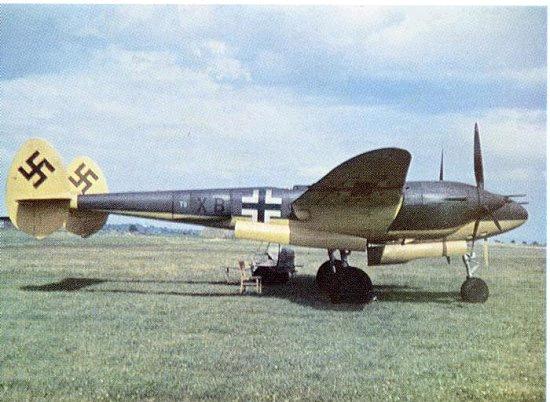
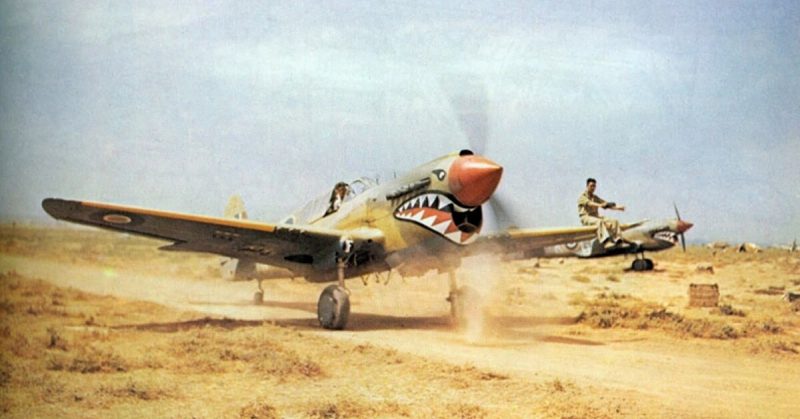
The Luftwaffe P-38 Lightning & Other STUNNING Pics of Allied Planes Pressed Into Nazi Service


Ever wondered what happened with the airplanes that made an emergency landing in occupied territory? When captured (relatively) intact they were tested by the Germans and sometimes put into service!
Enjoy these amazing pictures of familiar Allied airplanes in very unfamiliar colors and markings!

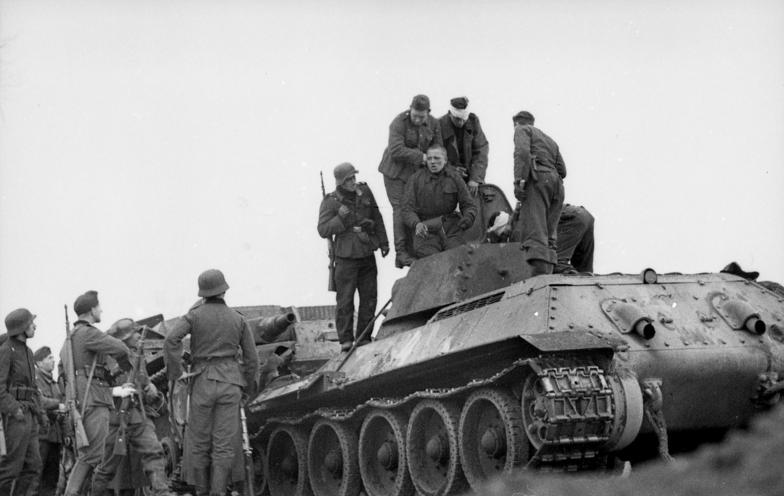
33 Facts You Didn’t Know About Hitler’s Invasion of the Soviet Union


Bundesarchiv, Bild 101I-268-0169-09 / Böhmer / CC-BY-SA 3.0
1.42k
SHARES
A quick look at the invasion of the Soviet Union by Nazi Germany in 33 facts
1.The invasion of the Soviet Union was the most ambitious campaign of the Second World War, and yet Hitler believed that it could be won within three months with a fast, powerful blitzkrieg strike.
2. The campaign was launched with Fuhrer Directive 21. Signed on 18 December 1940, it set out the intention to “crush Soviet Russia in one rapid campaign”.
3. In February 1941, British and American intelligence learned of the planned invasion of the USSR. Hoping to encourage Stalin to act against Hitler, they informed him of the plan. Stalin did not believe them, as he believed that Hitler would stick to the non-aggression pact the two countries had signed before the war.
4. The German navy was to play a part in the operation, blocking Soviet ships from breaking out of the Baltic Sea

What’s the Value of Recreating the Palmyra Arch with Digital Technology?


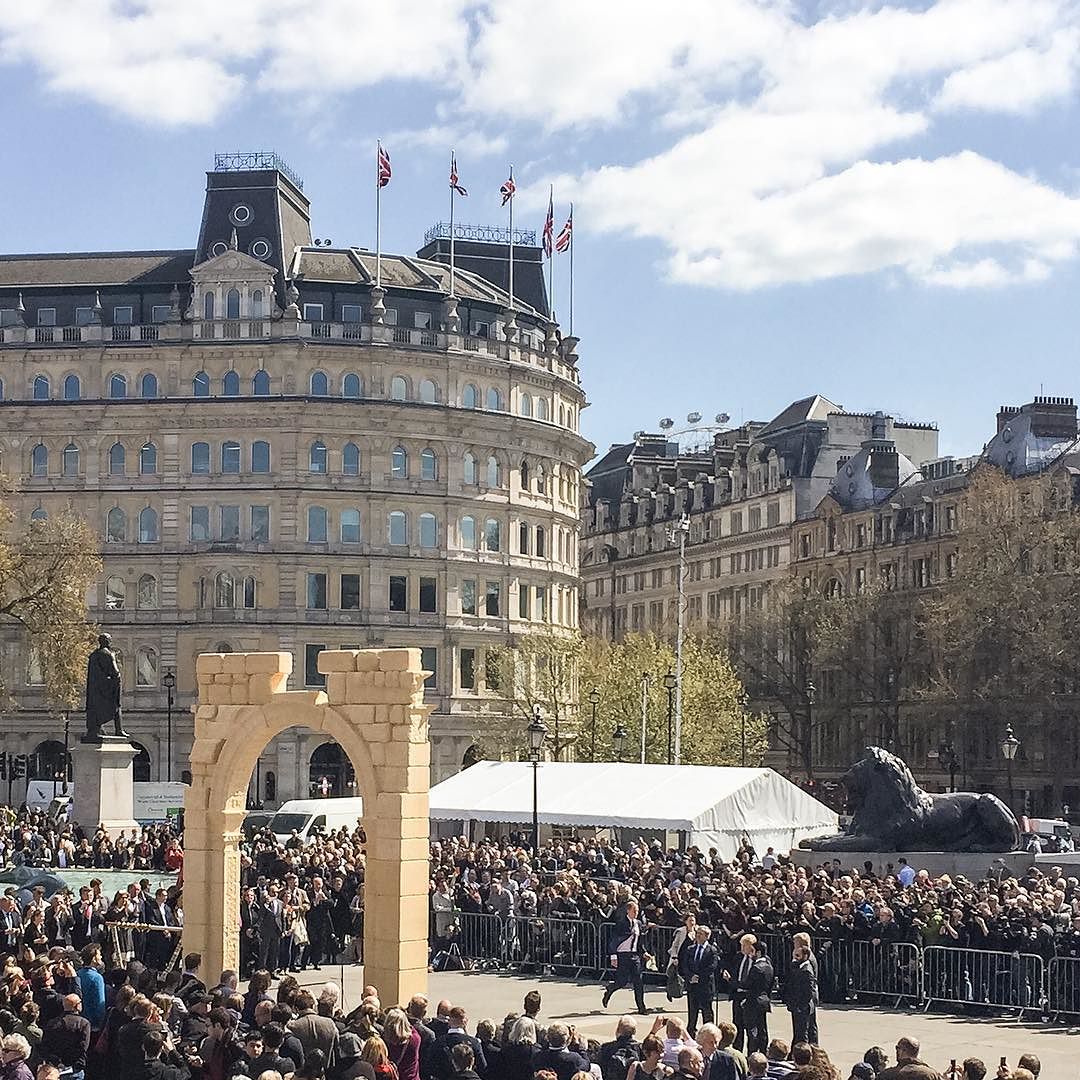
The reconstructed Arch of Palmyra in Trafalgar Square (photo via @mralexmorrison/Instagram)
Seven months after ISIS destroyed Palmyra’s 1,800-year-old Arch of Triumph, the structure has risen once more — this time 2,800 miles away from the ancient city, in London’s bustling Trafalgar Square. But rather than stretching nearly 50-feet skywards and hand-carved from limestone, this one stands just 20 feet tall and is made of Egyptian marble, sculpted in 30 days by robotic arms at a workshop in the famous quarries of Carrara, Italy. London, though, its host for only three days, is far from this replica’s final destination: the arch will travel to Dubai then to New York City in September before likely finding a permanent home in Palmyra — not directly on, but near, the site of the original gateway.

This is the oldest surviving claymation film – from 1926 and it’s awesome!


Source :Yestervid

Clay animation or claymation is one of many forms of stop motion animation. Each animated piece, either character or background, is “deformable”—made of a malleable substance, usually Plasticine clay.
Traditional animation, from cel animation to stop motion, is produced by recording each frame, or still picture, on film or digital media and then playing the recorded frames back in rapid succession before the viewer. These and other moving images, from zoetrope to films to video games, create the illusion of motion by playing back at over ten to twelve frames per second. The techniques involved in creating CGI are conversely generally removed from a frame-by-frame process.

The Knights Templar – The Rise and Fall of the Greatest Order

 by - 

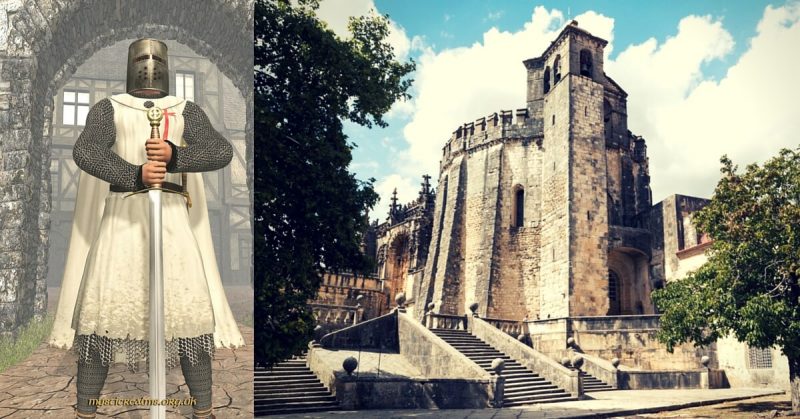
Main image by Daniel VILLAFRUELA, CC BY-SA 4.0 & Les Still, mysticrealms.org.uk CC BY-SA 3.0 / Wikipedia


A crimson cross emblazoned on a white background; a simple design, perhaps, but behind it lies one of the most remarkable stories in the history of the medieval world. It’s a saga that began in the city of Nablus, in the aftermath of the First Crusade.
That same saga came to a sudden end in 1307, two centuries later. As the sun rose over Paris on Friday the 13th of November, the doom of the Knights Templar was sealed.
heading
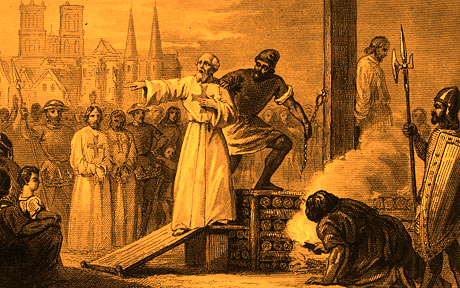
The last Grand Master of the Knights Templar insisted that he was innocent of all charges, even as he burned at the stake (Wikipedia)
Almost two hundred years before that fateful morning, however, no one could have imagined what was to come. Following a bloody end of the First Crusade, the Holy Land was under Christian dominion. As news spread to Europe, a steady flow of pilgrims and travellers began to pour across the Mediterranean to visit Jerusalem and the sacred sites.

Κέρκυρα, η άγνωστη σερβική πρωτεύουσα


Η Ιστορία έχει καταχωρίσει το Βελιγράδι ώς την πρωτεύουσα του σερβικού κράτους από την ίδρυσή του, συνεχώς και αδιαλείπτως. Πλην μιας περιόδου, όχι πολύ μακριά πίσω, κατά την οποία πρωτεύουσα υπήρξε η πόλη της… Κέρκυρας.
Με σερβική Βουλή, κυβέρνηση, στρατό αλλά και υπηκόους μάλιστα. Από προχθές τη «σερβική πρωτεύουσα» στην Ελλάδα επισκέπτεται ο πρόεδρος της Σερβίας, Τόμισλαβ Νίκολιτς, επικεφαλής κυβερνητικού κλιμακίου, αποτίοντας φόρο τιμής στο «Νησί της Σωτηρίας», όπως έχει καταχωρισθεί η Κέρκυρα στη συλλογική σερβική εθνική συνείδηση. «Ηρθαμε για να τιμήσουμε τους στρατιώτες μας που κατέφυγαν στην Κέρκυρα αναζητώντας σωτηρία και για να πούμε ένα μεγάλο “ευχαριστώ” στους Ελληνες και ιδιαίτερα στους Κερκυραίους, οι οποίοι πραγματικά τους έσωσαν», δήλωσε.

Top Curtiss P-40 Warhawk Facts!


The Curtiss P-40 Warhawk is an American single-engined, single-seat, all-metal fighter and ground-attack aircraft that first flew in 1938.