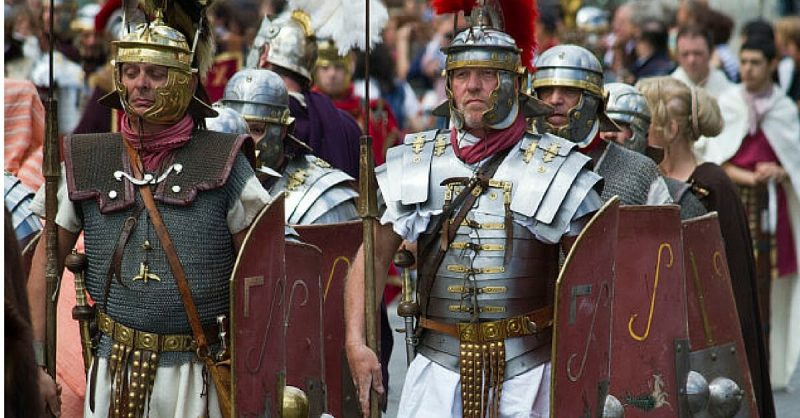
Roman
legions could become famous for their endurance or victories in war.
Though all were numbered, many also had names that recorded their
history, origins or achievements. These were often a mark of their
particular renown. Roman legionnaires were devoted to their legion and
were prepared to die to save its eagle standard.
Και
εκείνες οι φοβερές μέρες για το νησί συνεχίζονται, με βομβαρδισμούς,
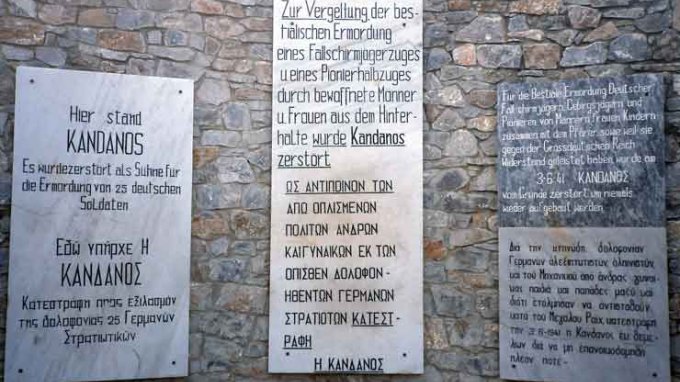
φωτιές, σκοτωμούς και αίμα πολύ. 25 Μαΐου 1941 η Κάνδανος καίγεται… για
να καταστραφεί ολοσχερώς στις 3 του Ιούνη .Μια ακόμα μαύρη σελίδα στην
ιστορία της Κρήτης!
Από το βράδυ ρίχνονται χιλιάδες προκηρύξεις στα Χανιά, τους
συνοικισμούς και τα χωριά και απειλούν τον πληθυσμό, ότι θα επιβάλουν
αυστηρές κυρώσεις σ’ αυτούς που πολεμούσαν τα…γερμανικά
στρατεύματα. Οι γύρω από την πόλη φρουρές αποσύρονται σε νέες λιγότερο
κοντινές προς την πόλη θέσεις, γεγονός που οδηγεί στην αποθάρρυνση και
επιτείνει το αίσθημα της ανασφάλειας. Οι βρετανικές δυνάμεις αποσύρονται
προς τη Σούδα. Οι καθυστερήσεις όμως που συνεπάγονται οι καταλήψεις των
χωριών και οικισμών γύρω από τα Χανιά, επιβραδύνουν σημαντικά τα σχέδια
των Γερμανών να φτάσουν στα Σφακιά και να παρεμποδίσουν τη φυγή των
Βρετανών. Ύστερα από συνεχείς επιθέσεις και αντεπιθέσεις καταλαμβάνεται ο
Γαλατάς με τη γνωστή υπεροχή των όπλων του αντιπάλου. Ήρθε όμως και η
σειρά της Κανδάνου. Μετά την εξολόθρευση ενός γερμανικού λόχου από τους
κατοίκους της, οι Γερμανοί επιτίθενται με αγριότητα. Βομβαρδίζεται η
Κάνδανος και παραδίνεται στη φωτιά, στενάζοντας κάτω από τους σκελετούς
των ερειπίων. Εκτελούν όσους από τους κατοίκους της Κανδάνου ή των
γειτονικών χωριών συναντούν, ανεξάρτητα από ηλικία και χωρίς καμία
διαδικασία. Στις 3 Ιουνίου θα επιστρέψουν και πάλι για να ολοκληρώσουν
την καταστροφή. Την ίδια μέρα ο πτέραρχος Στουντέντ προσγειώνεται στο
αεροδρόμιο Μάλεμε και διαπιστώνει προσωπικά το μέγεθος της καταστροφής
του δημιουργήματός του.
Many historians,
writers and philosophers have tried to look underneath the iron
mask of the prisoner, so as to find the truth, and resolve the story of
the mysterious prison inmate from the 17th century.
Voltaire
claimed that the prisoner wore an iron mask and was the older,
illegitimate brother of Louis XIV. In the late 1840s, writer Alexandre
Dumas elaborated on the theme in the final installment of his Three Musketeers
saga: here the prisoner is forced to wear an iron mask and is Louis
XIV’s identical twin. Dumas also presented a review of the ideas about
the prisoner extant in his time (circa 1840) in the chapter “L’homme au
masque de fer” of the sixth volume of his Crimes Célèbres.
The Man in the Iron Mask or L’Homme au Masque de Fer is
the offical name given to the prisoner who was arrested as Eustache
Dauger in 1669 or 1670 and held in a number of jails, including the
Bastille and the Fortress of Pignerol (today Pinerolo, Italy). He was
held in the custody of the same jailer, Bénigne Dauvergne de Saint-Mars,
for a period of 34 years. He died on 19 November 1703, under the name
of Marchioly, during the reign of Louis XIV of France (1643–1715). The
possible identity of this man has been thoroughly discussed and has been
the subject of many books, as no one ever saw his face because it was
hidden by a mask of black velvet cloth.
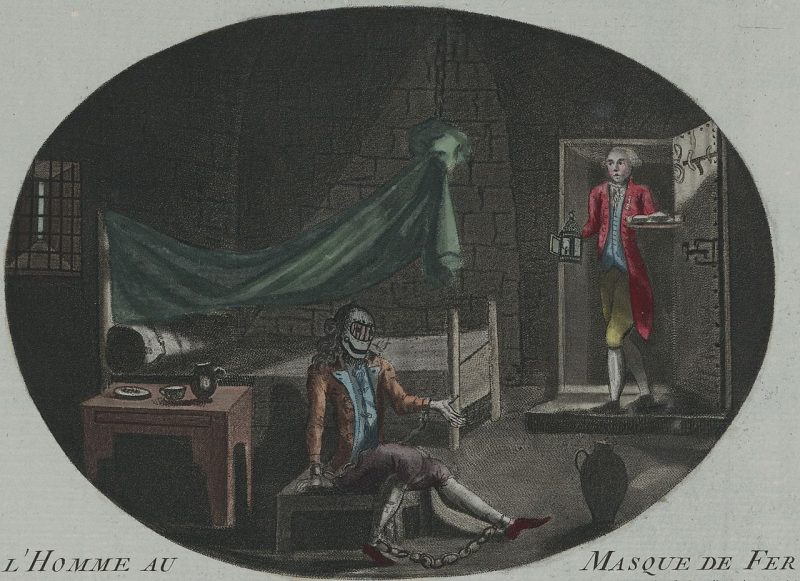
The Man in the Iron Mask. Anonymous print (etching and mezzotint, hand-colored) from 1789..SourceThe
earliest surviving records of the masked prisoner are from late July
1669, when Louis XIV’s minister the Marquis de Louvois sent a letter to
Bénigne Dauvergne de Saint-Mars, governor of the prison of Pignerol,
then part of France. In his letter, Louvois informed Saint-Mars that a
prisoner named Eustache Dauger was due to arrive in the next month or
so.
Louvois instructed Saint-Mars to prepare a cell with multiple
doors, one closing upon the other, which were to prevent anyone from the
outside listening in. Saint-Mars himself was to see Dauger only once a
day in order to provide food and whatever else he needed. Dauger was
also to be told that if he, Dauger, spoke of anything other than his
immediate needs he would be killed, but, according to Louvois, the
prisoner should not require much since he was “only a valet”.



 Και
εκείνες οι φοβερές μέρες για το νησί συνεχίζονται, με βομβαρδισμούς,
φωτιές, σκοτωμούς και αίμα πολύ. 25 Μαΐου 1941 η Κάνδανος καίγεται… για
να καταστραφεί ολοσχερώς στις 3 του Ιούνη .Μια ακόμα μαύρη σελίδα στην
ιστορία της Κρήτης!
Και
εκείνες οι φοβερές μέρες για το νησί συνεχίζονται, με βομβαρδισμούς,
φωτιές, σκοτωμούς και αίμα πολύ. 25 Μαΐου 1941 η Κάνδανος καίγεται… για
να καταστραφεί ολοσχερώς στις 3 του Ιούνη .Μια ακόμα μαύρη σελίδα στην
ιστορία της Κρήτης!