Haykaberd (or Çavuştepe in Turkish) is an archaeological
site in Van Province in Turkey’s Eastern Anatolia region, known for its
ancient 8th century BC fortifications and royal palace of the Urartian
kings. But this time around, beyond ramparts and walls, archaeologists
are interested in seeds. Originally discovered in 2014, from the
Çavuştepe Castle that was constructed by Urartian King Sarduri II (circa
8th century BC), these batches of wheat and sesame seeds are almost
2800-years old. And now the researchers are looking forth to resurrect
these ancient specimens inside a laboratory environment.
Professor Rafet Çavuşoğlu (Archaeology Department) from the Van Yüzüncü Yıl University, said –
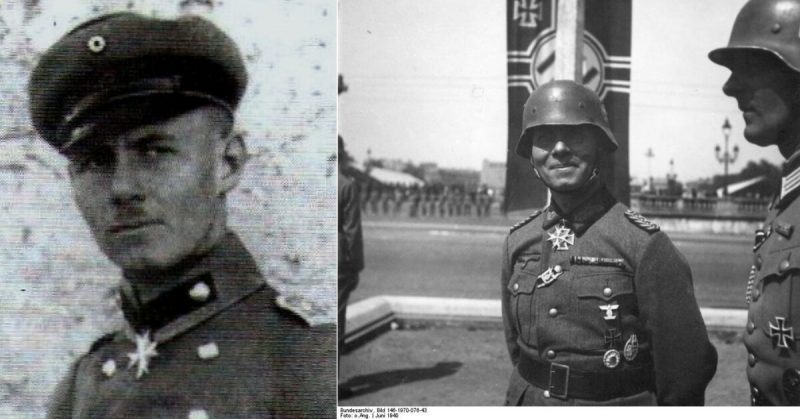
Erwin
Rommel was undoubtedly one of the finest generals of the Second World
War, his strategic mind and patient approach led his men to victory
after victory early in the war. But, while his fame and glory came as a
General and Field Marshal, it was as a Lieutenant in the First World War
that he earned his greatest honor.
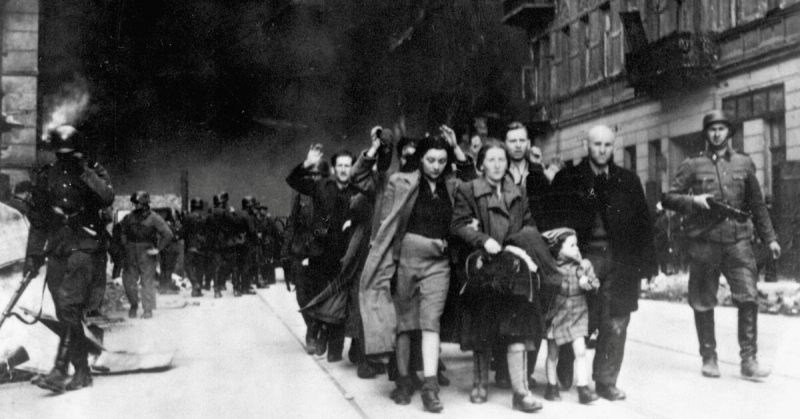
Life
in a Ghetto was the unfortunate fate of many Jewish citizens during the
Nazi Party’s reign over Germany and its many occupied territories.
Crammed into hastily built quarters, packed amongst other people and
families all forced to leave their homes, little about life in these
ghettos was desirable.
Yet in one ghetto, the Jewish residents
held within its walls refused to accept the terrible fate the Germans
planned for them. In 1942, Warsaw Ghetto decided to fight back against
the execution of its people, and the Warsaw Ghetto uprising became the
largest revolt of Jewish people to occur during World War II.
Unfortunately,
the uprising led to the total destruction of the ghetto and the deaths
of so many of its residents – but before its buildings burned and smoke
filled the streets, its people made history.
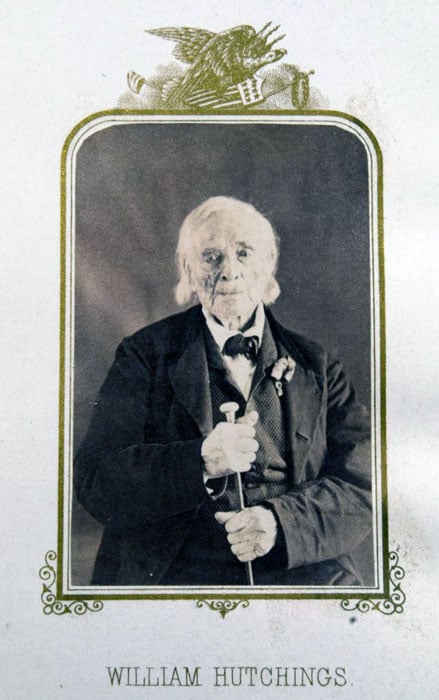
PetaPixel has a wonderful post by Michael Zhang
with rare photographs of Revolutionary War veterans who actually lived
long enough to have their photographs taken. It’s an amazing post, so
don’t miss it. Photography was invented in the 1820s
and 1830s, and the Revolutionary War ended decades before, in 1783.
This meant that most Revolutionary War veterans didn’t live long enough
to have their photographs taken. That being said, there were a few war
veterans who did live long enough to be immortalized in portraits. In 1864, a full 81 years after the
war ended, Reverend E. B. Hillard and two photographers went to New
England to interview and photograph the six men known to have survived.
All of the veterans were over 100 years old. These amazing photographs
were made into a book called The Last Men of the Revolution. This is a fascinating look into history that we’re lucky to have.
U-848
is bracketed by five depth charges dropped by United States Navy PB4Y-1
Privateer "107-B-4" flown by Lieutenant Samuel K. Taylor of Patrol
Bombing Squadron VB-107. Lieutenant Taylor attacked from seventy feet
(21 meters) at 225 knots (415 kilometers per hour). This ninth attack in
one day on U-848 was followed by another run by Lieutenant Taylor, who
destroyed the U-Boat with two depth charges. U-848, a Type IXd2 U-Boat,
was commissioned on February 20, 1943 under the command of
Korvettenkapitan Wilhelm Rollman (August 5, 1907 - November 5, 1943).
Rollman was a U-Boat ace who sank over 100,000 tons while the commander
of U-34.
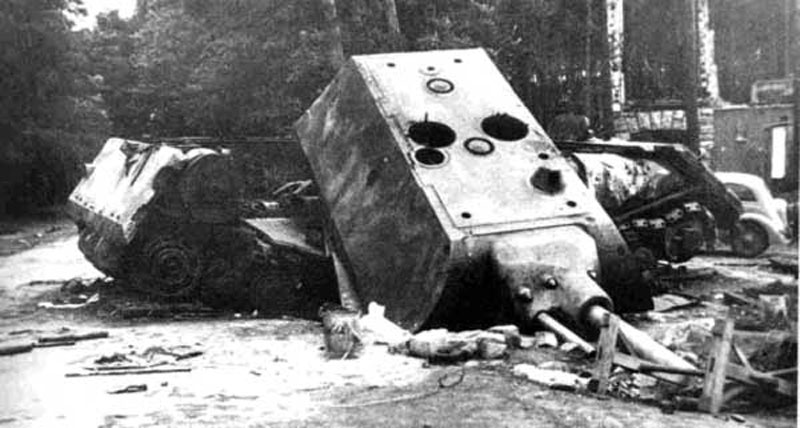
Panzerkampfwagen
VIII Maus (“Mouse”) was a German World War II super-heavy tank
completed in late 1944. It is the heaviest fully enclosed armored
fighting vehicle ever built. Only two hulls and one turret were
completed before the testing grounds were captured by the advancing
Soviet forces.
These two prototypes – one with, one without turret
– underwent trials in late 1944. The complete vehicle was 33 ft 6
inches long, 12 ft 2 inches wide, and 11.9 ft high. Weighing 188 metric
tons, the Maus’s main armament was the Krupp-designed 128 mm gun. This
128 mm gun was powerful enough to destroy all Allied armored fighting
vehicles then in service, some at ranges exceeding 3,800 yards.
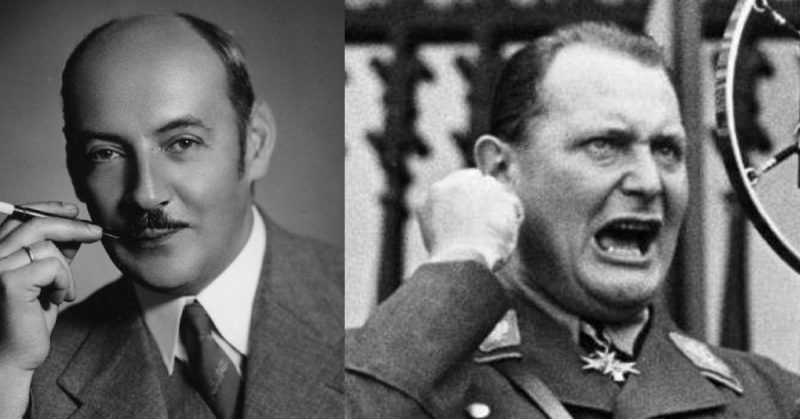
What
would happen to your family should one of your siblings join a deadly
political beast? If you were a member of the Göring family in the first
half of the 1900s, you would find your entire family divided. This was
the situation between Albert and Hermann Göring, two brothers torn apart
by World War II. While one brother, Hermann, became a proud member of
the Nazi Party, the other, Albert, chose an entirely different
direction.
Truly
touching moments of humanity, ethics and morals are rather rare in
warfare. The Christmas Truce of WWI was an excellent example of such
humanity, as were the heroic actions of German Luftwaffe fighter pilot
Franz Stigler on December 20th, 1943. His actions got nine men home for Christmas.
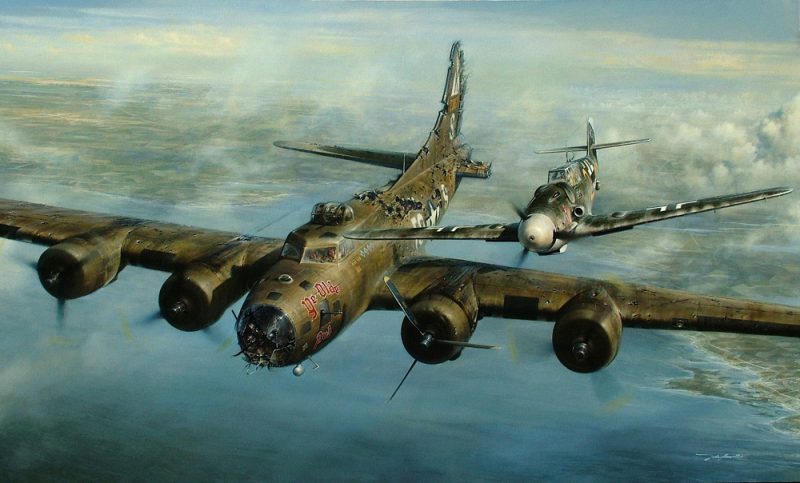
Charlie
Brown of the USAAF was a Lt. flying his first mission as an aircraft
commander flying a B-17, “Ye Olde Pub” on a bombing run over Bremen.
Brown’s bomber occupied the especially dangerous left of the formation,
sometimes called the Purple Heart Corner. Bremen was defended by a large
contingent of fighters and well-manned flak guns. Two B-17s were
quickly struck by heavy flak, and many went down. Brown’s bomber was hit
at least once in the left wing. The crew had to shut down an engine
which took them out of the formation. Soon they were met by about eight
enemy fighters.
The B-17 was sometimes referred to as the flying
porcupine and Ye Olde Pub sure lived up to The name. the gunners took
out at least one of the fighters and as many as three, all on their own.
The remaining fighters were still able to take the fight to the bomber,
however, and bullets tore through Ye Olde Pub.
Many
heroes’ names line the pages of WWII history. Many of these men and
women were not recognized and known to the public during their lifetimes
– some were secret agents, some worked within underground resistance
groups, and some conducted their plans hidden in plain sight.
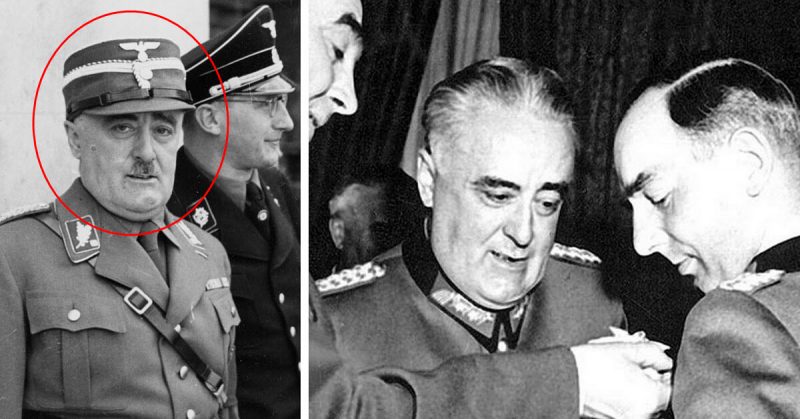
One
man in particular fought back from within the Nazi Party, reporting its
atrocities and plotting to bring them down from the inside. That man was
Edmund Glaise-Horstenau, a general within the Austrian military and
respected Nazi leader.
Though so many of his fellow Nazis
facilitated the concentration camps and various other horrors conducted
during the war, Glaise-Horstenau did not – he wanted the reign of terror
to end, even if he had to die to make this dream a reality.
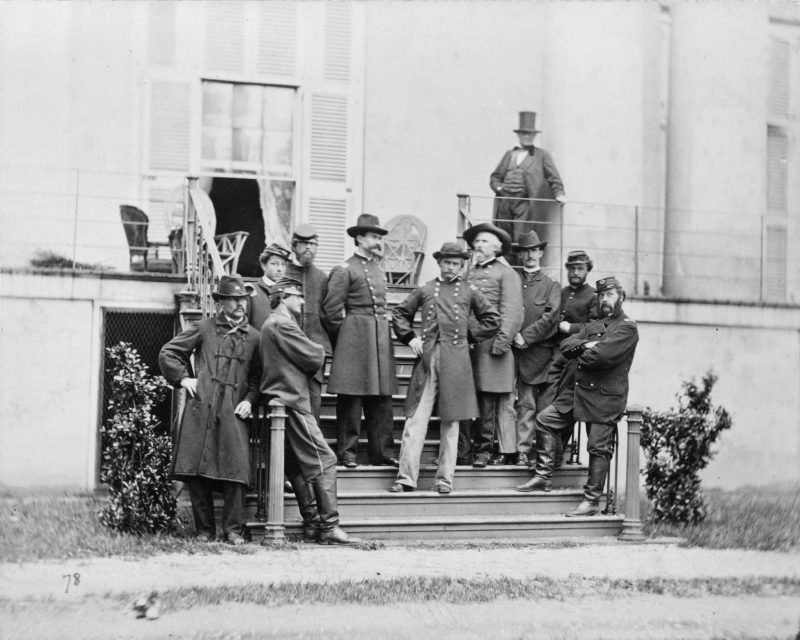
The
south steps of the Confederate White House teeming with Southern
officers and soldiers. Freedwoman Mary Bowser, posing as a slave, often
spied here for the Union.
The
typical Southern officer’s opinion of African Americans was that they
were an inferior subhuman race, lacking in intelligence or cunning.
Their ignorance and subsequent disregard of the slaves in their midst
led to the most successful intelligence gathering of the Civil War.
The
black men and women that provided information to the Union did so at
extreme peril and risk that they would never outlive, even long after
the war was over. They did this gambling that the pay-off would be
winning the war and trusting that they would hopefully gain
their freedom. There would be no accolades or acknowledgment. Such
attention, even long after the South fell, would put them in danger of
retaliation from disgruntled former Confederates.
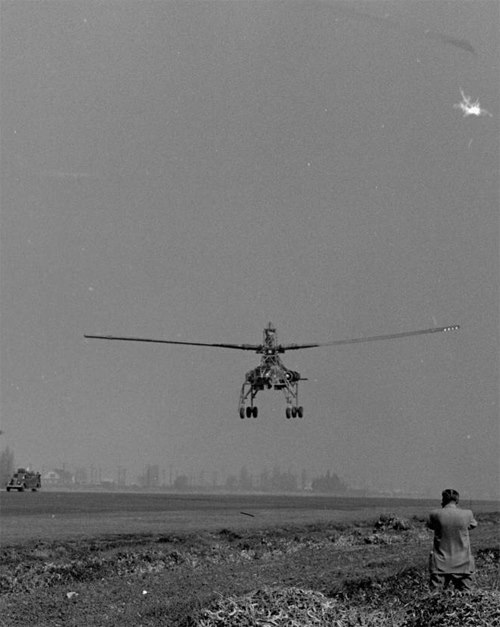
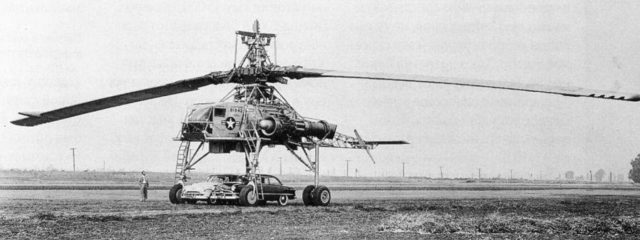
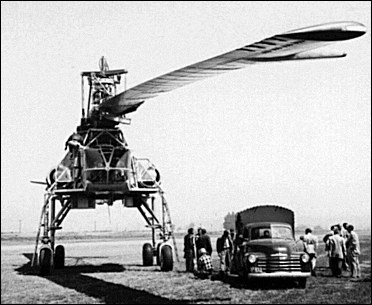
Great image here for the scale of the ‘flying crane’. sourceOK,
it looked ugly and strange but it worked – kind of. Made from parts
from various WWII warbirds the Hughes XH-17 “Flying Crane” was by far
,the most impressive of all rotor-craft in the early 1950s was a strange
monster designated XH-17. This was planned and taken through the design
process by Kellett, but hardware trials were transferred to Hughes
Aircraft at Culver City. Already the aircraft firm of billionaire Howard
Hughes had a reputation for being quite undeterred by the most
formidable development problems, and certainly the XH-17 made sense on
paper. In any case, it was part-funded by the USAF. It was a flying
crane, the specialized category pioneered by the German Fa 284 and
intended to lift cargo weighing up to 27,000 lb more than ten times as
much as any other rotorcraft of its day. To do so it had a radically new
form of lift power.
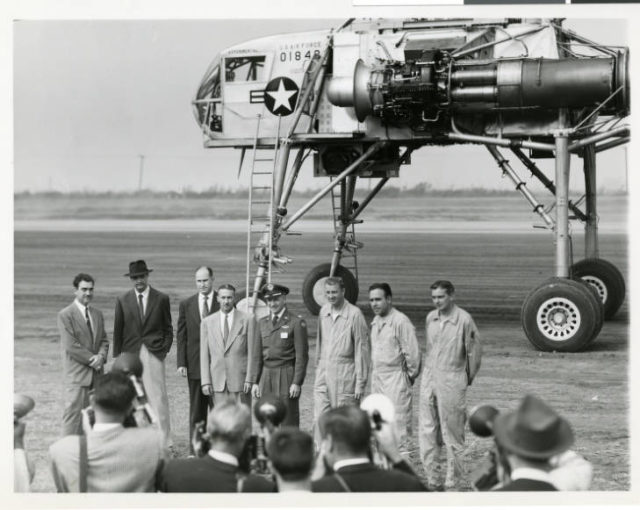
Howard
Hughes (second from left) standing under the blade of the XH-17, Flying
Crane with L-R: Rea Hopper, Director of the Aeronautical Division,
Hughes Aircraft Company; Hughes; Clyde Jones, Director of Engineering,
Hughes Tool Company Aeronautical Division; Warren Reed, Assistant;
Colonel Carl E. Jackson, Air Research and Development Headquarters;
Gale. J. Moore, Pilot; Chal Bowen?, Flight Engineer/Co-Pilot;
unidentified pilot. source
Scroll down for video
The
prototype was finished in 1949, ahead of schedule and one of the
reasons being that it was made from parts poached from WWII warbirds.
The XH-17 was a heavy-lift rotorcraft that was designed to lift loads
in excess of 15 metric tons.
To speed construction, parts of the
XH-17 were scavenged from other aircraft. The front wheels came from a
B-25 Mitchell and the rear wheels from a C-54 Skymaster. The fuel tank
was a bomb bay-mounted unit from a B-29 Superfortress. The cockpit was
from a Waco CG-15and the tail rotor from a Sikorsky H-19 was used for
yaw control.
In
the late 1940s, Hughes developed an interest in helicopters. In August
1947, helicopter manufacturer Kellett sold his design for the giant
XH-17 Sky Crane to Hughes, who commissioned the development of the XH-17
Flying Crane research vehicle. In 1948, the XH-17 began to take shape.
The giant helicopter was tested in Culver City, California over a
three-year period beginning in 1952. The XH-17 flew in 1953 at a gross
weight in excess of 50,000 pounds (23,000 kg). It still holds the record
for flying with the world’s largest rotor system. Only one unit was
built, since the aircraft was too cumbersome and inefficient to warrant
further development.
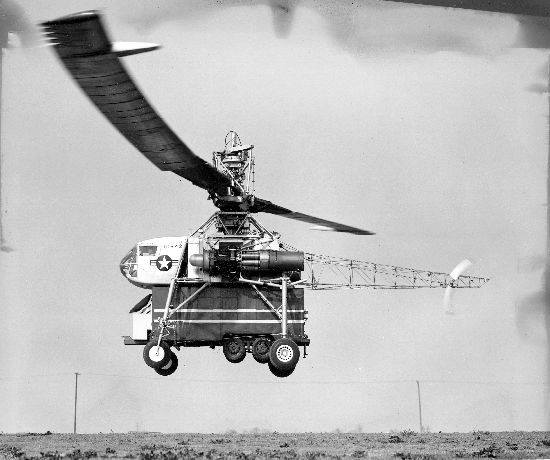
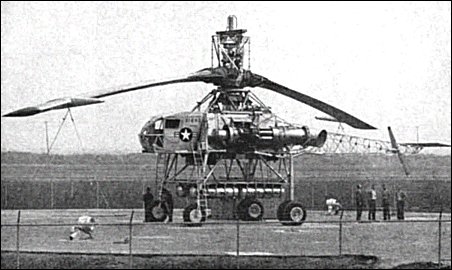
Engines: two GE J35 turbojets Weight fully loaded: 52,000 lb Cruising speed: 60 mph Range: 40 miles Number of seats: 2. sourceThe
propulsion system was unusual. Two General Electric J35 turbojet
engines were used, sending bleed air up through the rotor hub. The
blades were hollow, and the hot compressed air traveled through the
blades to tip jets where fuel was injected. In flight, the rotors spun
at a sedate 88 rpm. Since the rotor was driven at the tips rather than
the hub, little torque compensation was required.
The XH-17 employed an unusual gas-turbine and rotor-tip combustion combination to provide power to spin the gigantic rotors.
Thus, the XH-17 had a very small tail rotor compared to its main
rotor. This drive system was inefficient, limiting the test aircraft to a
range of only 40 miles. Finally, having received the Air Force serial
50-1842, the XH-17 was first flown by Gale Moore at Culver City on 23
October, 1952. That flight, however, had to be cut short after the XH-17
had been airborne for barely a minute as directional control forces
were excessive. While correction of this deficiency could be made
quickly, difficulties uncovered later in the trials required more time.
In particular, high vibratory stresses in the main rotor blades were
difficult to correct and the XH-17 was repeatedly grounded while
modifications were incorporated. The off and on test programme ended
when the rotor blades reached their design life in December 1955
writes aviastar.org
Hughes experimental helicopters XH-17 at the front XH-28 mock up at the rear. sourceBy
the end of the test program the XH-17 had proved its concept, that it
could fly, and that it could carry a considerable payload – exceeding
the original requirement. However it fell short, well short, of the Air
Force’s range requirement. Mainly due to its appalling fuel consumption,
and there was little which could be done to improve it.
In the
end it became a bit of an engineering cul-de-sac. One derivative, the
XH-28, an even larger version, was proposed. But it never got further
than a wooden mock-up. The sole XH-17 prototype was eventually scrapped,
and sadly nothing remains of this unusual giant except for photos and
some video footage.
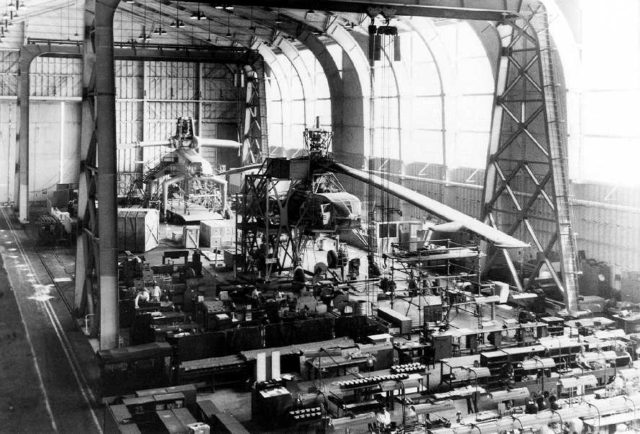
Ground
tests began towards the very end of 1949, and immediately the sheer
size and complexity of the rotors, and their unusual powersource began
to throw up some issues for the engineers. However the project continued
to develop at a satisfactory pace. source
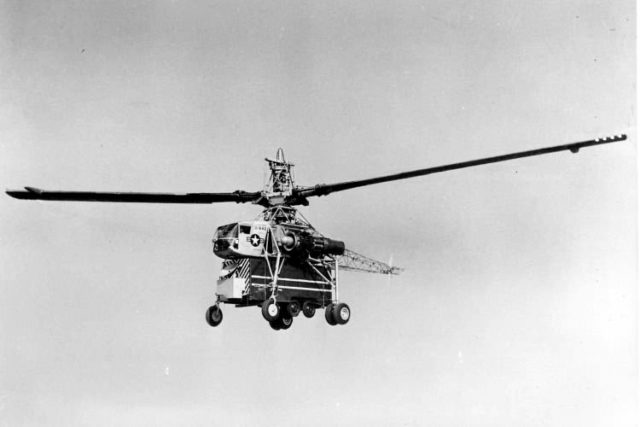
The giant rotors promised a huge lifting capacity, so they were attached to stilt-like legs and a box-like fuselage. source
Entry to the cockpit required a pair of tall ladders attached to the forward landing gear legs. source
Δείτε τι τύπωσε και μοίρασε στους «μαχητές» του το «Ισλαμικό Κράτος» -
Με μαύρο χρώμα αποτυπώνονται οι περιοχές που θεωρεί το ISIS ότι θα
πρέπει να εμπεριέχονται στην ίδρυση ενός μελλοντικού ισλαμικού
χαλιφάτου.
Ντοκουμέντο:
Ο χάρτης που τύπωσε και μοίρασε στους «μαχητές» του το «Ισλαμικό
Κράτος» και κυκλοφόρησε στο Διαδίκτυο. Με μαύρο χρώμα αποτυπώνονται οι
περιοχές που θεωρεί το ISIS ότι θα πρέπει να εμπεριέχονται στην ίδρυση
ενός μελλοντικού ισλαμικού χαλιφάτου. Μεταξύ αυτών των περιοχών
συμπεριλαμβάνονται τόσο η Ελλάδα όσο και η Κύπρος. Τα σύνορα του
χαλιφάτου φτάνουν μέχρι τον Ατλαντικό στα δυτικά, έως την Αυστρία στα
βόρεια, συμπεριλαμβάνουν ολόκληρη την Αφρική βόρεια της Σαχάρας, την
Αραβική Χερσόνησο, την Ινδία, μέρος της Κίνας και το σύνολο των χωρών
των λεγόμενων τουρκόφωνων περιοχών της Ασίας
Great image here for the scale of the ‘flying crane’. sourceOK,
it looked ugly and strange but it worked – kind of. Made from parts
from various WWII warbirds the Hughes XH-17 “Flying Crane” was by far
,the most impressive of all rotor-craft in the early 1950s was a strange
monster designated XH-17. This was planned and taken through the design
process by Kellett, but hardware trials were transferred to Hughes
Aircraft at Culver City. Already the aircraft firm of billionaire Howard
Hughes had a reputation for being quite undeterred by the most
formidable development problems, and certainly the XH-17 made sense on
paper. In any case, it was part-funded by the USAF. It was a flying
crane, the specialized category pioneered by the German Fa 284 and
intended to lift cargo weighing up to 27,000 lb more than ten times as
much as any other rotorcraft of its day. To do so it had a radically new
form of lift power.
Howard
Hughes (second from left) standing under the blade of the XH-17, Flying
Crane with L-R: Rea Hopper, Director of the Aeronautical Division,
Hughes Aircraft Company; Hughes; Clyde Jones, Director of Engineering,
Hughes Tool Company Aeronautical Division; Warren Reed, Assistant;
Colonel Carl E. Jackson, Air Research and Development Headquarters;
Gale. J. Moore, Pilot; Chal Bowen?, Flight Engineer/Co-Pilot;
unidentified pilot. source
Scroll down for video
The
prototype was finished in 1949, ahead of schedule and one of the
reasons being that it was made from parts poached from WWII warbirds.
The XH-17 was a heavy-lift rotorcraft that was designed to lift loads
in excess of 15 metric tons.
To speed construction, parts of the
XH-17 were scavenged from other aircraft. The front wheels came from a
B-25 Mitchell and the rear wheels from a C-54 Skymaster. The fuel tank
was a bomb bay-mounted unit from a B-29 Superfortress. The cockpit was
from a Waco CG-15and the tail rotor from a Sikorsky H-19 was used for
yaw control.
In
the late 1940s, Hughes developed an interest in helicopters. In August
1947, helicopter manufacturer Kellett sold his design for the giant
XH-17 Sky Crane to Hughes, who commissioned the development of the XH-17
Flying Crane research vehicle. In 1948, the XH-17 began to take shape.
The giant helicopter was tested in Culver City, California over a
three-year period beginning in 1952. The XH-17 flew in 1953 at a gross
weight in excess of 50,000 pounds (23,000 kg). It still holds the record
for flying with the world’s largest rotor system. Only one unit was
built, since the aircraft was too cumbersome and inefficient to warrant
further development.
Engines: two GE J35 turbojets Weight fully loaded: 52,000 lb Cruising speed: 60 mph Range: 40 miles Number of seats: 2. sourceThe
propulsion system was unusual. Two General Electric J35 turbojet
engines were used, sending bleed air up through the rotor hub. The
blades were hollow, and the hot compressed air traveled through the
blades to tip jets where fuel was injected. In flight, the rotors spun
at a sedate 88 rpm. Since the rotor was driven at the tips rather than
the hub, little torque compensation was required.
The XH-17 employed an unusual gas-turbine and rotor-tip combustion combination to provide power to spin the gigantic rotors.
Thus, the XH-17 had a very small tail rotor compared to its main
rotor. This drive system was inefficient, limiting the test aircraft to a
range of only 40 miles. Finally, having received the Air Force serial
50-1842, the XH-17 was first flown by Gale Moore at Culver City on 23
October, 1952. That flight, however, had to be cut short after the XH-17
had been airborne for barely a minute as directional control forces
were excessive. While correction of this deficiency could be made
quickly, difficulties uncovered later in the trials required more time.
In particular, high vibratory stresses in the main rotor blades were
difficult to correct and the XH-17 was repeatedly grounded while
modifications were incorporated. The off and on test programme ended
when the rotor blades reached their design life in December 1955
writes aviastar.org
Hughes experimental helicopters XH-17 at the front XH-28 mock up at the rear. sourceBy
the end of the test program the XH-17 had proved its concept, that it
could fly, and that it could carry a considerable payload – exceeding
the original requirement. However it fell short, well short, of the Air
Force’s range requirement. Mainly due to its appalling fuel consumption,
and there was little which could be done to improve it.
In the
end it became a bit of an engineering cul-de-sac. One derivative, the
XH-28, an even larger version, was proposed. But it never got further
than a wooden mock-up. The sole XH-17 prototype was eventually scrapped,
and sadly nothing remains of this unusual giant except for photos and
some video footage.
Ground
tests began towards the very end of 1949, and immediately the sheer
size and complexity of the rotors, and their unusual powersource began
to throw up some issues for the engineers. However the project continued
to develop at a satisfactory pace. source
The giant rotors promised a huge lifting capacity, so they were attached to stilt-like legs and a box-like fuselage. source
Entry to the cockpit required a pair of tall ladders attached to the forward landing gear legs. source
Δεν χρειάζεται να ντρέπεστε που είστε Έλληνας, ντρέπονται άλλοι για σας. Οι Έλληνες οι πρόγονοι σας !
Είπες
πώς ντρέπεσαι που είσαι Έλληνας; Μήπως η λέξη Έλλην πρέπει να ντρέπεται
που εκπροσωπεί εσένα, που δεν θυμίζεις τίποτα από τον Ηρωισμό, την
Τόλμη, την Αρετή, των προγόνων σου!
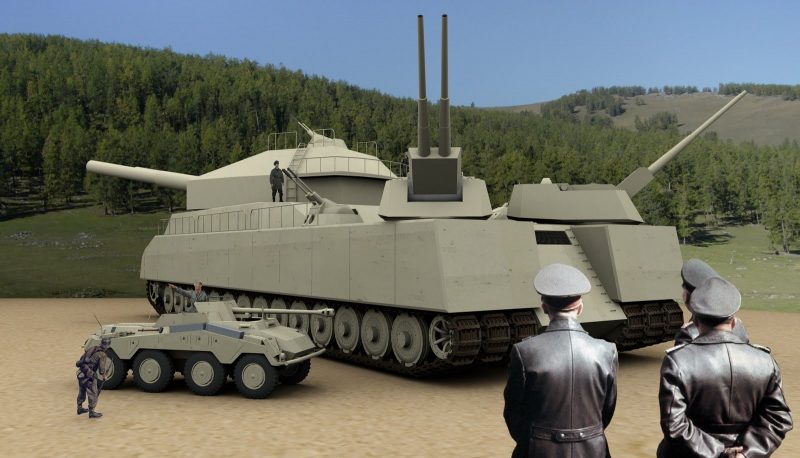
As
the beginning of the war swept over Europe, with lightening speed,
Hitler felt invincible, at least for the first two years of the war. He
was known for his megalomaniac ambitions, but the most telling example
of his unrestrained hubris was endorsing the Landkreuzer P.1000, which
he nicknamed The Rat (Ratte).
It was supposed to be more than five
times heavier than its predecessor, Panzer VIII Maus, a super tank,
built in late 1944. About 1,000 metric tons was the predicted weight, 35
meters long, 11 meters high and 14 meters wide it was to be the biggest
land war machine ever created.
Sverd
i fjell (English: Swords in Rock) is a commemorative monument located
in the Hafrsfjord neighborhood of Madla, a borough of the city of
Stavanger in Rogaland county, Norway. They commemorate the historic
Battle of Hafrsfjord that took place there in the year 872, after which
King Harald Fair Hair united the three districts of Norway into one
kingdom. Harald Fairhair reigned from c. 872 to 930 and is today
recognized as the first King of Norway. The Three Swords (Sverd i Fjell) stand on the edge of Hafrsfjord, 6km from the center of Stavanger. The Sverd i fjell monument was put in place to celebrate an ancient battle. Source1 Source2
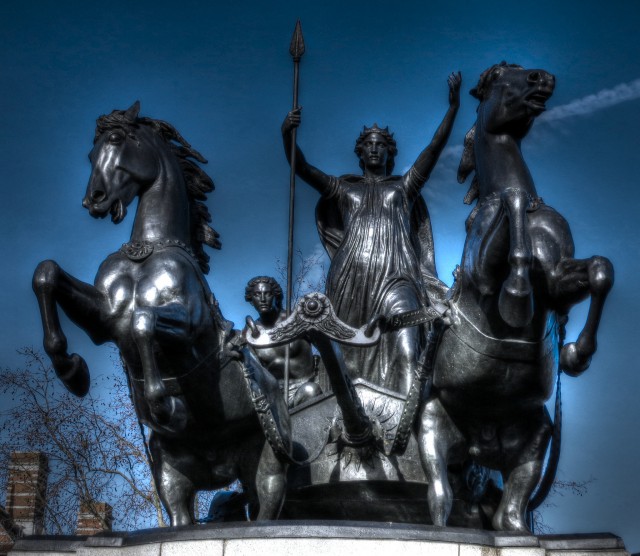
Boudica Statue at Westminster. Picture by Paul Walter via Flickr Creative CommonsOne
mistake the inhabitants of Colchester made was looking to Catus
Decianus for help. The procurator, whose own actions had triggered the
revolt, sent only two hundred auxiliary troops to stop the rebel army.
It was a weak response to a massive crisis, reflecting the hubris that
characterized Decianus’s dealings with the Iceni.
When
one thinks of the U.S. Army, one generally doesn’t think of squadrons
of jets flying around the battlefield. But at the height of the Cold
War, the ground combat branch had its sights set on buying a fleet of
jump jets.
Though
the Pentagon turned the U.S. Air Force into a separate service shortly
after World War II, its ground-pounding cousins remained interested in
helicopters and other flying machines. A decade later, Army aviators
were hard at work with aircraft makers to cook up special craft that
could land and take off like helicopters, but fly like normal planes.
“While
the 1947 National Security Act created an independent United States Air
Force, this did not halt the expansion of Army organic aviation, or the
Army’s increasing use of the helicopter,” Dr. Ian Horwood wrote in Interservice Rivalry and Airpower in the Vietnam War.
“[But] in the early 1950s, such ‘convertiplanes’ appeared to offer more
potential for Army surveillance and air mobility tasks than
helicopters.”
In the end, the Air Force scuttled the plans — and buried decades of work.
By
1950, the idea of combining features from helicopters and traditional
aircraft was hardly new. Spanish engineer Juan de la Cierva invented the
autogyro, which blends a free-spinning rotor and a conventional
forward- or rear-mounted engine, nearly three decades earlier.
As
world settled into the Cold War, major air arms became fascinated by
the idea a jump jet that wouldn’t necessarily need a long runway. During
World War II, Allied forces bombarded Nazi Germany’s air bases and
limited the Luftwaffe’s ability to fight back.
Above, below and at top — Ryan XV-5s Vertifans. Photos via the San Diego Air and Space Museum archives
On
both sides of the Iron Curtain, military commanders realized that
nuclear war would only speed up the destruction of normal airstrips. By
the time Berlin fell, Hilter’s weaponeers had already started work on
various alternatives, such as rocket planes that could shoot straight up
into the sky from a small launch rail right into enemy bomber
formations
The
Soviet Union officially ceased to exist on December 26, 1991, 74 years
after its inception in 1917. The fall of the Union left the world in
awe. The pre-revolutionary flag was raised in Kremlin, but it wasn’t
without turmoil. As the Soviet empire fell apart, many problems began to
surface. Civil wars, armed insurgencies, and attempted coups troubled
the ex-Soviet republics throughout the 90s as the region tried to
stabilize itself.
Some of the conflicts were motivated by ethnic
and religious differences, while others were triggered by historical
disputes that had been haunting the regions throughout the 20th century.
Furthermore, the power vacuum created by the fall of the centralized
government reflected in the rise of new political elites, nationalism
and crime. We offer you an overview of the conflicts that shaped the
territories of the former Soviet Union.



 The XH-17 employed an unusual gas-turbine and rotor-tip combustion combination to provide power to spin the gigantic rotors.