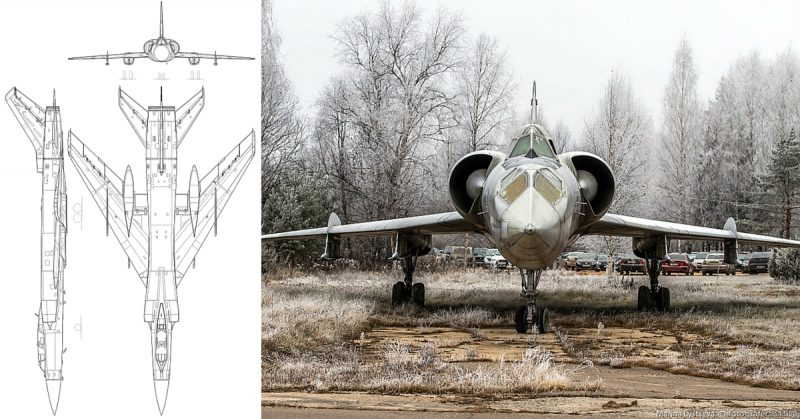
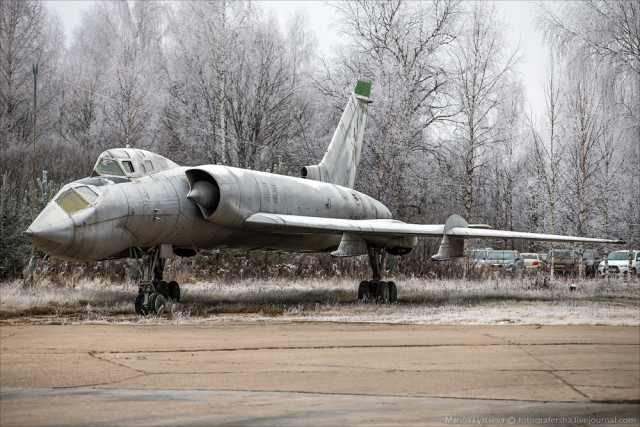
The
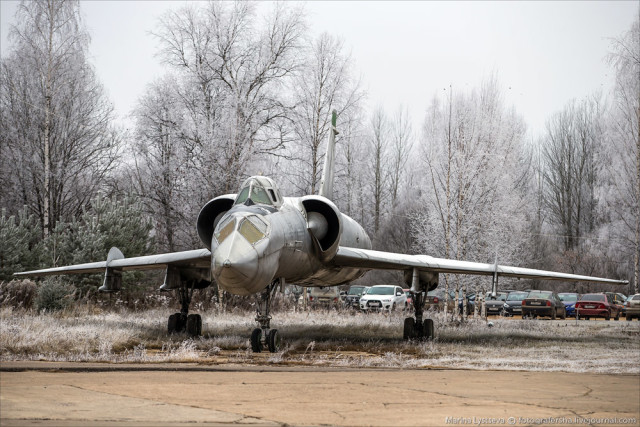
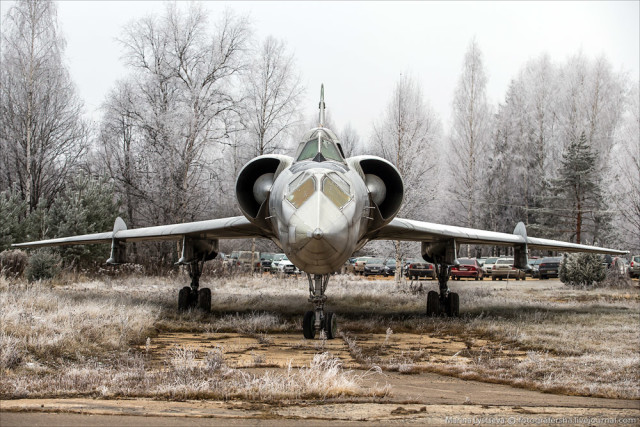
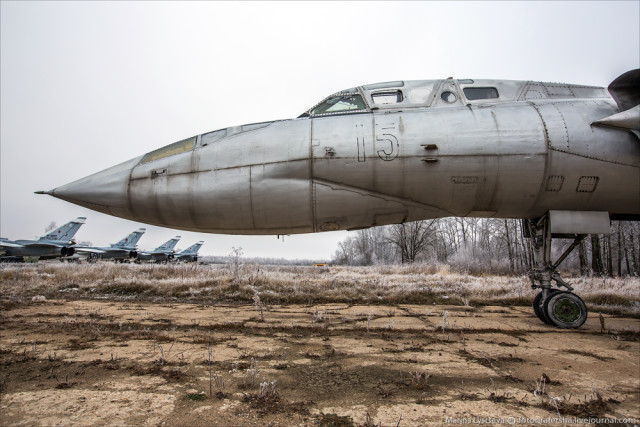
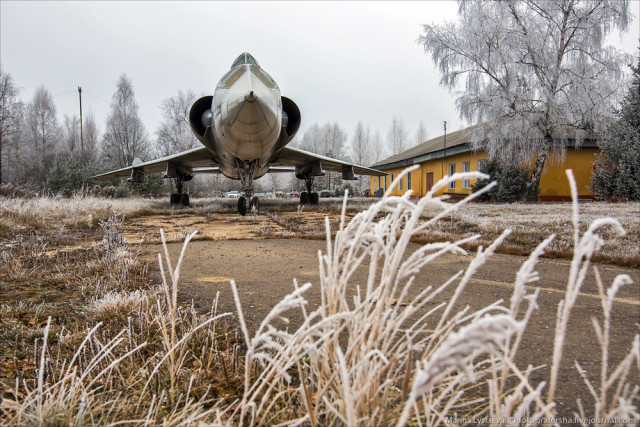
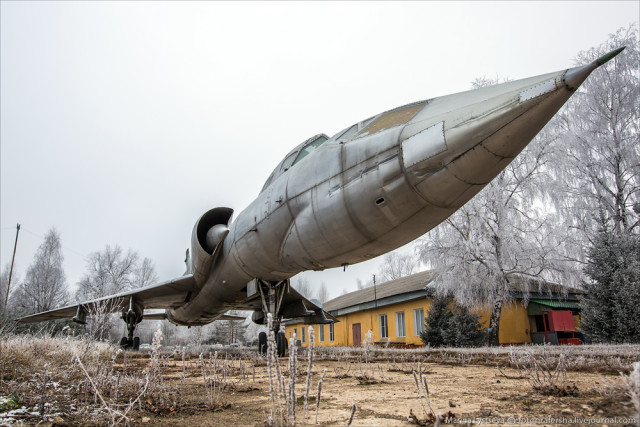
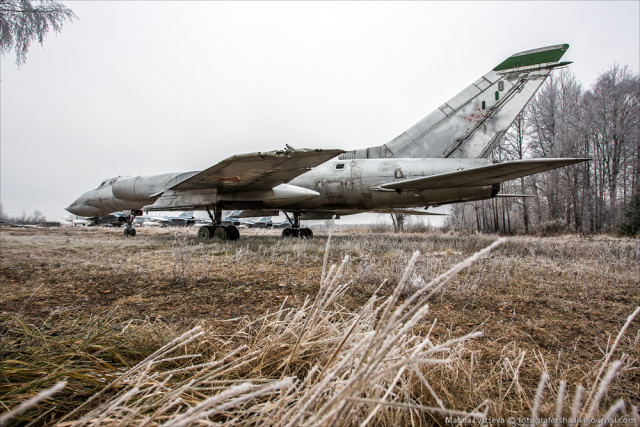
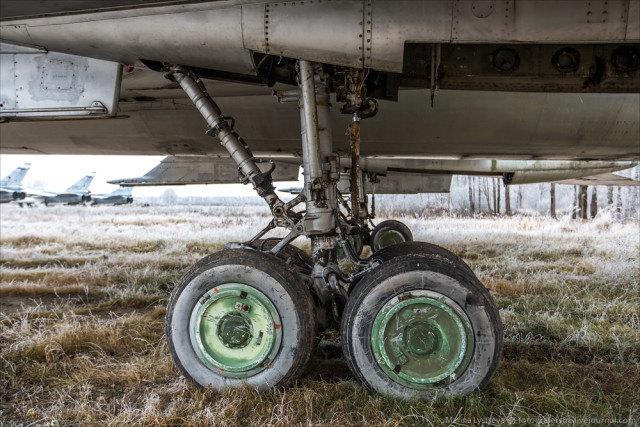
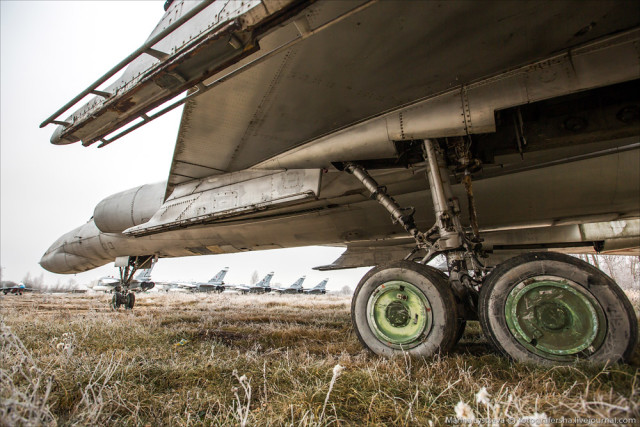
Tupolev Tu-28 (NATO reporting name Fiddler) was a long-range
interceptor aircraft introduced by the Soviet Union in the 1960s. It
was the largest and heaviest fighter ever in service.
In the
1950s, the Soviet Union sought the means to defend against the
nuclear-armed American bombers possibly penetrating its borders.
Contemporary interceptors were able to cover a radius of a few hundred
kilometers; the newly developed surface-to-air missiles had even shorter
range. Considering both, the sheer numbers required to defend a 5,000
km air front were economically impossible to maintain.
This left
the Soviet Union able to provide a modern air defense only for selected
valuable areas. The PVO decided to cover the entire territory, but with a
more loose defense. In 1955 it placed a requirement for a large
area-defense interceptor, that would achieve it with sparse airbases.
The
work began in 1958, based on an existing single prototype of the
unsuccessful Tu-98 supersonic bomber. The military designation of the
interceptor was at first Tu-28, but it had been changed in 1963 to
Tu-128.
The Tu-128’s only publicly reported combat operation was
the destruction of NATO reconnaissance balloons. The aircraft remained
in service until 1990. Through the 1980s, units armed with the Tu-128
converted to the Mikoyan MiG-31.
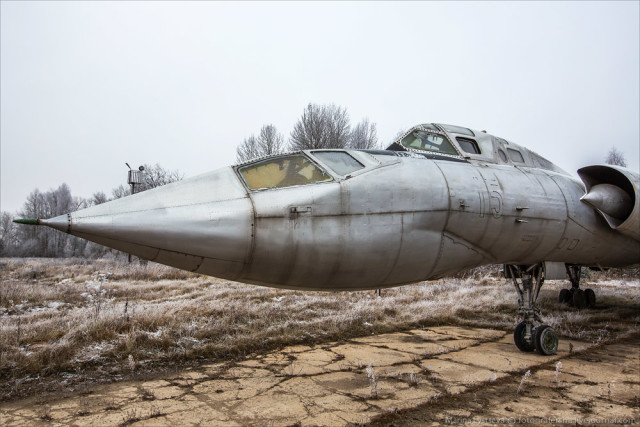
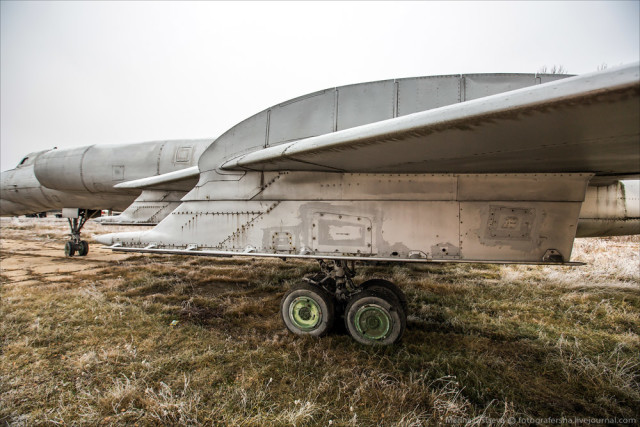
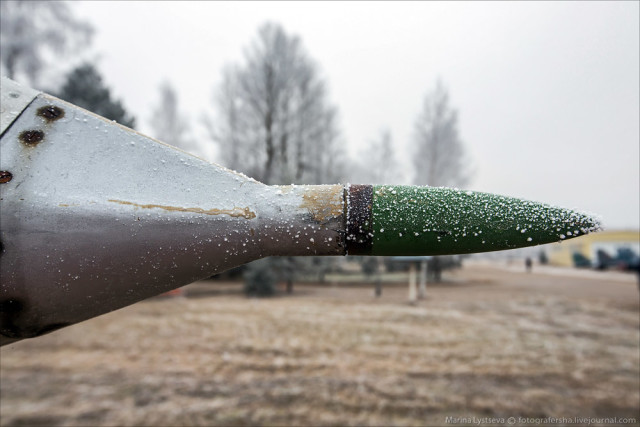
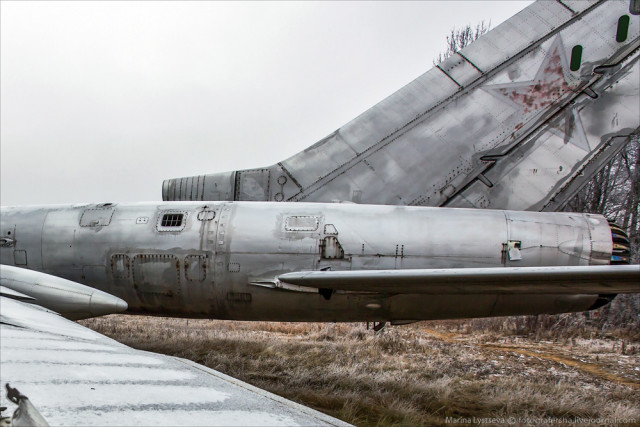
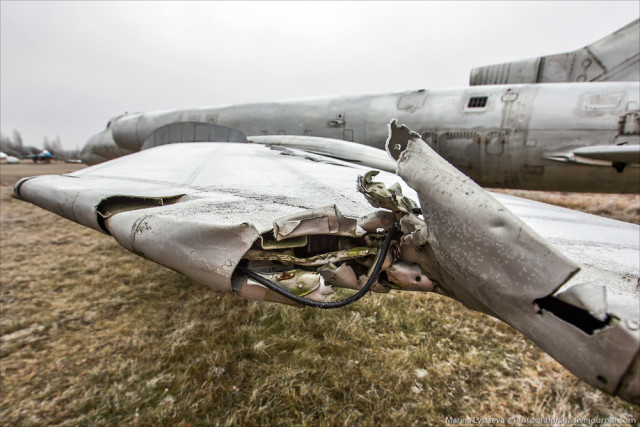
Credit for all photos – Marina Lystseva In West, more commonly used designation for this aircraft was Tu-28Especially long nothern border of Russia was vulnerable for possible violations.First flight was in 18 March 1961.(By Kaboldy – Own work, CC BY-SA 3.0)Built by Voronezh Aircraft Production Association.The aircraft remained in service until 1990.Developed from Tupolev Tu-98 bomber prototype.Production of the Tu-128 ended in 1970 with total 198 aircraft having been built……including 10 trainers.Western
experts, unaware that the bulge on the belly carried testing
instruments, mistook it for a large ventral radar for a mixed
interceptor/AWACS role.Development
of various projects designated Tu-28A, Tu-28-80, Tu-28-100, Tu-138, and
Tu-148 were proposed by the Tupolev Design Bureau but all were
abandoned.The Tu-128’s only publicly reported combat operation was the destruction of NATO reconnaissance balloons.Through the 1980s, units armed with the Tu-128 converted to the Mikoyan MiG-31.Now it stands as a remnant of the Cold War……in its Motherland – Russia.
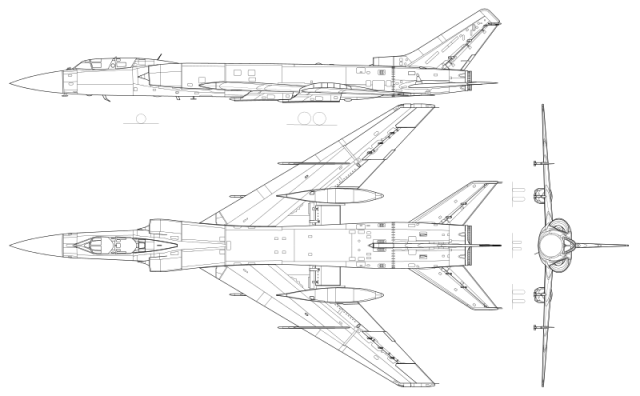
General characteristics
Crew: Two, pilot and radar operator
Length: 30.06 m (98.62 ft)
Wingspan: 17.53 m (57.51 ft)
Height: 7.15 m (23.46 ft)
Wing area: 96.94 m² (1,043.45 ft²)
Empty weight: 24,500 kg (54,013 lb)
Loaded weight: 40,000 kg (88,185 lb)
Max. takeoff weight: 43,000–43,700 kg (94,800–96,342 lb)
For
some reason, the Soviets and the Germans seemed to have thought that
big really was beautiful. During WWII Hitler was obsessive about size.
Just think of the planned super tank. It would have weighed 1,000 tons
and fired a long-distance rocket that could have pounded London or New
York into brick dust – but no road could support it. The you have to
think of the German railway gun – the Schwerer Gustav. It weighed 1350
tons and took a 250 to assemble the gun in 3 days (54 hours), 2,500 to
lay track and dig embankments. 2 Flak battalions to protect the gun from
air attack.
The difference between an act of terrorism and an act carried
out by a loner with a history of mental illness has finally been
identified.
The Daily Mail, whose front pages are routinely filled with stories
about invading armies of migrant crime swamps taking over our garden
centres, made the discovery.
“There’s a fine line between a follower of a hate-filled ideology
carrying out barbaric attacks on our democracy and a quiet man who lived
on his own since his mother died,” explained Daily Mail headline writer
Simon Williams.
Α)Ο τραγικός θάνατος της Τζο Κοξ ίσως ανακόψει τη δυναμική υπέρ του Brexit
Ο
τραγικός θάνατος της Τζο Κοξ, της πολιτικού που ήταν υπέρ της
Ευρωπαϊκής Ένωσης, σόκαρε τη Βρετανία και θα μπορούσε να στρέψει την
κοινή γνώμη προς την ασφάλεια της ενιαίας οικονομικής ένωσης.
«Αυτό (η δολοφονία της Κοξ) ίσως αλλάξει την ψυχολογία της
εκστρατείας. Αυτοί που είναι υπέρ της ΕΕ ίσως ευνοηθούν από αυτό το
τραγικό συμβάν… θα μπορούσε να αυξήσει τις πιθανότητές τους».
Την άποψή ayth φάνηκαν να συμμερίζονται και οι αγορές. Η στερλίνα
κατέγραφε άνοδο κατά μισό τοις εκατό στα 1,4273 δολάρια περίπου,
ανακάμπτοντας από το χαμηλό δύο μηνών των 1,4013 δολαρίων που σημείωσε
νωρίτερα αυτή την εβδομάδα. Η ανάκαμψη περιουσιακών στοιχείων με ρίσκο,
όπως το ράλι της στερλίνας, οφείλεται στην αίσθηση ότι υπάρχουν
μεγαλύτερες πιθανότητες για την ψήφο υπέρ της παραμονής, δήλωσε ο Άλαν
Ράσκιν, ένας από τους επικεφαλής συναλλαγματικής ανάλυσης στην Deutsche
Bank.
The
McDonnell XP-67, otherwise known as the “Bat” or “Moonbat”, was a
ambitious prototype for a twin-engine, long range, single-seat
interceptor for the USAAF. sourceIn
1940, the U.S. Army Air Corps issued Request for Proposal R-40C,
requesting designs for a high-speed, long-range, high-altitude
interceptor intended to destroy enemy bombers. The specifications were
very bold, encouraging manufacturers to produce radical aircraft that
would outperform any existing fighter in the world at the time.
The aerospace parts manufacturer McDonnell Aircraft, eager to begin
manufacturing its own aircraft, responded to the proposal with drawings
and specifications of the proposed Model I, which would be powered by an
unusual geared drivetrain with a single Allison V-3420 engine buried in
the fuselage powering twin wing-mounted pusher propellers in the wings.
This
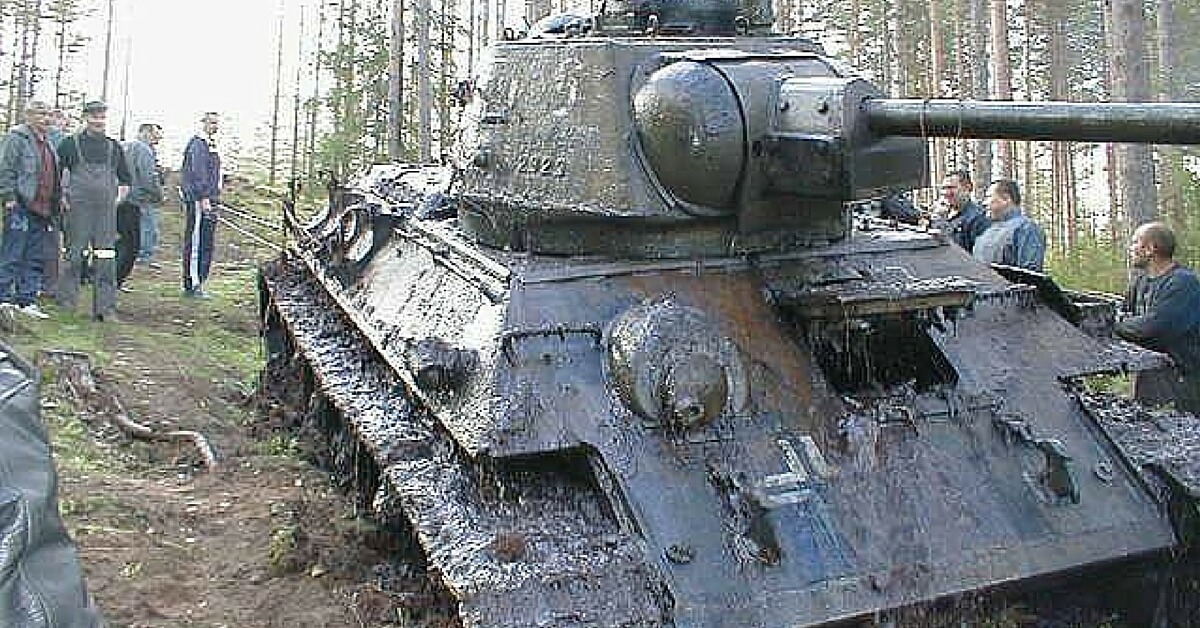
Russian-built T34 tank was captured by the Germans and marked and used
as their own. This one was either stuck during battle or ditched during
the German retreat to keep it from falling back into Russian hands.
In
the eastern part of Estonia, on the narrow 50km wide Narva front,
fierce battles were fought from February to September of 1944. It is
estimated that over 100,000 men were killed and over 300,000 were
wounded in this fighting. After this tank was used by the Germans it is
believed that they drove it into the lake on purpose to prevent it from
being taken and used by the advancing Red Army.
The tank was in
the lake at a depth of 12 meters with 6 meters of peat and silt above
it. Over a two week period, divers from the local diving club washed
away silt above the tank. After it was pulled from the bog and on dry
land again the ammunition, 116 pieces in total, was removed from the
tank and it was taken to the war museum in the nearby village of
Gorodenko. There it was possible to start the diesel engine without
installing any spare parts!
The
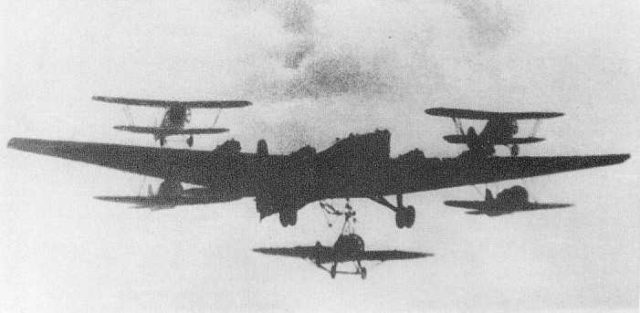
Aviamatka PVO (transport aircraft for aerial defense) was tested at the
end of 1935. Assembly composed of a Tupolev TB3 4M-17F capable of
carrying 5 to 6 aircraft. sourceOne
of the most strange and bizarre looking aircraft that ever took to the
air has to be the Zveno composite bomber/fighter design by Vakhmistrov.
The concept first took shape in the mid-twenties, when the Soviet Air
Force were looking at ways to both, shoot down incoming enemy bombers
and to supplement the ground troops in the battlefield
Zveno
was a parasite aircraft concept developed in the Soviet Union during
the 1930s. It consisted of a Tupolev TB-1 or aTupolev TB-3 heavy bomber
acting as a mothership for between two and five fighters. Depending on
the Zveno variant, the fighters either launched with the mothership or
docked in flight, and they could refuel from the bomber. The definitive
Zveno-SPB using a TB-3 and two Polikarpov I-16s, each armed with two
550 lb bombs, was used operationally with good results against strategic
targets in Romania during the opening stages of the German-Soviet War.
The same squadron afterwards also carried out a tactical attack against a
bridge over the River Dnieper that had been captured by advancing
German forces.
In June 1931, Vladimir Sergeyevich Vakhmistrov of
the scientific test institute of the air force started work on
combinations of fighters rigidly attached to heavy bomber aircraft. The
system was envisioned to serve several purposes:
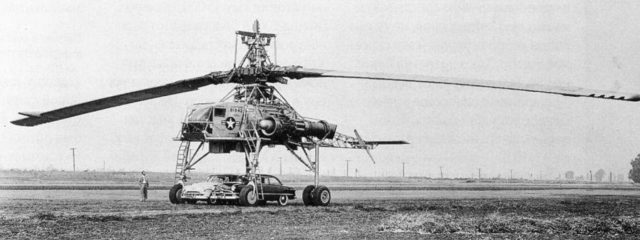
Great image here for the scale of the ‘flying crane’. sourceOK,
it looked ugly and strange but it worked – kind of. Made from parts
from various WWII warbirds the Hughes XH-17 “Flying Crane” was by far
,the most impressive of all rotor-craft in the early 1950s was a strange
monster designated XH-17. This was planned and taken through the design
process by Kellett, but hardware trials were transferred to Hughes
Aircraft at Culver City. Already the aircraft firm of billionaire Howard
Hughes had a reputation for being quite undeterred by the most
formidable development problems, and certainly the XH-17 made sense on
paper. In any case, it was part-funded by the USAF. It was a flying
crane, the specialized category pioneered by the German Fa 284 and
intended to lift cargo weighing up to 27,000 lb more than ten times as
much as any other rotorcraft of its day. To do so it had a radically new
form of lift power.
An 1,800-year old ancient oracular edifice might just be the
first oracle ever discovered in the capital city of Athens. Now
historically, the scope of ancient oracles and divination have always
been connected to the famous Delphi (along with other sites) in Greece.
But this fascinating discovery, conducted by the Kerameikos excavation
project (by members of the German Archaeological Institute at Athens),
might shed new light into how Apollo’s cult with its intricacies and
secrets, may have also been popular in Athens. As for the well in
question, it was possibly used for hydromancy – a divination method that
entails the medium of water.
Coming to the location of this Athenian oracle well, the Kerameikos
site is almost in the middle of the city, just northwest to the renowned
Acropolis. While historically being the district of potters, the
neighborhood was sumptuously supplied by water from the Eridanos River.
Suffice it to say, the Athenians built many strategic wells that were
connected to this water system, with some of them serving on a public
basis. And it was this very sustaining ‘force’ of water that endowed it
with a symbolic significance in Greek mythology. As Dr. Jutta Stroszeck,
director of the Kerameikos excavation, said (to Haaretz) –
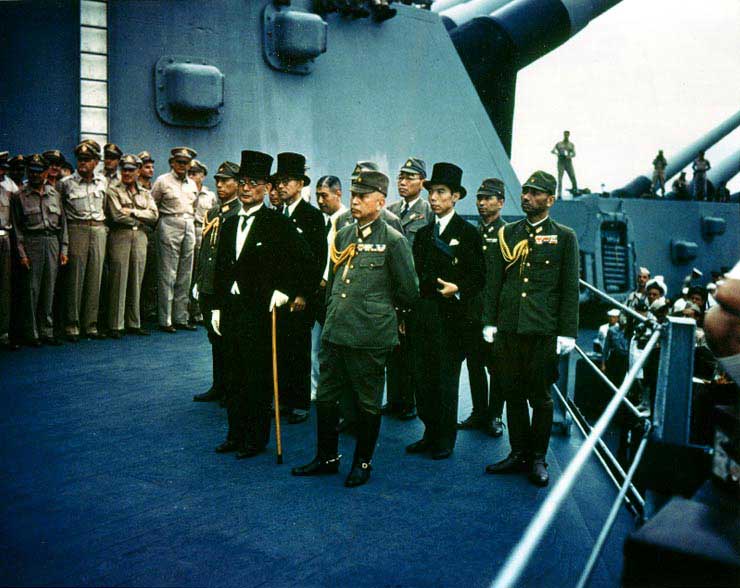
US President Obama’s recent visit to Hiroshima is not being used to “repair” the narratives about World War II.
“Not
a chance,” says Carol Gluck, a professor of Japanese history at
Columbia University. “They will not revisit history, they will not talk
about President Truman, they will not talk about the decision to
surrender.”
Some have suggest that reason the US president will
not be apologizing for the atomic bombs dropped on Japan may be to avoid
political attacks on both leaders. Obama gives an additional reason why
he will not apologize, saying:
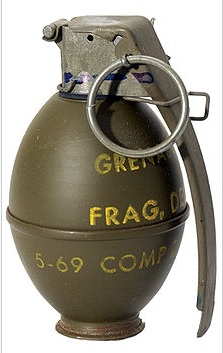
In
the early 1970s, many military officers worried that the armed services
in Southeast Asia were in a state of mutiny. A new word, “fragging,”
had entered the military vocabulary. Fragging referred specifically to
the murder of commanding officers in combat, usually when the officer
made an unpopular decision, was inept, demeaning to soldiers, or put his
men unnecessarily in harm’s way. The term comes from the small
percussion fragmentation hand grenades often used in such homicides. In
one such incident.
On
23 October 1970 the 1st Marine Division’s only death by fragging
occurred on Hill 190, west of Da Nang. That evening, Private Gary A.
Hendricks of Company L, 3d Battalion, 1st Marines, was one of two
Marines found sleeping on post by their platoon sergeant, Sergeant
Richard L. Tate.
Warning: Some readers may find the content of this article distressing
Dr. Beverley Chalmers’ latest book is Birth, Sex, and Abuse: Women’s Voices Under Nazi Rule (Grosvener House,
2015), which is undoubtedly a difficult read, but one that people
should not shy away from. The truth can be hard to accept and this
book’s subject is no exception to that rule. Her work sheds light on the
horrifying experiences of many Jewish and non-Jewish women who were
raped and brutalized, experimented upon, forced into prostitution, or
compelled to undergo sterilization or abortion without consent.
The U.S. Marine Corps landed in China exactly 116 years ago today.On May
31, 1900, an expeditionary force of 56 Marines and sailors arrived in
Beijing to protect the U.S. diplomatic mission in the face of mounting
militia attacks in what would be known as the Boxer Rebellion.
Over
a brutal 55-day siege, the Marines would fend off repeated assaults
through dense urban terrain by militias and Chinese government forces
determined to wipe them out.
"The Americans who have been besieged
in Peking desire to express their hearty appreciation of the courage,
fidelity and patriotism of the American Marines, to whom we so largely
owe our salvation," a group of American missionaries wrote in the
aftermath of the battle, according to the National Archives. "By
their bravery in holding an almost untenable position in the face of
overwhelming numbers, and in cooperating in driving the Chinese from a
position of great strength, they made all foreigners in Peking their
debtors, and have gained for themselves an honorable name among the
heroes of their country."
A
shocking number of military leaders have suffered from mental health
issues, even as they held the lives of the men they led in their hands.
At times ambition, politics, inheritance or the trauma of war have
created commanders with varying degrees of insanity.
Sir William Erskine
The
Duke of Wellington was plagued by new officers thrust upon him by the
British government; men whose status came not from ability but from
their background and connections. None was worse than Sir William
Erskine.
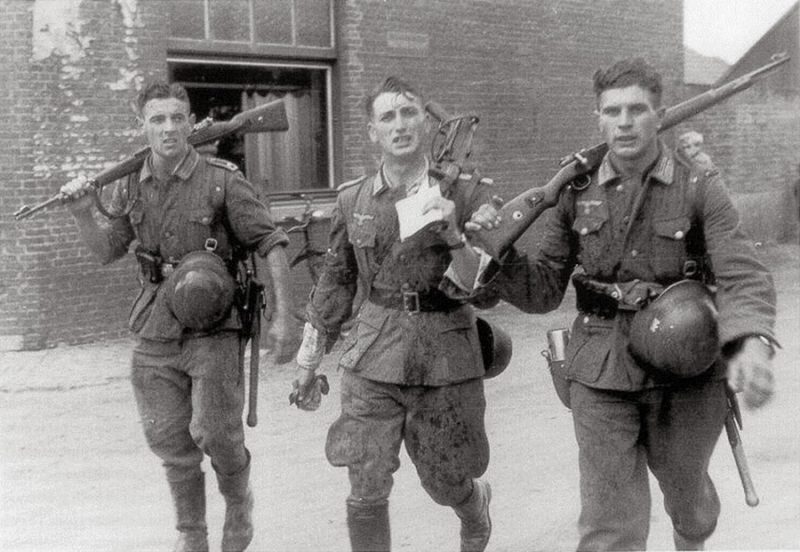
Definitely
not an arranged or posed picture and therefore a rather rare example.
These three men obviously return from a very recent fight, in which the
officer in the middle has been wounded on his right hand or arm. Note
the blood stains over the uniforms and the very agitated look in their
eyes. They don’t seem to like being photographed at this very moment.
The men to the side are armed with K98k’s with walnut stocks and flat
buttplates, while the officer is carrying an MP38 submachine gun on his
shoulder. These are army uniforms, not SS ones, the eagle is on the
right chest, not the left upper sleeve. Location unknown.
In
this case a picture truly does tell a thousand words. Look at the
middle guy’s face, he looks so upset. Imagine almost getting killed,
being wounded and likely just returned from intense combat has him
pretty shaken. That expression is more likely indicating the loss of a
comrade in said battle.
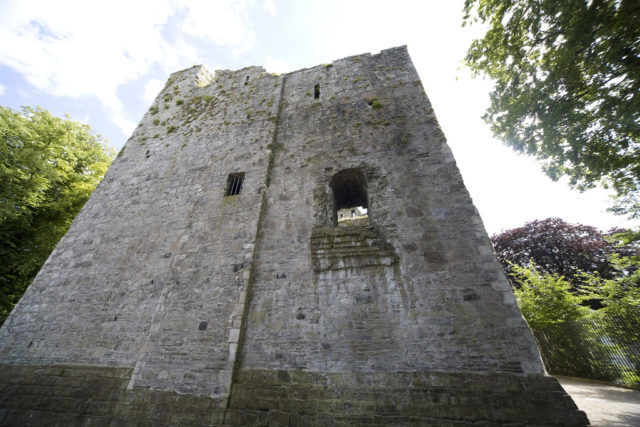
Maynooth
Castle is mid to late 12th Century Norman castle in Ireland which
stands at the entrance to the South Campus of Maynooth University. The
Castle was built by the very powerful Fitzgerald family around the early
13th century. The Kildare Fitzgerald’s emerged as one of the most power
families in Ireland with Maynooth Castle being one of the largest and
richest Earl’s houses. The castle was a stronghold of the 16th-century
historical figure Thomas FitzGerald, 10th Earl of Kildare better known
as Silken Thomas. A great stone castle which was founded in the early 13th century. SourceThe
area covered by modern Kildare was granted by Strongbow to Maurice
Fitzgerald in 1176. The castle was built at the junction of two streams
(“The Abhann Slad” and “The Lyreen”) and became the home of the
Fitzgerald family. The Castle was constructed at the most westerly point
of The Pale and apart from the Keep which was first built in the early
1200’s the remaining ruins seen today are additional fortifications
dating from the 1400’s.
Back in March, we talked about a 3,200-year old massive battle
that took place in the cultural ‘backwaters’ of Bronze Age northern
Europe (circa 13th century BC), and how this mysterious encounter
involved over 4,000 well-armed men from different regions, including
Poland, Holland, Scandinavia and even Southern Europe. Intriguingly
enough, there also seems to be a date-oriented significance relating to
13th century BC. Within a generation of these contemporary times, the
increasing scale of warfare and over-arching political affairs seemed to
have swept through many parts of the known world, including the eclipse
of the Mycenaean Greeks, the invasion of Egypt by the ‘sea-people’ and
the concurrent downfall of the Hittites. And furthermore, there is also
the literary narrative of the Trojan War – a large scale conflict (and
possibly the proverbial ‘last hurrah’ of the Mycenaeans) that pitted the
Greeks against the mystifying Trojans. Considering all these ‘mega’
events of the ancient times, archaeologist Eberhard Zangger has alluded
to what he calls ‘World War Zero’ – a seemingly cataclysmic scenario
that severely affected and ultimately shattered the thriving nature of
eastern Mediterranean Bronze Age civilizations.
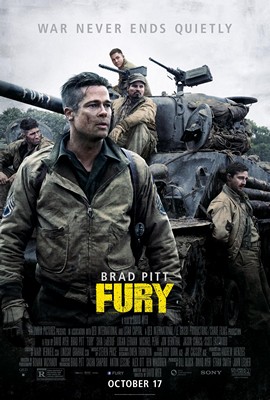
sourceWardaddy’s
veteran tankers wear the Combat Winter Uniform Jacket, aka “The Tanker
Jacket”, as part of their uniform. This would have been the
original-issue uniform that tankers at the time would have been provided
with. Norman wears the newer M1943 Field Jacket, distinguishable for
its many large pockets and greener color. The choice of uniform would
have reflected on the status of the men, with veterans wearing the
older-issue uniforms while replacements would have the newer issue.
Shia LaBeouf reportedly pulled out his own tooth and did not shower during filming.
The
cast underwent a rigorous month-long course of boot camp, in which the
final test was manning a real tank during a combat exercise. Despite
being considerably older than his cast mates, Brad Pitt made sure that
he participated in all of the physical training alongside the other
actors.
The archaeological world went into frenzy when researchers came across a medieval Viking grave ring inscribed with the word ‘Allah’.
This odd affair probably alluded to the extensive mercantile prowess of
the Vikings and the Rus, who frequently traded with (and raided) many
Mediterranean coastal towns. But as it turns out, historically the
incredible trade link between distant Scandinavia and Mediterranean was
not just limited to the middle ages. Archaeologists have recently come
across 3,600-year old bronze tools in Sweden that were meticulously
crafted from Mediterranean-sourced copper. The findings are complemented
by a depicted visual scope in Bohuslän, Sweden that possibly showcases
trading between ancient Scandinavia and the Mediterranean.
Mycenaeans and mysteries go hand in hand when it comes to the
realm of history. But fortunately, while Homeric works allude to the
vague idea of these ancient ‘Greeks’ of the Bronze Age, it is
tried-and-tested archaeology (with painstaking efforts from researchers
over the last century) that has brought forth a few surprising evidences
and clues that help in painting a ‘credible’ picture of the actual
Mycenaean culture and military. So without further ado, let us take a
gander at the ten incredible facts you should know about the Mycenaean
civilization and its warriors.
1) Mycenaean – a term ‘unknown’ to Classical authors
Mycenaean as a term was probably as much ‘mysterious’ to ancient
authors as the civilization is puzzling to modern scholars. In fact,
Classical authors was not even aware of any singular Mycenaean faction –
and given their Greek traditions, such writers often attributed the
specific geographically-limited tribes as their ancestors, like the
Achaeans and the Argives. Now of course, the greatest example of
Classical Greeks being inspired by their ‘ancestors’ comes from the epic
poetry of Homer in Iliad and Odyssey. And while the
popular historical sentiment hints at how Homer was actually talking
about the Mycenaeans, much of the Trojan War is set in a date that only
tentatively corresponds to Mycenaeans. To that end, rather than a
historical exposition of how Mycenaeans fought and behaved, the Iliad
should be viewed more as a compilation of folkloric traditions that
were passed down through generations from around 9th-8th century BC
(three centuries after the passing of the Mycenaeans).
Mycenaeans and mysteries go hand in hand when it comes to the
realm of history. But fortunately, while Homeric works allude to the
vague idea of these ancient ‘Greeks’ of the Bronze Age, it is
tried-and-tested archaeology (with painstaking efforts from researchers
over the last century) that has brought forth a few surprising evidences
and clues that help in painting a ‘credible’ picture of the actual
Mycenaean culture and military. So without further ado, let us take a
gander at the ten incredible facts you should know about the Mycenaean
civilization and its warriors.
During
the Civil War, while the Union and Confederate officers were busy
fighting a war, the women from both sides began gathering crucial
information about the enemy and served as a undercover agents. Over the
course of the war, both sides began recruiting women as operatives to
provide them with critical information on their enemy’s military
strategy.
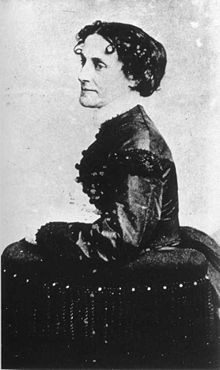
One of the most renowned Union spys was Elizabeth Van Lew.
Elizabeth
Van Lew was born on October 25, 1818, in Richmond, Virginia to John Van
Lew and Eliza Baker, whose father was Hilary Baker, mayor of
Philadelphia from 1796 to 1798. Elizabeth’s father came to Richmond in
1806 at the age of 16 and, within twenty years, had built up a
prosperous hardware business and owned several slaves.
Her
family sent Elizabeth to Philadelphia for her education at a Quaker
school, which reinformed her abolitionist sentiments. When her father
died in 1843, Elizabeth’s brother John Newton Van Lew took over the
business and the family freed their nine slaves, despite John’s
misgivings. Many of the emancipated slaves continued as paid servants
with the family, including the young future Union spy Mary Bowser. In
the depths of the 1837-44 depression, Elizabeth used her entire cash
inheritance of $10,000 (nearly $200,000 in current money) to purchase
and free some of their former slaves’ relatives. For years thereafter,
Elizabeth’s brother was a regular visitor to Richmond’s slave market,
where, when a family was about to be split up, he would purchase them
all, bring them home, and issue papers of manumission.
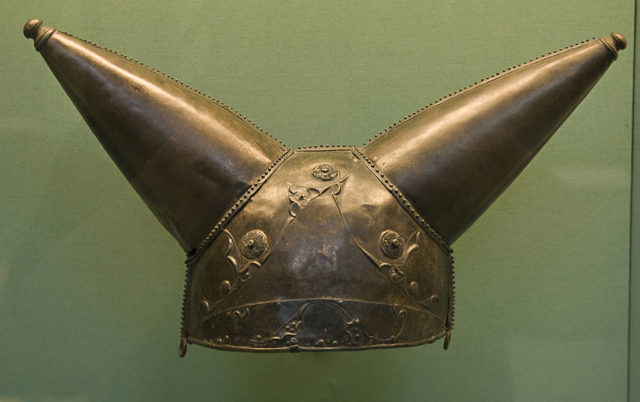
The
Waterloo Helmet is one of only three Iron Age helmets found in England
and also the only horned helmet dating to the Iron Age to have been
found anywhere in Europe. However, there are several Iron Age depictions
of people wearing horned helmets from elsewhere in Europe. The
pre-Roman ceremonial horned helmet with repoussé decoration in the La
Tène style, dating to circa 150–50 BC, that was found in 1868 in the
River Thames by Waterloo Bridge in London, England.
Horned helmet found in the River Thames at Waterloo Bridge, known as the Waterloo Helmet, now in the British Museum.SourceThe
helmet was dredged from the bed of the River Thames close to Waterloo
Bridge in 1868, and in March of the same year it was given on loan to
the British Museum by Thames Conservancy.
The main part of the
helmet is constructed from two sheets of bronze, one forming the front
and one the back of the helmet, that are riveted together at the sides
and top. A separate crescent-shaped bronze piece is riveted to the
bottom of the front sheet, and two conical bronze horns with terminal
knobs are riveted to the top of the helmet. A decorative strip with a
row of rivets overlays the join between the front and back sheets, and
goes around the base of the horns. At the end of the strip, on both
sides of the helmet, is a ring fitting for a chin-strap or cheek piece.
There are a number of small holes around the bottom edge, which may have
been used to attach a lining.
Αμερικανικά μαχητικά, που απογειώθηκαν από το αεροπλανοφόρο USS Harry
S Truman το οποίο βρίσκεται στη Μεσόγειο, έπληξαν την Παρασκευή θέσεις
των τζιχαντιστών του Ισλαμικού Κράτους στη Μέση Ανατολή.
Είναι η πρώτη φορά από τον πόλεμο στο Ιράκ το 2003 που αμερικανικό
αεροπλανοφόρο βομβαρδίζει στόχους στη Μέση Ανατολή από τη Μεσόγειο.
Το μαχητικά ξεκίνησαν τους βομβαρδισμούς μόλις το αεροπλανοφόρο USS
Harry S Truman εισήλθε στη Μεσόγειο μέσω της Διώρυγας του Σουέζ, όπως
ανακοίνωσε το αμερικανικό Πολεμικό Ναυτικό, χωρίς όμως να δώσει
περισσότερες λεπτομέρειες για τους στόχους που επλήγησαν ή αν αυτοί ήταν
στο Ιράκ και τη Συρία.
Ωστόσο, το Πολεμικό Ναυτικό των ΗΠΑ δεν έδωσε στη δημοσιότητα λεπτομέρειες για τους στόχους και το αποτέλεσμα των επιχειρήσεων.
tvxs.gr
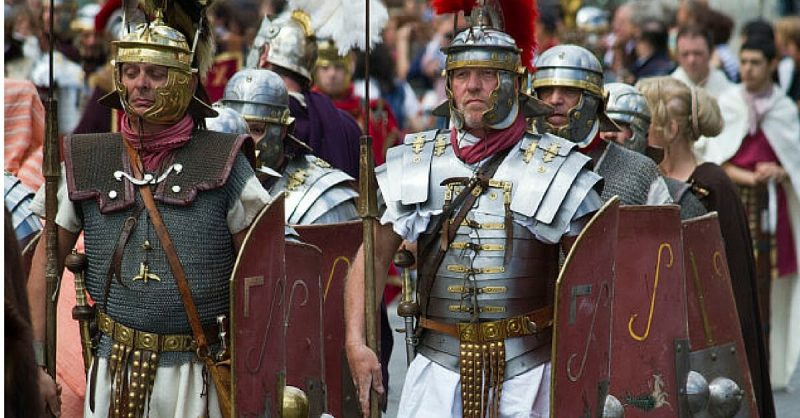
Roman
legions could become famous for their endurance or victories in war.
Though all were numbered, many also had names that recorded their
history, origins or achievements. These were often a mark of their
particular renown. Roman legionnaires were devoted to their legion and
were prepared to die to save its eagle standard.
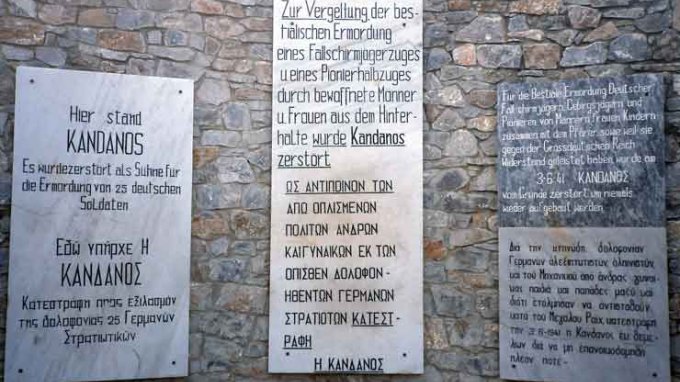
Και
εκείνες οι φοβερές μέρες για το νησί συνεχίζονται, με βομβαρδισμούς,
φωτιές, σκοτωμούς και αίμα πολύ. 25 Μαΐου 1941 η Κάνδανος καίγεται… για
να καταστραφεί ολοσχερώς στις 3 του Ιούνη .Μια ακόμα μαύρη σελίδα στην
ιστορία της Κρήτης!
Από το βράδυ ρίχνονται χιλιάδες προκηρύξεις στα Χανιά, τους
συνοικισμούς και τα χωριά και απειλούν τον πληθυσμό, ότι θα επιβάλουν
αυστηρές κυρώσεις σ’ αυτούς που πολεμούσαν τα…γερμανικά
στρατεύματα. Οι γύρω από την πόλη φρουρές αποσύρονται σε νέες λιγότερο
κοντινές προς την πόλη θέσεις, γεγονός που οδηγεί στην αποθάρρυνση και
επιτείνει το αίσθημα της ανασφάλειας. Οι βρετανικές δυνάμεις αποσύρονται
προς τη Σούδα. Οι καθυστερήσεις όμως που συνεπάγονται οι καταλήψεις των
χωριών και οικισμών γύρω από τα Χανιά, επιβραδύνουν σημαντικά τα σχέδια
των Γερμανών να φτάσουν στα Σφακιά και να παρεμποδίσουν τη φυγή των
Βρετανών. Ύστερα από συνεχείς επιθέσεις και αντεπιθέσεις καταλαμβάνεται ο
Γαλατάς με τη γνωστή υπεροχή των όπλων του αντιπάλου. Ήρθε όμως και η
σειρά της Κανδάνου. Μετά την εξολόθρευση ενός γερμανικού λόχου από τους
κατοίκους της, οι Γερμανοί επιτίθενται με αγριότητα. Βομβαρδίζεται η
Κάνδανος και παραδίνεται στη φωτιά, στενάζοντας κάτω από τους σκελετούς
των ερειπίων. Εκτελούν όσους από τους κατοίκους της Κανδάνου ή των
γειτονικών χωριών συναντούν, ανεξάρτητα από ηλικία και χωρίς καμία
διαδικασία. Στις 3 Ιουνίου θα επιστρέψουν και πάλι για να ολοκληρώσουν
την καταστροφή. Την ίδια μέρα ο πτέραρχος Στουντέντ προσγειώνεται στο
αεροδρόμιο Μάλεμε και διαπιστώνει προσωπικά το μέγεθος της καταστροφής
του δημιουργήματός του.
Many historians,
writers and philosophers have tried to look underneath the iron
mask of the prisoner, so as to find the truth, and resolve the story of
the mysterious prison inmate from the 17th century.
Voltaire
claimed that the prisoner wore an iron mask and was the older,
illegitimate brother of Louis XIV. In the late 1840s, writer Alexandre
Dumas elaborated on the theme in the final installment of his Three Musketeers
saga: here the prisoner is forced to wear an iron mask and is Louis
XIV’s identical twin. Dumas also presented a review of the ideas about
the prisoner extant in his time (circa 1840) in the chapter “L’homme au
masque de fer” of the sixth volume of his Crimes Célèbres.
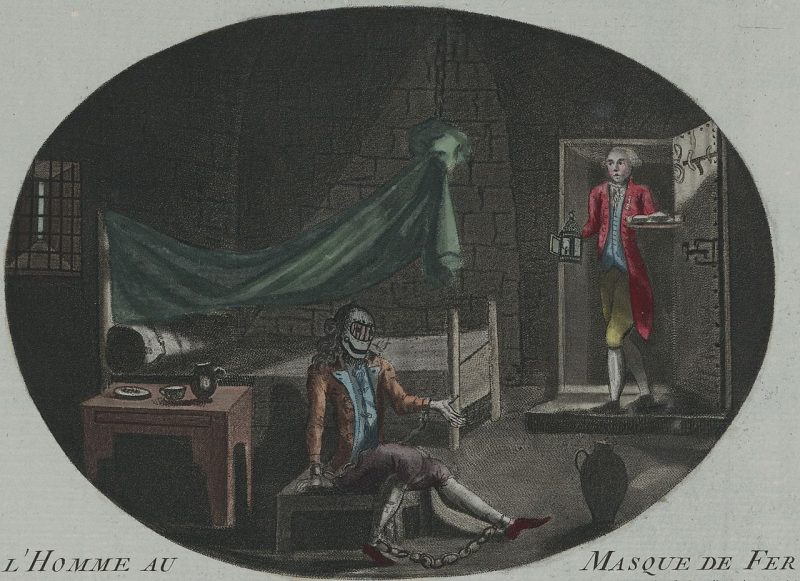
The Man in the Iron Mask or L’Homme au Masque de Fer is
the offical name given to the prisoner who was arrested as Eustache
Dauger in 1669 or 1670 and held in a number of jails, including the
Bastille and the Fortress of Pignerol (today Pinerolo, Italy). He was
held in the custody of the same jailer, Bénigne Dauvergne de Saint-Mars,
for a period of 34 years. He died on 19 November 1703, under the name
of Marchioly, during the reign of Louis XIV of France (1643–1715). The
possible identity of this man has been thoroughly discussed and has been
the subject of many books, as no one ever saw his face because it was
hidden by a mask of black velvet cloth.
The Man in the Iron Mask. Anonymous print (etching and mezzotint, hand-colored) from 1789..SourceThe
earliest surviving records of the masked prisoner are from late July
1669, when Louis XIV’s minister the Marquis de Louvois sent a letter to
Bénigne Dauvergne de Saint-Mars, governor of the prison of Pignerol,
then part of France. In his letter, Louvois informed Saint-Mars that a
prisoner named Eustache Dauger was due to arrive in the next month or
so.
Louvois instructed Saint-Mars to prepare a cell with multiple
doors, one closing upon the other, which were to prevent anyone from the
outside listening in. Saint-Mars himself was to see Dauger only once a
day in order to provide food and whatever else he needed. Dauger was
also to be told that if he, Dauger, spoke of anything other than his
immediate needs he would be killed, but, according to Louvois, the
prisoner should not require much since he was “only a valet”.
Looking
back at WWII there have been four decisions made that, in the end, did
not work out to the Axis advantage. Of course, you can argue that
starting the war in the first place was the biggest mistake made. But,
for the sake of the argument, let us look at four mistakes that were
made after the war was started.
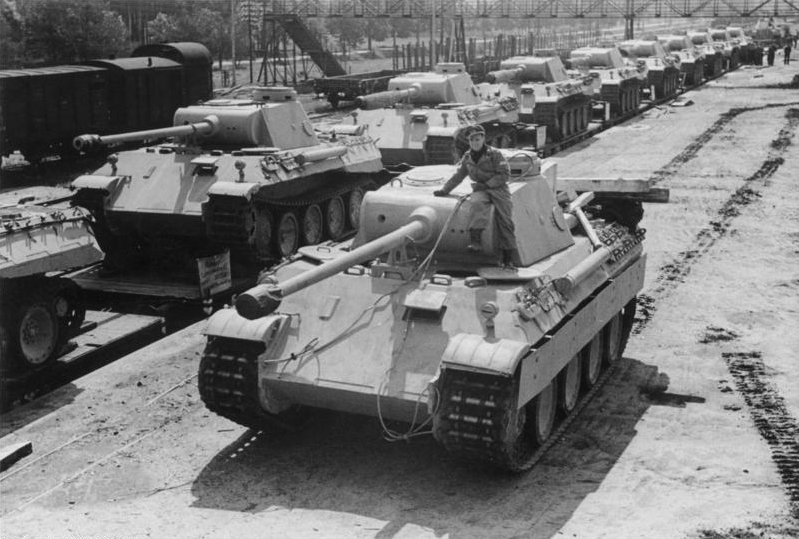
Zentralbild,
II. Weltkrieg 19139-45 Der von der faschistischen deutschen Wehrmacht
während des Krieges entwickelte neue Panzerkampfwagen Typ "Panther".
UBz: die Verladung neuer "Panther"-Panzerkampfwagen zum Transport an die
Front (1943).
Panther Ausf. D tanks, 1943. The D model can best be recognized by the drum-shaped cupola.Via Wikipedia / Bundesarchiv
1) Over 6000 Panthers have been built by the Germans but more surprisingly, 9 were built by the British Army in 1945-1946.
2)
The full name was the Panzerkampfwagen V Panther and had the ordnance
inventory designation of Sd.Kfz. 171. But on 27 February 1944, Hitler
ordered that the Roman numeral “V” be deleted from the designation.
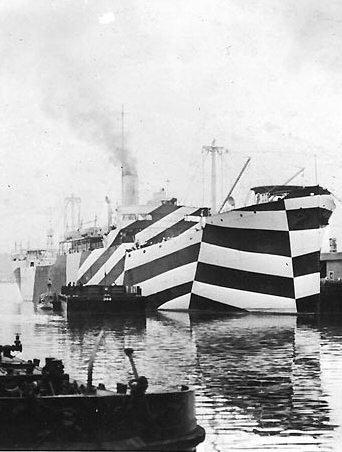
Nature always knows best. That dazzle did indeed work along these lines is suggested by the testimony of a U-boat captain: It
was not until she was within half a mile that I could make out she was
one ship [not several] steering a course at right angles, crossing from
starboard to port. The dark painted stripes on her after part made her
stern appear her bow, and a broad cut of green paint amidships looks
like a patch of water. The weather was bright and visibility good; this
was the best camouflage I have ever seen
U-boats
were equipped with two periscopes, one for searching out enemy ships,
the other with a more powerful lens but narrower field of vision for use
in combat. Though the use of periscopes allowed the U-boat to remain
safely underwater while carrying out an attack, looking straight out at
misty sea level, which was rarely level at all made accurate vision very
difficult. Hitting anything with a torpedo this way is as much a
testament to luck as it is to skill. Wilkinson advocated “masses of strongly contrasted colour” to confuse the enemy about a ship’s heading.Even
so there were those among the allies who thought they knew how to shift
the odds even further. Naval ships were already being painted gray to
blend in between the ocean and sky as much as possible. But a ship at
sea cannot really be camouflaged as colors change along with the light
throughout the day and when silhouetted against a blank horizon it is
impossible to hide. But since ships were almost always moving targets
U-boat commanders had to aim their torpedos at where they thought the
ship would be when it reached it, not at the point where the ship was
seen. This involved careful calculation of distance, heading, and speed
based on the coincidence principal, and this is where Norman Wilkinson
thought they could be deceived.
What
kind of technologies do the governments and militaries of the world
possess? What highly classified project have the public been blissfully
unaware of? Anti-gravity? Death rays? Cloaking devices? Telekinetics?
Telekinesis? Alien contact?
Well,
we’ll leave all those questions to the conspiracy theorists and sci-fi
aficionados among us. But there is one, very interesting story that,
despite the facts and testimonies presented against it, has a hold on
people’s imagination It is the story of when the U.S. destroyer escort
USS Eldridge supposedly disappeared: The Philadelphia Experiment.
Depending
on who you ask, all of this is a deluded hoax or the U.S. Navy either
found a way to bend light around an entire ship or managed to teleport
it to Norfolk Virginia and back. The alleged incidents took place in the
mid to late 1943 in the Philadelphia Naval Shipyard.
Γιώργος Χατζής
«Ο Κωνσταντίνος παρά την συγκινητική ομιλία προς τους πολεμιστές του,
γνωρίζει ότι η πτώση της Πόλεως είναι αναπόφευκτη. Σηκώνεται χαράματα,
ανεβαίνει στα τείχη για να επιθεωρήσει το στρατό του και να
αποχαιρετήσει για τελευταία φορά την Βασιλεύουσα που χάνεται. Βλέπει
απέναντί του τα στίφη των αιμοδιψών απίστων και αντιλαμβάνεται με
ευκολία τα επερχόμενα. Προσεύχεται για
τελευταία φορά, ενώ εικόνες άγριων συγκρούσεων, σφαγών, φρίκης και
ανείπωτου πόνου περνάνε μπροστά από τα μάτια του. Αναλογίζεται τη μοίρα
της Ρωμιοσύνης μετά από εκείνη την ημέρα.
Σκοτάδι, μαυρίλα παντού, σκλαβοπάζαρα, μετατροπή εκκλησιών σε τζαμιά,
εξισλαμισμοί, ξεριζωμοί χωριών ολόκληρων, μαρτύρια και δημιουργία μιας
απέραντης στρατιάς Νεομαρτύρων και Αγίων. Θα χαθεί η Ρωμιοσύνη άραγε
μετά από την Άλωση; Η λογική λέει ναι. Ο ίδιος δεν θέλει να το δεχθεί
όμως. Ο Θεός είναι μεγάλος. Δεν μπορεί, δεν γίνεται το αίμα των
Νεομαρτύρων να πάει χαμένο. Αυτό το αίμα, αναμεμιγμένο με το δικό του θα
ποτίσει ολόκληρη την Ρωμιοσύνη για να αναγεννηθεί μέσα από τις στάχτες
της.
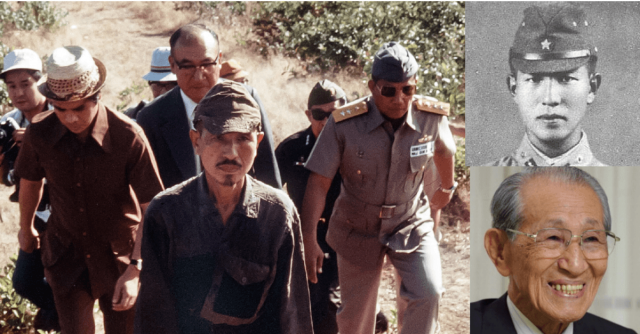
Hiroo
Onoda was a Japanese soldier a brave and an amazing survivor. However,
he was surviving and fighting for a war that has long since ended. He
was fighting for his country, in what he believed was still World War
II, because he did not know he was fighting for it 29 years too long.



 The difference between an act of terrorism and an act carried
out by a loner with a history of mental illness has finally been
identified.
The difference between an act of terrorism and an act carried
out by a loner with a history of mental illness has finally been
identified. Ο
τραγικός θάνατος της Τζο Κοξ, της πολιτικού που ήταν υπέρ της
Ευρωπαϊκής Ένωσης, σόκαρε τη Βρετανία και θα μπορούσε να στρέψει την
κοινή γνώμη προς την ασφάλεια της ενιαίας οικονομικής ένωσης.
Ο
τραγικός θάνατος της Τζο Κοξ, της πολιτικού που ήταν υπέρ της
Ευρωπαϊκής Ένωσης, σόκαρε τη Βρετανία και θα μπορούσε να στρέψει την
κοινή γνώμη προς την ασφάλεια της ενιαίας οικονομικής ένωσης.








 Και
εκείνες οι φοβερές μέρες για το νησί συνεχίζονται, με βομβαρδισμούς,
φωτιές, σκοτωμούς και αίμα πολύ. 25 Μαΐου 1941 η Κάνδανος καίγεται… για
να καταστραφεί ολοσχερώς στις 3 του Ιούνη .Μια ακόμα μαύρη σελίδα στην
ιστορία της Κρήτης!
Και
εκείνες οι φοβερές μέρες για το νησί συνεχίζονται, με βομβαρδισμούς,
φωτιές, σκοτωμούς και αίμα πολύ. 25 Μαΐου 1941 η Κάνδανος καίγεται… για
να καταστραφεί ολοσχερώς στις 3 του Ιούνη .Μια ακόμα μαύρη σελίδα στην
ιστορία της Κρήτης!