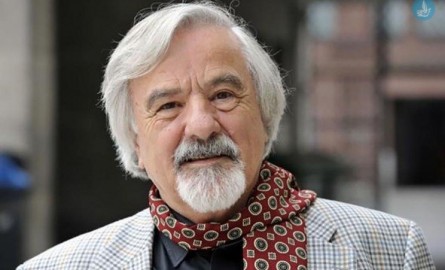
Chiune
Sugihara is not a name that immediately springs to mind when thinking
of Japanese Second World War heroes, but his story is remarkable.
Born
in January 1900 in the small Japanese town of Yaotsu, Chiune was an
excellent scholar. He graduated from high school with top marks. He
gained a place at the famous Waseda University in Tokyo where he studied
English. He paid his way through university by taking several part-time
jobs.
When he was 19, Sugihara discovered that the Japanese
Foreign Ministry was looking for people who wanted to work in the
overseas diplomatic service, and he applied. The entrance exam was
notoriously difficult, but Chiune passed. He studied Russian at a
Manchurian University, graduating with an honours degree when he was 24.
The
specter of 1918 is haunting the Nazi party, as Himmler and his Gestapo
are turned loose on the German people in a desperate attempt to hold the
home front together.
Our
enemy has become our protector.” Thus one German visiting Stockholm
reacted when told that Heinrich Himmler had been appointed
Reichsminister of the Interior. Even Hitler knows that the white-headed,
uncultivated, bespectacled man with the moist, slack handshake is
disliked among Germans. Only absolute necessity put this man in the ugly
palace on the Koenigsplatz in Berlin. About 8,000,000 foreign
workers, several millions of evacuees constituted a gravely disquieting
problem for the party leaders. Germany’s home front has become her
second front.
Unearthed
from an archive in the German city of Dresden is a leaflet with the
printed title stating A Nazi Guide to Christmas. The said pamphlet lists
a number of instructions on how a Nazi party member should precisely
decorate and celebrate Christmas. What’s more, in this said leaflet, the
Virgin Mary is turned German and the archangel Gabriel into an Aryan
goddess.
The leaflet A Nazi Guide to Christmas is
composed of twenty pages filled with clear-cut instructions for Nazi
Party members on how to celebrate their Christmas. It was printed way
back in 1937 by the Nazi Party’s Saxony branch, the Heimatwerk
organization. This arm of the party was organized the year before the
pamphlet was published. It was formed as the “promoter of Saxon Germanic
culture as a shining example of true Germanness”.
There never was an intention to mass produce the A Nazi Guide to Christmas leaflet.
However, it was distributed among the Nazi Party’s bureaucrats and in
turn, they were the ones who would disseminate the information to the
population making sure that the latter follow on to the new way things
had to be.
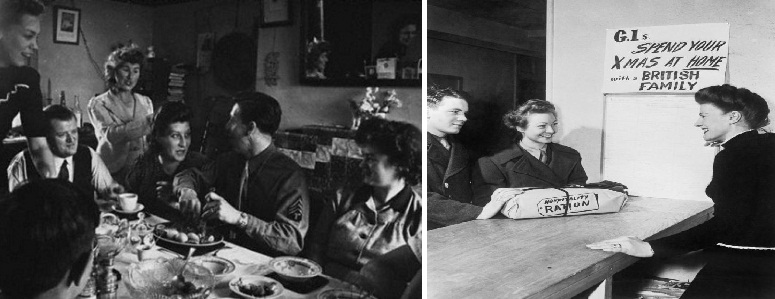
Α)Christmas with GIs: How American Soldiers Took The Place of British Fighting Men During WWII
GI
Christmas WWII (Left: A Gi spending his Christmas with a British
family; Right: The actual poster put around the base urging GIs to spend
their holidays with British families.)
American
GIs sent to Britain during the height of WWII were repeatedly described
as “overpaid, oversexed and over here” but at least, on Christmas they
made many a British families happy with their presence during the
holiday celebrations. The main reason – they brought with them extra
rations as well as the much sought after Coca-Cola and nylon stockings.
With
British soldiers away battling on the Western Front, their families
left in Britain were encouraged to invite the US soldiers stationed in
their country over to celebrate Christmas. This they readily did because
they knew the soldiers would be bringing extra food with them. As for
the American GIs in the foreign land, it was their way of escaping the
difficulties brought about by being away from home on an occasion that
would have been best spent with families and friends.
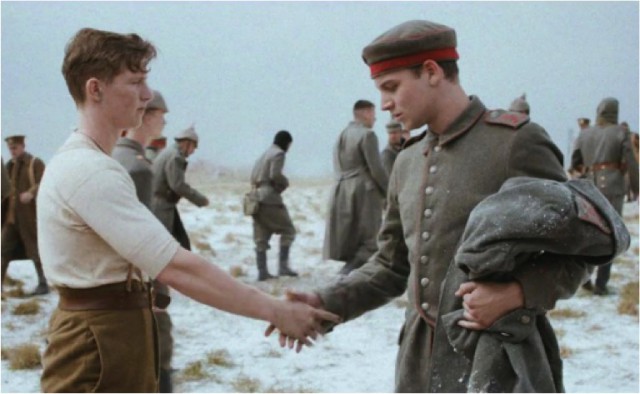
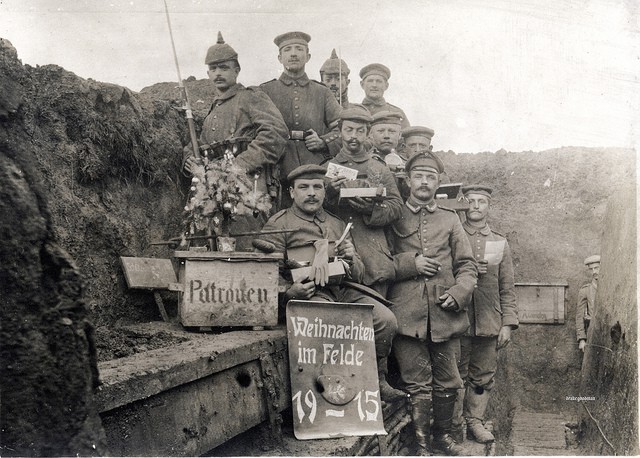
Α)The Christmas Truce of 1914 – When the Impossible Happened
Still from last years Sainsbury’s Christmas truce advertWWI
was most notable for trench warfare, the conditions of which were often
so horrific that it’s hard to imagine what these soldiers endured, day
after day. Despite such horrors, something strange happened on 25
December 1914, one that threatened the governments of both sides and the
progress of the war. The threat? Christmas.
The
Germans started the war in July 1914. Having taken Belgium and a slice
of France, they were confident they’d take Paris just as quickly and
that the whole thing would be over by Christmas. The British and the
French, as well as their allies, thought the same. They were all wrong.
The
Allies repelled the German advance at the First Battle of the Marne
from September 5 to 12, forcing them to retreat to the Aisne valley
where they dug themselves in. The Allies reached them on September 13,
and the First Battle of the Aisne began. It ended in a stalemate.
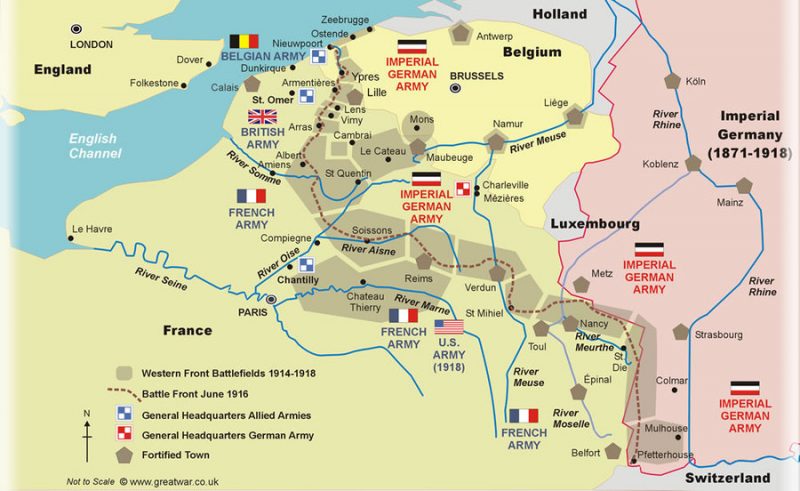
Map of the trenches that defined the Western FrontThe
Germans wanted to reach the Sea; the Allies wanted to prevent that, so
each dug trenches to try to outflank the other, separated by several
meters called no man’s land. And so it went: the Allies blocking the
Germans by digging trenches further east and west, and the Germans doing
the same, till both reached the North Sea.
By the start of
December, each side had dug over 250 kilometers of trenches and had
suffered heavy losses in the first months of the war. Britain lost
almost 100,000 men. In August alone, France had lost double that number,
roughly the same as Germany.
Not all the deaths were due to
combat, however. Disease was rampant in the cold, the cramped and
unsanitary conditions, as well as the constant mud and water. There was
also trench foot: when feet are constantly soaked. Left untreated,
gangrene and death results.
Sometimes,
trenches caved in, burying the men they were built to protect. But even
the best-made ones could be death traps because if hit directly, they
focused bomb blasts, causing more damage than if they had gone off in
open spaces. Often, the men could only watch helplessly as the bombs
fell toward them – unable to run because they were so tightly packed
together.
Finally, there was the propaganda. Each portrayed the
other as unfeeling brutes because it’s easier to kill a person if you
stop seeing them as human. Despite this, there were occasional,
hour-long ceasefires so that everyone could dispose of their dead.
On
the evening of December 24, however, the Twilight Zone descended. No
one is sure where it started exactly, but it’s believed the first
incidents began in Flanders before spreading to the rest of the Western
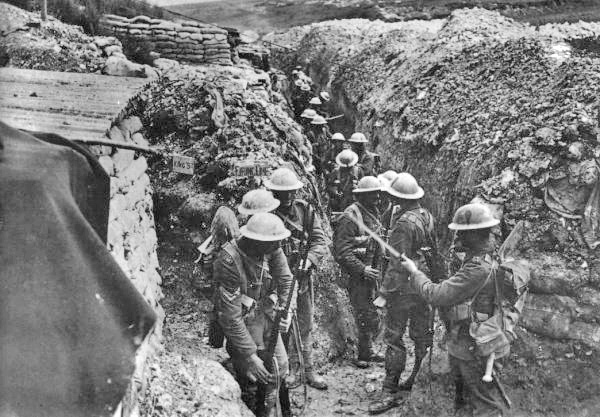
Front. The Lancashire Fusiliers attaching bayonets to their guns in preparation for the Battle of Albert at the Somme in 1916The
Germans started singing Christmas carols. Then flashlights and
cigarette lighters came on – a dangerous thing to do since it allowed
the Brits to pinpoint exact enemy positions.
But while most of the
Brits understood no German, they recognized the tunes. Some even sang
along in English. As they did, more flashlights and lighters were lit
among the German line. None of the Brits had the heart to shoot them.
On
Christmas morning, Pioneer Sergeant J.J. ‘Nobby’ Hall, stuck a sign on a
stick which read “Merry Christmas,” and waved it over the trench. A
similar sign was waved over the German line before it popped back under.
Then
at noon, a German jumped over his trench as British rifles took aim.
The man put his hands up and began walking unarmed across no man’s land.
Private Ike Sawyer went out to meet him. In the middle, they shook
hands. From the German line, more soldiers stood with their hands up and
the Brits met them in the middle.
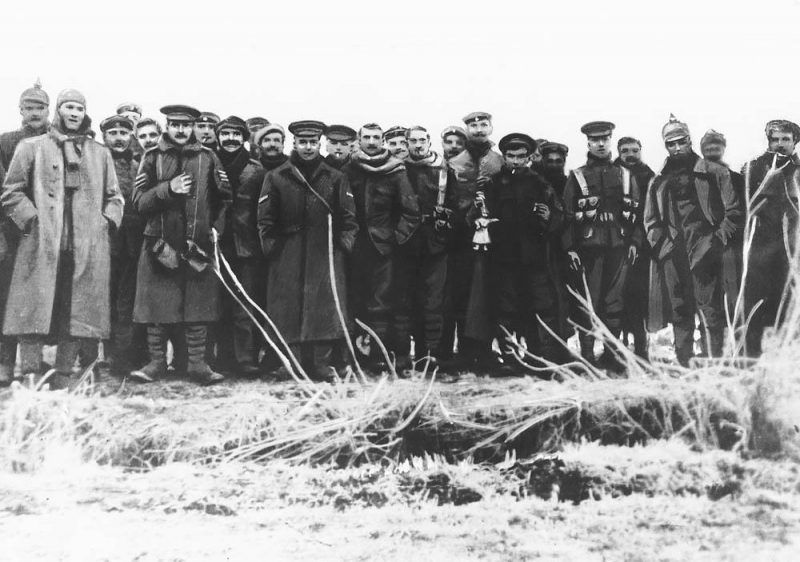
British and German troops meeting between the trenches at the Bridoux-Rouge Banc SectorSome
Germans stuck candles in small pine trees and used that as a white flag
while they crossed over. Gifts of food, cigarettes and clothes were
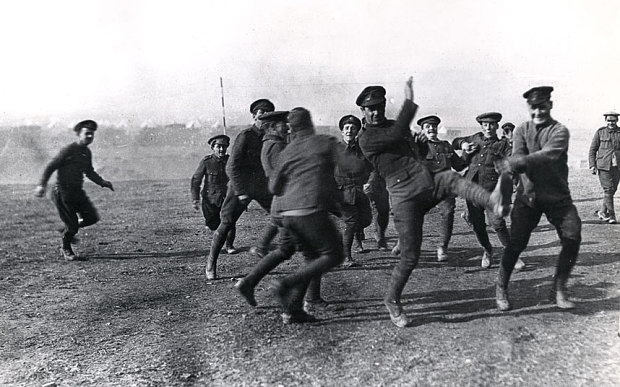
exchanged. Football games were played, and the Germans who played
against the Scotts couldn’t stop laughing when they found out the latter
wore nothing under their kilts.
Such
camaraderie only happened in the British sectors, however. The French
were in no mood to fraternize with the enemy that had seized portions of
their country. On the Eastern Front, the Russians (who were allied with
the British and the French) did not celebrate Christmas till January 7.
Since
many of the Germans worked in Britain before the war, most spoke some
English. Some had even met, such as Captain Clifton Stockwell, who found
himself shaking hands with a German soldier that had waitered at a
restaurant he frequented. Another Brit let his pre-war German barber cut
his hair and shave his beard.
A football game between enemies during the Christmas TruceDespite
the camaraderie, they had an unspoken rule: neither could see the
trenches of the other to prevent revealing their weaponry and layout.
Not all the British-German fronts saw peace, however, and fought through
Christmas Day.
The governments of both sides were mortified. They
threatened dire consequences for those who fraternized with the enemy,
but it did no good for those who were already on friendly terms. The
greatest fear was that the war might end on the Western Front. Worse,
with anti-royalist and pro-communist sentiments growing in some
countries, what would happen if soldiers dropped their weapons and
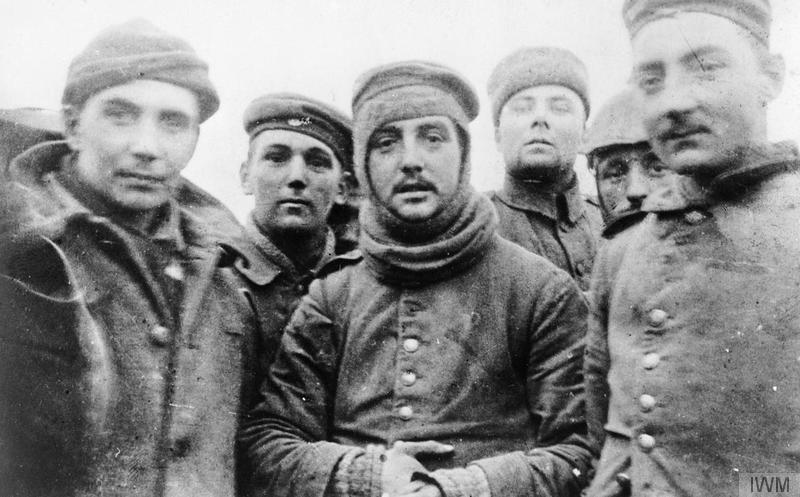
brokered a permanent peace? The German soldier in the middle is wearing a British balaclava, a gift from the British soldiers he is posing withFor
those who did reach out, the truce usually held until December 26.
Along some fronts, it held out longer, but for Private Archibald
Stanley, it ended the day after Christmas. His commanding officer,
fearing a mutiny, allowed the truce to hold on Christmas. The next day,
he ordered his men to fire at any Germans still standing on no man’s
land. He was ignored.
By
late afternoon, fearing he was losing control, the officer shot and
killed an unarmed German soldier. Things went downhill from there. As
the war progressed and new weapons like poison gas were used, neither
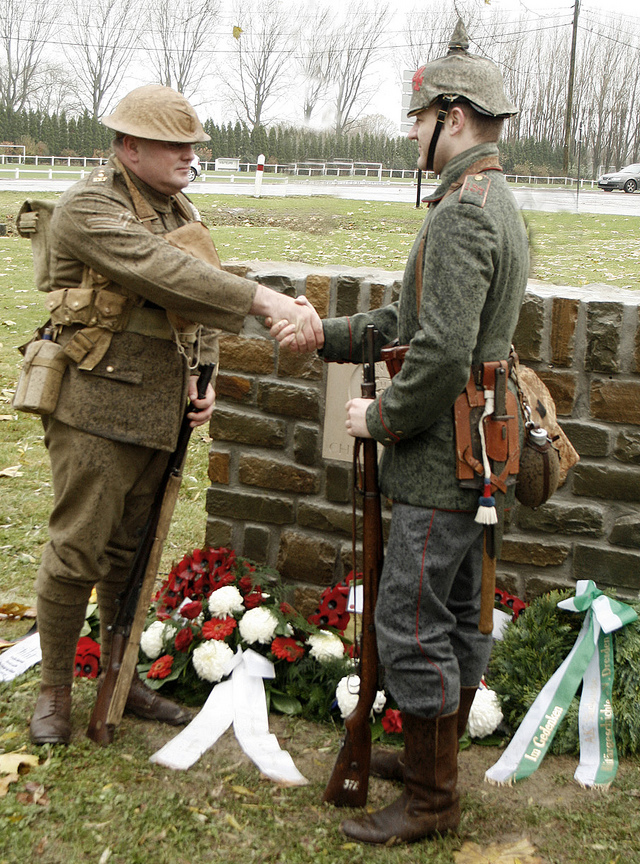
side felt any desire for a truce. Peter
Knight and Stefan Langheinrich, descendants of WWI soldiers, shake
hands on 11 November 2008 at the Christmas Truce monument in
Frelinghien, France to reenact the eventOn 11,
November 2008, a monument to the Christmas Truce was set up in
Frelinghien, France. It was attended by the descendants of those WWI
veterans who dared to let the spirit of Christmas infect them, if only
for a day or two.
www.warhistoryonline.com
===============================
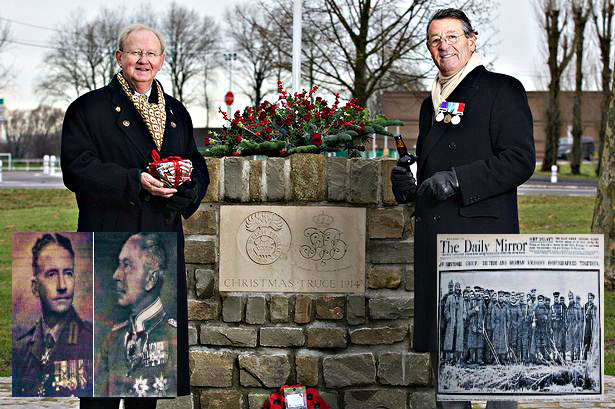
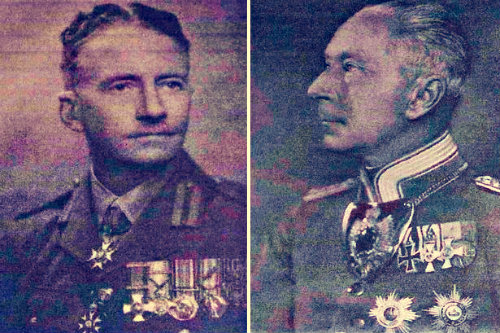
B)Christmas Truce Story: Ordered to Kill Each Other, British Captain and German Baron Shared Beer Instead
One
hundred years ago, instead of killing each other as they were ordered
to do, British Captain Clifton Stockwell and German Baron Maximillian
von Sinner instead had a toast at the midst of the Great War. A century
past, their grand-kids – both involved in military service – met in the
same spot to commemorate their grandfathers’ action.
The Orders
On
Christmas morning some ten decades ago, two men from the Great War’s
warring parties were commanded to kill each other. However, when they
met on No Man’s Land, no blood was shed. Instead, they exchanged gifts
of plum pudding and shared a beer.
The guns fell silent that day
as British Captain Clifton Stockwell and German Baron Maximillian von
Sinner negotiated a truce lasting for a day all the while toasting each
other’s good health.
Soon after, the two parties were engaged in a
game of football with the British troops being trashed by the Germans
when it came to goals. Meanwhile, the officers smoked cigars and talked
to each other showing to each other pictures of their families back
home.
The 1914 ceasefire occurred Frelinghien in northeastern
France. Starting at exactly eleven in the morning on Christmas day that
year, a German soldier started it by walking towards the trench of
the Royal Welsh Fusiliers with his hands up in the air. A British
soldier climbed out of the trenches to meet that German soldier despite
his officers’ attempts to stop him. When they did meet, the German
serviceman presented the latter with a box of cigars.
Witnessing
the scene unfold, the rest of the Fusiliers, with eagerness, wanted to
come up as well. So, Captain Stockwell took upon himself the task of
making contact with the officers of the other side. He called out to
them to meet him.
It was Baron von Sinner who answered his call.
Upon meeting on No Man’s Land, the two agreed to a truce that would last
until midnight. With this agreement, the German soldiers belonging to
the 134th Saxon Infantry rolled out three barrels of beer – taken from a
nearby French brewery – and shared them with the British troops.
Both
sides went on to make large banners wishing each other to have a merry
season that they, then, put up just above their trenches.
Clifton
and Maximillian, the two officers of the warring sides, who decided on a
truce, shared plum pudding and a beer toast during the Great War.
Great
War ended with both Stockwell and von Sinner surviving. Nevertheless,
they never told their families about that particular occurrence.
Stockwell just wrote about it in his war diary. This same journal was
eventually used by the Royal Welsh for the compilation of its regimental
history.
Aside from his account about the truce in his journal,
it is also believed that Stockwell wrote this poem alluding to that
one-day truce on Christmas day of 1914.
Entitled Christmas 1914, it goes as follows:
Twas a frosty Xmas morning In our trenches on the Lys And a fog was hanging thick along the fields You could hear the Bosches singing But no Xmas bells were ringing ’Cept the tinkle of the bullets on shields. When the fog at last had lifted And the Bosches glances shifted On our parapet in front of them they saw; On a notice board in writing From the men that they were fighting “Merry Xmas” and Kaisers heads galore. Then the Bosches started shouting “Will you come and take an outing?” And a row of heads along our line appear For two Saxons greatly daring To our trenches were boldly faring With a barrel of the most indifferent beer. Thus when after-dinner came Both sides did more of the same And their trenches boldly left and came abrad And with barrels full of beer And something of good cheer Made an effort to arrive at an accord. Then the officers conferred While our rations were transferred: To a truce between the two they did agree, That till dawn the following day None should shoot or forward stray Whilst our notice board the enemy could see. The Comeback
A
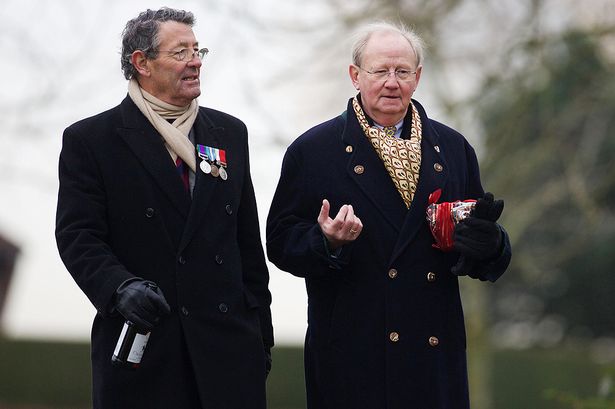
century after that Christmas truce, the grandsons of the two officers
returned to the same spot where they stood, they talked and toasted beer
bearing the same items their grandfathers brought that day — beer and
plum pudding.
In 2014, 71-year-old retired British Major Miles
Stockwell and 63-year-old retired German Colonel Joachim Freiherr von
Sinner visited the same location where their grandpas met. Both men had
followed in their ancestors’ footsteps and had served in the respective
military organizations of their countries.
According to Miles, who
also served in the Royal Welsh, the story between their grandfathers is
amazing. They had been ordered never to fraternize with the enemy that
was why there were never pictures taken of that day and the two of them
together.
He went on to say that deciding to ignore the orders of
the ones above them had been risky but still they pushed forward to meet
on the muddy No Man’s Land while their men cheered in the background.
Miles added that his grandfather didn’t have anything to give as a peace
offering that day, only a plum pudding he had been set, so he fetched
that and handed it to the German baron.
Miles
and Joachim honored their grandfathers in 2014 by bringing and
exchanging plum pudding and beer on the exact spot where their ancestors
stood a century ago.
The latter, on the other hand, had two
beers in hand, and he gave one to the British captain. They toasted
each other’s health, decided on having a short truce, sat on the flat
ground drinking from their beer bottles and smoking cigar.
Miles,
then, pointed out that this story just goes on to show what possible
things happen when people just stop fighting and start talking.
www.warhistoryonline.com
========================================
Γ)Watch: Christmas In The Trenches (1914-1918)
The
Christmas truce in 1914 was a series of widespread but unofficial
ceasefires along the Western Front around Christmas 1914. In the week
leading up to the holiday, German and British soldiers crossed trenches
to exchange seasonal greetings and talk.
In
areas, men from both sides ventured into no man’s land on Christmas Eve
and Christmas Day to mingle and exchange food and souvenirs. There were
joint burial ceremonies and prisoner swaps while several meetings ended
in carol-singing. Men played games of football with one another, giving
one of the most enduring images of the truce. However, the peaceful
behaviour was not ubiquitous; fighting continued in some sectors while
in others the sides settled on little more than arrangements to recover
bodies.
In December 1915, there were explicit orders by the Allied
commanders to forestall any repeat of the previous Christmas truce.
Individual units were encouraged to mount raids and harass the enemy
line, while communicating with the enemy was discouraged by artillery
barrages along the front line throughout the day. The prohibition was
not completely effective, however, and a small number of brief truces
occurred.
An
eyewitness account of one truce, by Llewelyn Wyn Griffith, recorded
that after a night of exchanging carols, dawn on Christmas Day saw a
“rush of men from both sides … [and] a feverish exchange of souvenirs”
before the men were quickly called back by their officers, with offers
to hold a ceasefire for the day and to play a football match.
It
came to nothing, as the brigade commander threatened repercussions for
the lack of discipline, and insisted on a resumption of firing in the
afternoon. Another member of Griffith’s battalion, Bertie Felstead,
later recalled that one man had produced a football, resulting in “a
free-for-all; there could have been 50 on each side” before they were
ordered back.
In the Decembers of 1916 and 1917, German overtures
to the British for truces were recorded without any success. In some
French sectors, singing and an exchange of thrown gifts was occasionally
recorded though these may simply have reflected a seasonal extension of
the live-and-let-live approach common in the trenches.
Christmas
In The Trenches – cooking his pudding over a ‘fire devil’ in the
trenches and enjoying Xmas fare under adverse conditions.
British
soldiers stand in a trench around a bucket sitting on a grill over a
small fire; someone off-camera hands a tin can to one of the men. He
puts the can inside the bucket (a primitive double-boiler is the
invention here), later a soldier removes a can from the bucket.
Shot
of the enterprising cook dishing up tastes of the pudding to other
soldiers; who stand in line in the trench. Shot of group of soldiers
facing camera and eating; with big smiles.
The soldier in the front has a large moustache and is enjoying his Christmas pudding!
www.warhistoryonline.com
[embed]https://youtu.be/1emCCXegsKk[/embed]
During
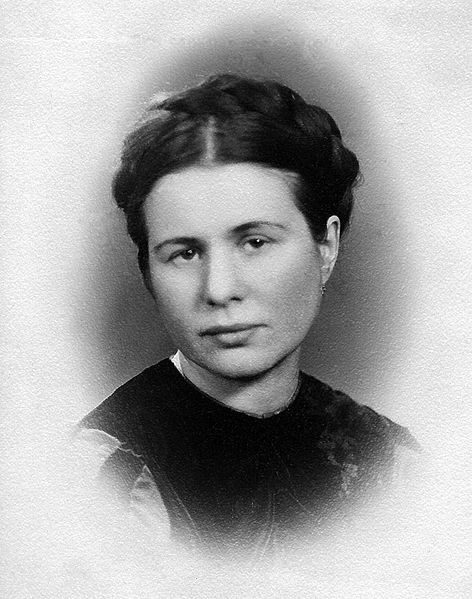
WWII, Irena Sendlerowa, a Catholic Polish social worker, saved 2,500
Jewish children from death. That’s more than Oscar Schindler managed
with 1,200. Though recognized by Yad Vashem in 1965 as being one of the Righteous Among the Nations (a non-Jew who saved Jews during the Holocaust), the rest of the world knew virtually nothing about her.
At
least, until 1999 when students at a rural Kansas high school were
looking for material for their school play. Thanks to them, Sendlerowa
was nominated for a Nobel Peace Prize but lost it to Al Gore.
Sendlerowa
was born on 15 February 1910 in the town of Otwock. Her father was a
doctor whose motto was, “jump into the water to save someone drowning,
whether or not you can swim.” He did just that, which was why he was the
only doctor in Otwock who’d treat Jews.
Irena Sendlerowa in 1942In
1935, Poland mandated ghetto benches in schools, requiring Jews to sit
in assigned seats away from non-Jews. Many protested this by refusing to
sit down in class. Sendlerowa took up Polish Literature at the Warsaw
University and joined these protests, for which she was suspended for
three years. Despite this, she earned her degree, joined the Polish
Socialist Party, and found a job with the Warsaw Social Welfare
Department.
Images
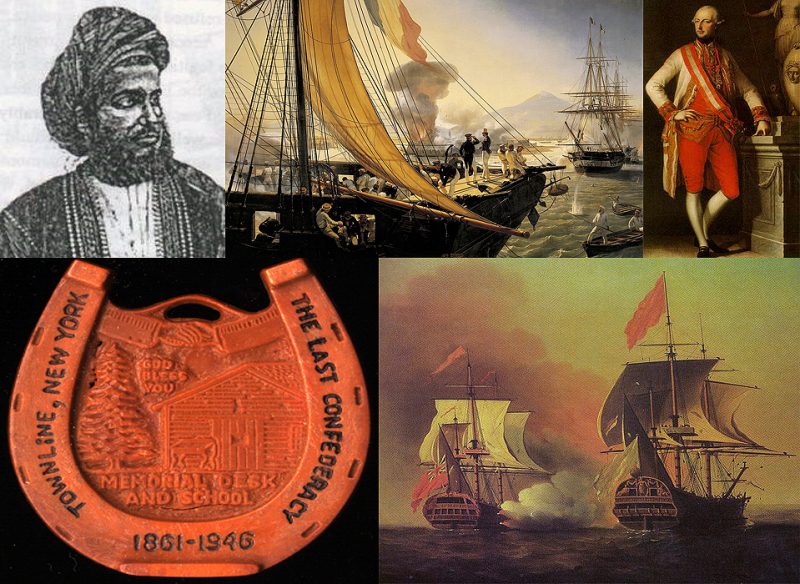
used (Clockwise from top left): (1) Sultan Kalid Barghash of Zanzibar
who ruled from August 25 to August 27, 1896 (2) The French forces
bombing and capturing the Mexican fortress of San Juan de Ulúa in 1838
(3) Holy Roman Emperor of the late 1700s, Joseph II, initiator of the
Kettle War (4) A British Warship (Left) capturing a Spanish trading ship
in 1743 during The War of Jenkin’s Ear, painted by a British painter
Samuel Scott (5) Town Line, A Town in New Yorkcalls itself ‘the last Confederacy’
War
can be defined as an organized and often extended conflict between
states or non-state entities. Some people would consider war as a
serious and glorious struggle over some important issues. But there had
been unconventional wars in the history of mankind that could be termed
as huge wastes of time.
It
is widely known that the Spartans produced some of the most brutally
efficient warriors of all time, but how did they gain that reputation?
How did they hold on to their culture built solely around war with
almost all other work falling to slaves? Sparta is remembered not just
because of their army, but because of their little-discussed empire, the
Spartans commanded large areas of Greece and all of Greece at one
point. What they achieved with their power allowed them to have the
reputation as warriors and also have the proven results.
The
Spartans resided in the large Peloponnese Peninsula of Greece, far
inland and among the mountains. With no real need or a suitable location
for a navy, the Spartans focused on their land army. As Sparta grew in
power, they sought power over their neighbors. One such neighbor was the
city of Argos, with their reputation for outstanding warriors.
Not only did the Pearl Harbor attack of December 7th,
1941 deal a devastating blow to the United States’ Navy and draw the
nation into World War II, but it also gave the Japanese Imperial Navy
some six months to further their control of the Pacific without U.S.
interference. This was, of course, the plan.
The
notion that one man alone could somehow avert a universal catastrophe
or could potentially save the world has lost its age-old value with the
increased awareness among masses. However this does not really mean that
such people don’t exist, as many will see in the recently released
movie by a Danish Filmmaker Peter Anthony.
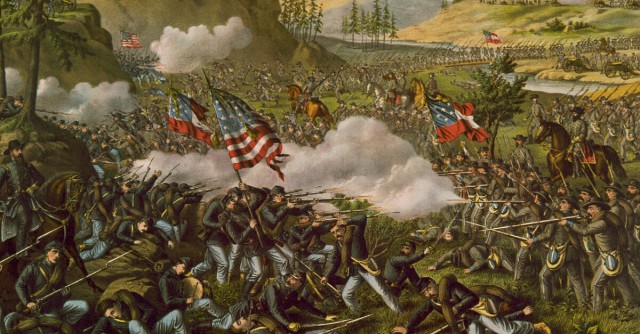
The Battle of Chickamauga
The
American Civil War was fought from 1861 to 1865 between the Confederate
States (Alabama, Florida, Georgia, Louisiana, Mississippi, South
Carolina, Texas) and the Union. Most believe it was about ending
slavery, but that’s a myth.
How
exactly were the Romans able to rise from a small trading settlement
near a ford in the Tiber to establishing an empire that stretched from
Britain to Mesopotamia? These people who had little interest in a navy
for generations ultimately grew to a point where they called the
Mediterranean “Our Sea.”
They
had an innovative military and political dynamic and welcomed many
aspects of foreign cultures and had such power that it resonates even in
the modern world. They weren’t always the powerful Roman Empire, many
influential periods shaped and truly enabled the Roman Empire.
The beginnings of the eternal city and “Romans.”
The
traditional origin story of Rome is certainly a product of later Roman
culture. However, the story of Romulus and Remus does speak a great deal
to how the Romans viewed themselves. Romulus and Remus being raised by a
wolf is barbaric enough, but the cold-blooded murder of Remus by
Romulus over Romulus’ territory shows that the Romans will go to great
lengths to protect their own. This is echoed in later civil wars with
little hesitation to go to war with other Romans to protect their
territory or to enforce what they thought was right.
With
or without the legendary Romulus and Remus origin story, the early
Romans were a fierce and warlike people. Local raiding was very common
in this early and fragmented Italy and the Romans were quite good at it.
With the Etruscans in the north and the Greeks to the south, the Romans
mostly took the fight to the various Italian tribes and cities in
between.
The
Roman Empire didn’t end with the 476 depositions of the Western Emperor
Romulus or the Fall of Rome. It continued with solid momentum in the
east with the powerful Byzantine Empire. Though we know it as the
Byzantine Empire, to them it was unequivocally still Roman.
Even
when Latin gave way to Greek, the Byzantines still considered
themselves Roman. In the early medieval period, the Byzantines reclaimed
control of many of the fallen territories, notably the Italian
peninsula. They fought various emerging powers and faced several
attempts to take their triple walled capital city. The only time it had
been taken was through internal strife and treachery coinciding with the
Fourth Crusade.
Heinz
Siegfried Heydrich was the son of Richard Bruno Heydrich and the
younger brother of SS General Reinhard Heydrich. After the death of his
brother, Heinz Heydrich helped Jews escape the Holocaust.
Heinz
Heydrich was born in Halle an der Saale to composer Richard Bruno
Heydrich and his wife Elisabeth Anna Maria Amalia Krantz. Her father was
Eugen Krantz, director of the Dresden Royal Conservatory.The Heydrich
family were well-to-do Catholics. The father, Richard Bruno Heydrich,
was an opera singer, the founder of a music conservatory in Halle, and a
German Nationalist who instilled patriotic ideas in the minds of his
three children. The Heydrich household was very strict and the children
were frequently disciplined. As a youth, Heydrich engaged his older
brother, Reinhard Heydrich, in mock fencing duels.
The
Gestapo was the abbreviation of the Geheime Staatspolizei, or the
Secret State Police. It was the official secret police of Nazi Germany
and German-occupied Europe.
The
force was created by Hermann Göring in 1933 by combining the executive
and the judicial branches into one power. Beginning on 20 April 1934, it
was under the administration of SS national leader Heinrich Himmler,
who in 1936 was appointed Chief of German Police by Hitler.
In the
popular picture of the Gestapo with its spies everywhere terrorizing
German society has been rejected by many historians as a myth invented
after the war as a cover for German society’s widespread complicity in
allowing the Gestapo to work.
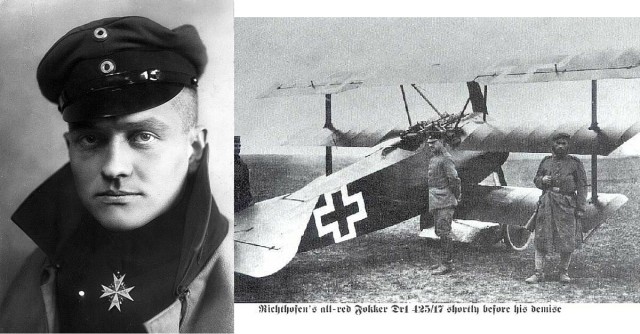
During
World War I a scarlet triplane terrorized the skies over France. This
image is one that many people conjure when they think of Manfred von
Richthofen, or the Red Baron. Today, a similar triplane may be seen
flying over the skies of The Old Rhinebeck Aerodrome in New York State.[1] This
powerful museum brings the aircraft of WWI to life with its weekend
airshows and staged dogfights; it also houses fascinating history of
aircraft and war memory in regards to the Red Baron. It is important to
note that the stereotypical image of the Red Baron, which has been
instilled into popular culture through toys, models, and a cartoon strip
featuring a loveable beagle, is far from accurate. Many aspects of
Richthofen’s life to this day are depicted incorrectly, from the
aircraft he flew, to his personal mannerisms and how this legendary
battle flyer has been memorialized.[2]
On
20 June 1942, the SS guard stationed at the exit to Auschwitz was
frightened. In front of him was the car of Rudolph Höss, the commandant
of the infamous concentration camp. Inside were four armed SS men, one
of whom – an Untersturmführer, or second lieutenant, was shouting and
swearing at him.
“Wake
up, you buggers!” the officer screamed in German. “Open up or I’ll open
you up!” Terrified, the guard scrambled to raise the barrier, allowing
the powerful motor to pass through and drive away.
Yet had he
looked closer, the guard would have noticed something strange: the men
were sweating and ashen-faced with fear. For far from being Nazis, the
men were Polish prisoners in stolen uniforms and a misappropriated car,
who had just made one of the most audacious escapes in the history of
Auschwitz. And the architect of the plot, the second lieutenant, was a
boy scout, to whom the association’s motto “Be prepared” had become a
lifeline.
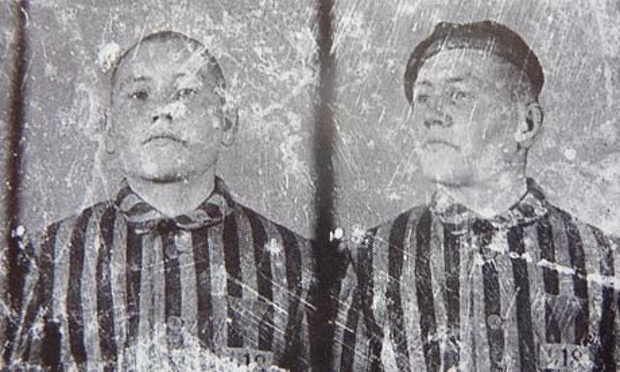
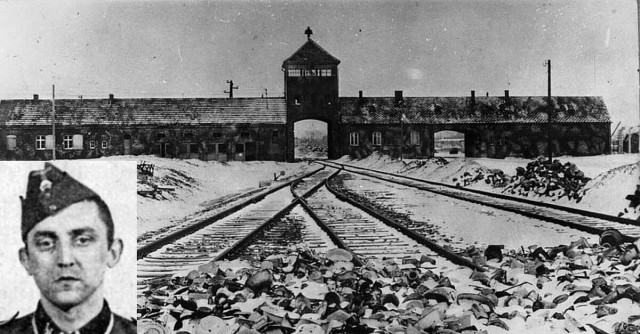
A
ninety-five-year-old man is to stand trial in Rostock, Germany, charged
with being an accomplice in the murder of 3681 people at Auschwitz
Death Camp. The charge says that Hubert Ernst Zafke, who was a member of
the medical staff when 15-year-old Anne Frank arrived at the camp in
September 1944, knew that people were being murdered there.
It is alleged that Zafke was present when the murders mentioned in the indictment took place and that he supported the policy.
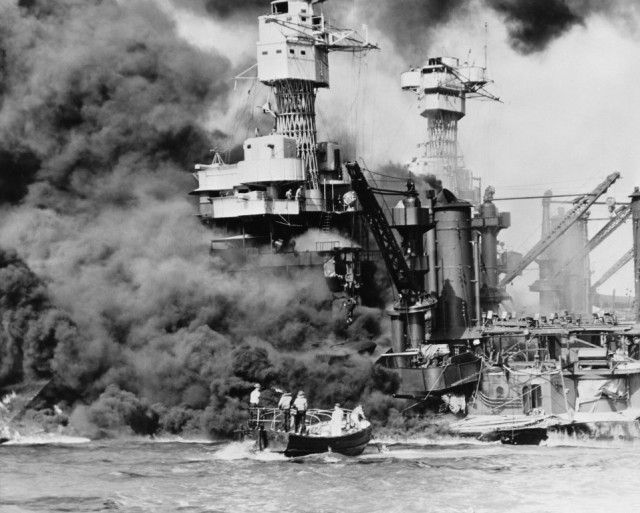
Sailors
in a motor launch rescue a man overboard alongside the burning West
Virginia during, or shortly after, the Japanese air raid on Pearl
Harbor.One of the survivors of the Pearl Harbor
attack, which brought the United States into World War Two 74 years ago
this year, has told the story of how he escaped death.
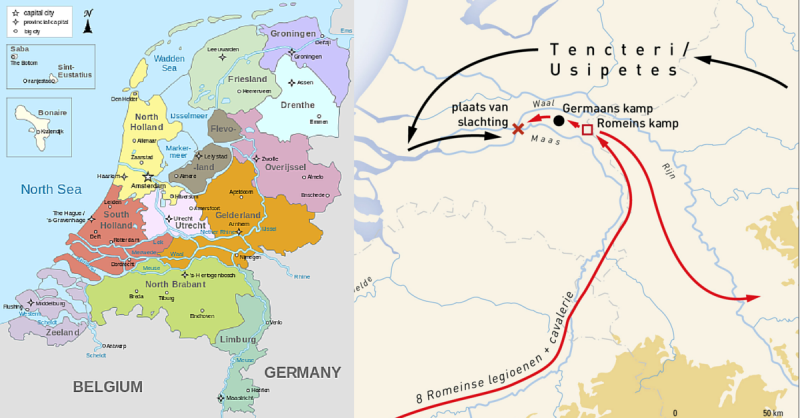
Site Where Caesar Slaughtered 200,000 Barbarians Discovered in The Netherlands
We
know that Caesar ran rampant through much of modern day France, Germany
and England and won great victories and also oversaw what were
essentially genocidal massacres of many tribes. One such battle and
massacre was recently discovered all the way up in the Netherlands. The
dig started many years ago near the town of Kessel in the Brabant
province. Map of the Netherlands on the left and a University created diagram of the battle on the rightEarly
dredging uncovered many metallic objects, leading to full digs
uncovering spearheads and swords as well as human skeletons. These
skeletons were of men, women and children and many bore evidence of
wounds caused by weapons. An adult woman’s skull showed a clear entry
point that would almost perfectly fit the narrow pila used by the
legionaries.
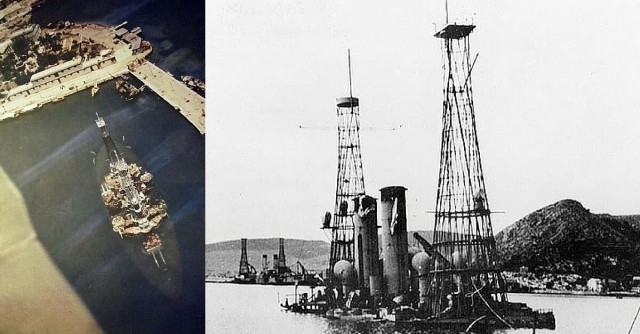
Battleship Kilkis was a 13,000 ton Mississippi-class battleship originally built by the US Navy in 1904–1908.
As
Mississippi she was purchased by the Greek Navy in 1914, and renamed
her Kilkis, along with her sister Idaho, renamed Lemnos. Kilkis was
named for the Battle of Kilkis-Lahanas, a crucial engagement of the
Second Balkan War. Armed with a main battery of four 12 inch guns,
Kilkis and her sister were the most powerful vessels in the Greek fleet.
Kilkis
and Lemnos quickly left the United States after their transfer in July,
due to the rising tensions in Europe following the assassination of
Archduke Franz Ferdinand of Austria the previous month. After arriving
in Greece, Kilkis became the flagship of the Greek fleet.
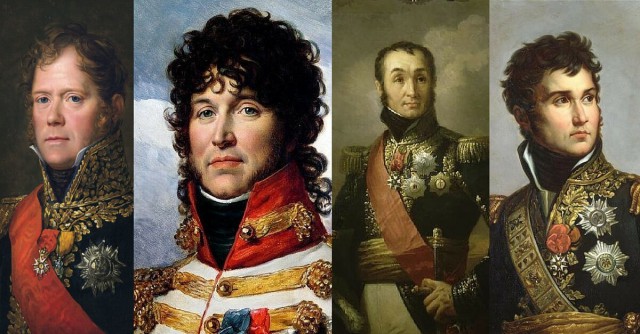
Napoleon
Bonaparte was no ordinary Joe. His family were minor nobles from
Corsica, and he was always destined to a more privileged life than 99%
of Frenchmen. His rise from such “humble” beginnings to become France’s
leading general was only extraordinary by the standards of an age in
which social status played a bigger part than ability in shaping
military careers.
His
rise to the position of Emperor was extraordinary by the standards of
any age. But he did not rise alone. His career was supported by the
Marshals, France’s leading generals. Many of the men who held these
positions under Napoleon were far more humble than the Emperor himself.
18 Ιανουάριος 2016, ΤΗΣ ΦΑΝΟΥΛΑΣ ΑΡΓΥΡΟΥ
Η αλήθεια για τις αγωγές Κυπρίων προσφύγων στα βρετανικά δικαστήρια
Η Τουρκία σκόπιμα άφησε να γίνει η διαρροή, δημοσιοποιώντας ό,τι εκείνη ήθελε
Ο Βρετανός ΥΠΕΞ, Φ. Χάμοντ, με τον Τούρκο ομόλογό του, Μ. Τσαβούσογλου.
Στις 8 Ιανουαρίου 2016 το τουρκικό Υπ. Εξωτερικών, επιχειρώντας να
προκαταλάβει την απόφαση του Δικαστηρίου στη Βρετανία, το οποίο ακόμα
δεν έχει λάβει τελική απόφαση, βγήκε να γνωστοποιήσει (πρώτο δημοσίευμα
στην τουρκική εφημερίδα «Χουριέτ») ό,τι αυτή ήθελε. ΄Ισως για να δημιουργήσει σύγχυση μεταξύ των Ελληνοκυπρίων.
Αυτό το έκανε η Τουρκία, προφανώς έχοντας υπόψη και την επίσκεψη του
Βρετανού Υπ. Εξωτερικών στη χώρα, που πραγματοποιήθηκε λίγες μέρες
αργότερα, ούτως ώστε να δοθεί η εντύπωση διπλωματικού επεισοδίου και να
δικαιολογηθεί το αδικαιολόγητο, δηλαδή μια παρέμβαση του Φόρεϊν Όφις στη
Δικαιοσύνη. Όπως έγινε με τις δηλώσεις, σε κοινή δημοσιογραφική
διάσκεψη στις 15 Ιανουαρίου 2016, μεταξύ του Τούρκου Υπ. Εξωτερικών κ.
Μ. Τσαβούσογλου και του Βρετανού Υπ. Εξωτερικών και Κοινοπολιτείας Φίλιπ
Χάμοντ στην Τουρκία.
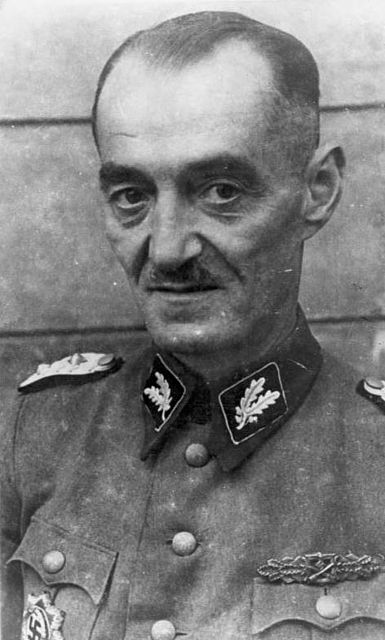
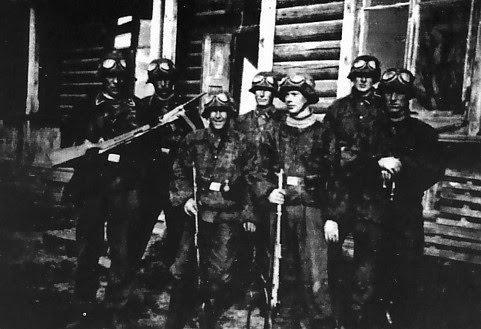
Dr.
Oskar Paul Dirlewanger (26 September 1895 – 7 June 1945 (certificate of
death), a German military officer, was the founder and commander of the
infamous Nazi SS penal unit “Dirlewanger” during World War II.
Dirlewanger’s name is closely linked to some of the worst crimes of the
war. He also fought in World War I as well as in the post-World War I
conflicts, and in the Spanish Civil War. He died after World War II
while in Allied custody, apparently beaten to death by his guards.
He
is invariably described as an extremely cruel character by historians
and researchers, including as “a psychopathic killer and child molester”
by Steven Zaloga, as “violently sadistic” by Richard Rhodes, as “an
expert in extermination and a devotee of sadism and necrophilia” by J.
Bowyer Bell, and as “a sadist and necrophiliac” by Bryan Mark Rigg.
World War II historian Chris Bishop called him the “most evil man in the
SS.” According to Timothy Snyder, “in all the theaters of the Second
World War, few could compete in cruelty with Oskar Dirlewanger.
Oskar
Dirlewanger was born in 1895 in Würzburg. He enlisted in the Imperial
German Army in 1913 and served as a machine gunner in the 123rd
Grenadier Regiment on the Western Front of World War I, where he took
part in the German invasion of Belgium and later fought in France. He
won the Iron Cross 2nd Class and 1st Class medals, having been wounded
six times, and finished the war with the rank of Lieutenant in charge of
the machine gun company of the Infantry Regiment 121 on the Eastern
Front in southern Russia and Romania. At the ceasing of hostilities the
German units in Dirlewanger’s area were ordered to be interned in
Romania, but Dirlewanger disobeyed orders and led 600 men from his and
other units back to Germany.
According
to his German biographer Knut Stang, the war was the main factor that
determined Dirlewanger’s later life and his “terror warfare” methods, as
“his amoral personality, with his alcoholism and his sadistic sexual
orientation, was additionally shattered by the front experiences of the
First World War and its frenzied violence and barbarism.” Interwar period
After the end of World War I, Dirlewanger, described in a police report
as “a mentally unstable, violent fanatic and alcoholic, who had the
habit of erupting into violence under the influence of drugs,” joined
different Freikorps right-wing paramilitary militias and fought against
German communists in Ruhr and Saxony, and against Polish nationalists in
Upper Silesia.
Today
soccer is unequivocally the most popular sport in a world with
countless different sports vying for fans. In the ancient world there
were not many options for sports outside of the wildly exciting chariot
races, especially after Gladiatorial games were outlawed, so almost any
sports fan was simply a fan of chariot racing.
Chariot
racing had passionate and rowdy fans, and Constantinople was both the
Capital of the Byzantine Empire and the capital of Chariot racing,
having a Hippodrome (stadium) that could easily seat 80,000 spectators
and had a private box from which the Emperor would often watch.
Chariot
racing featured teams of four-horse chariots that raced around a simple
oval track with long straightaways. Pileups were common and part of the
thrill, as was cheering for your favorite team. Four teams initially
were prevalent in races, but by this period only two teams known as the
blues and the greens were popular, Justinian and his wife Theodora were
noted blues fans.
Perhaps
there is a point in a soldier’s life, where he is so certain that he
might die that he would rather dictate the terms of such death on high
moral and gallant grounds than have it occur in a manner that betrays
his fellow brothers in arms. This is the familiar story of those in
World War 2, where storming the beaches of Normandy or Iwo Jima on the
first wave surely had to produce such thoughts.
Yet,
for a few men there would come a time where such a decision would be
theirs and theirs alone with survival on one hand and certain death on
the other. This is the story of non-Jewish Master Sergeant Roddie
Edmonds who with a Nazi gun to his head refused to give up Jewish POWs
and instead declared with gun to head, “We are all Jews here.”
The Constant Revelation of History
Countless
stories crucial to completing a fascinating historical war record are
lost to time and the death of those who could give first-hand accounts.
Fortunately for the world, there were still multiple men who could
testify to this account and with such a high degree of certainty that
the State of Israel would recognize Master Sergeant Roddie Edmonds’
sacrifice.
By
1945, the treatment of the Jewish people by the Nazi state was becoming
more and more clear. Atrocities the world knew of and those we did not
were being revealed with each square mile of Europe retaken.
American
soldiers had long been told of the German treatment of Jews and were
told if captured to destroy dog tags or identification that would mark
them as such. For Russians on the Eastern front, if they were captured
and identified as Jewish they were often if not always sent to
extermination camps.
However, that practice had made its way to
the Western front as well although these POWs were often sent to slave
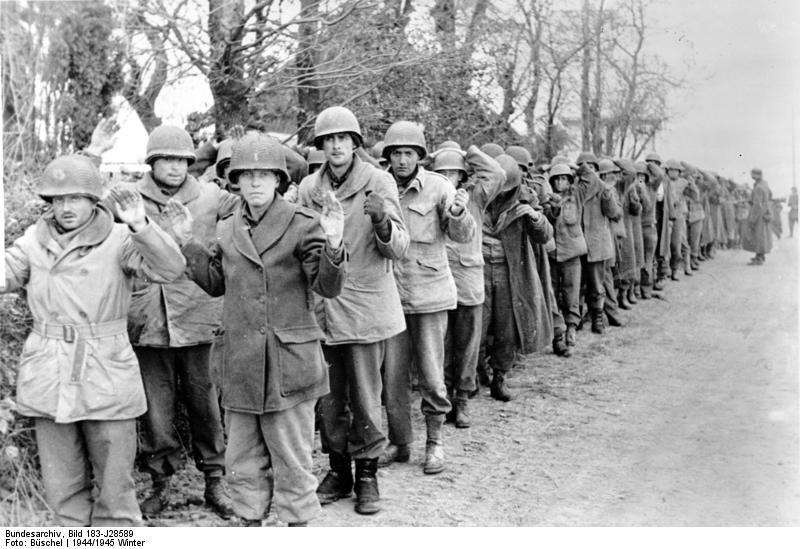
labor camps where the odds of survival were very low. American POWs from the Battle of the BulgeThis
was an unfortunate fate that would meet many who fought the Germans in
the last year of the war. But for a group of prisoners of war detained
at Stalag IXA, a different fate would await them. For there was a
senior NCO in charge who rallied the men of that camp to invite certain
death upon themselves in order to protect the few who would be destined
for an unspeakable fate at the hands of Nazi Germany.
Life as a German POW
For
Master Sergeant Roddie Edmonds, the Reich’s last ditch offensive at the
Battle of the Bulge would unfortunately end his war by putting him in
the hands of the enemy. Edmonds served with the 422nd Infantry Regiment in Europe and when captured, found himself as the senior NCO among the Prisoners of War.
For
all the chaos that was World War 2, there was a pretty regular attempt
to maintain military discipline within prison camps and that would often
put senior leaders in charge and responsible for representing the men
to their captors.
In January of 1945, an order came out for the
Jewish POWs of Stalag IXA in Germany to fall out in the morning for an
undeclared fate. For Edmonds this put him in an awkward position as to
whether to ensure the order was followed as directed and risk a few men,
or defy the Nazi proclamation and risk them all.
And while
history won’t record how Edmonds came to such a decision, it would
vindicate him as a hero of World War 2 and in keeping with the best
traditions and spirit of the United States Military.
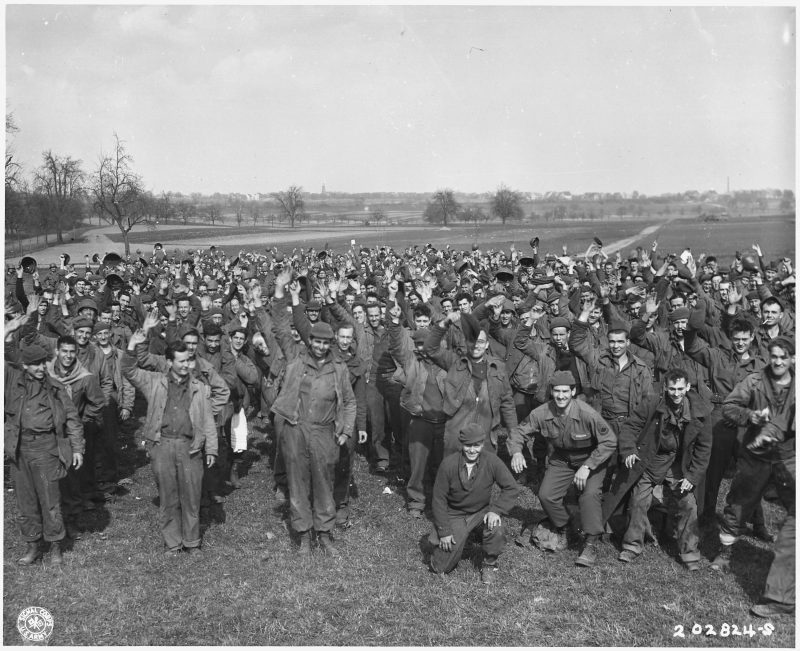
US Soldiers outside a German POW CampIn
the morning when the German officer in charge came to collect the
Jewish POWs, he was shocked to see that all 1,000 plus prisoner had
fallen out to report. As the highest ranking enlisted man in the camp,
Master Sergeant Edmonds had ordered that every man fall out to report
that morning.
The
German officer was reported to exclaim that not all these men could be
Jews and when he ordered Edmonds to correct the problem, Edmonds was
quoted as saying, “We’re all Jews Here.” Angered by the defiance, the
German officer put a pistol to Edmonds head, but rather than relent,
Edmonds would as the kids call it today, punk out a German officer with a
pistol to his head.
A Defiant Act of Heroism
Rather
than give up his Jewish brothers in arms, Edmonds would tell the
officer that if he killed him that he would have to kill them all and
when the Allies won this war which was ever more apparent in early 1945,
that he would be tried as a War Criminal. The German camp commandant,
then holstered his pistol and walked away.
It
is reported that up to 200 prisoners in that camp were of Jewish
descent and they were all save a horrible and almost certain life-ending
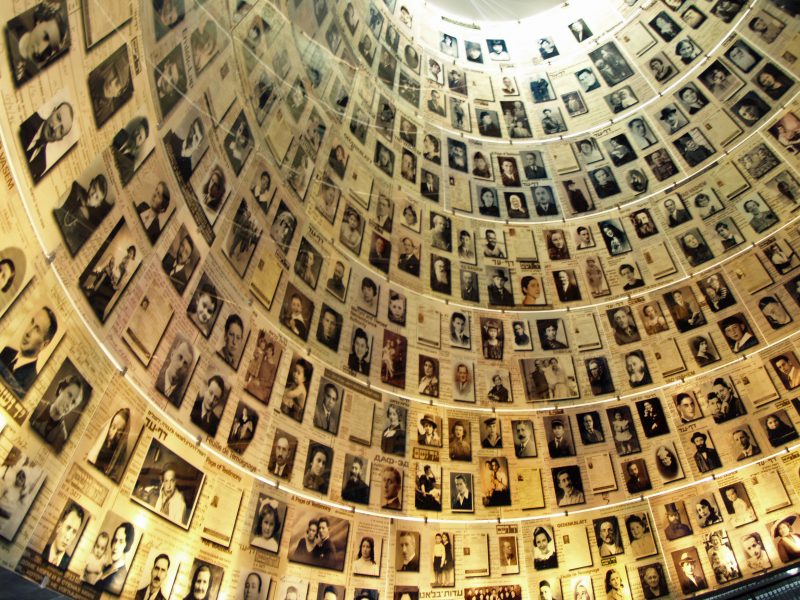
fate because Master Sergeant Edmonds said otherwise. Yad Vashem Hall of Names Memorial to the Holocaust via creativecommons.org/licenses/by-sa/3.0/As
this story has been reported and confirmed as a recent revelation of
History, the Jewish living memorial to the Holocaust known as Yad Vashem
would recognize Edmonds as Righteous Among the Nations which is an
honor given to those who protected the Jewish people during World War
2. The most famous recipient of this honor is Oskar Schindler known to
many through the movie Schindler’s List.
Edmonds would be one of
only 4 American given this high honor and the first American Soldier to
be recognized for his specific and gallant actions to protect the Jewish
people.
But
for a warrior like Edmonds, there was no other choice than to protect
his own and risk the life of over 800 men to do what history would
recognize as the great moral act of that day. While many would hope
they would do the same, Edmonds died an old man in 1985 never having to
wonder for himself.
What he did with a pistol to his head that
day, has been one of the long lost stories of that great struggle. But
lost no more, he deserves the highest honor one could give and the
respect of the historical record.
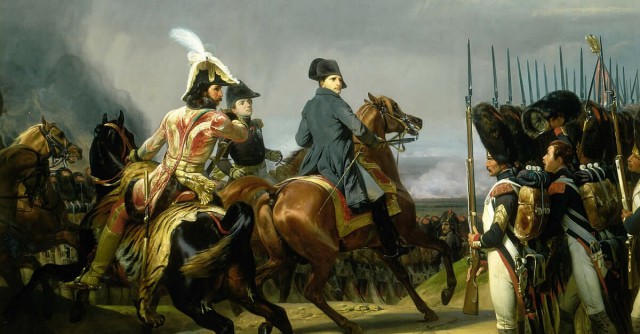
Napoleon
Bonaparte’s rise to power marked the death knell of the French
Revolution. His autocratic government ended the attempts at increased
democracy that had shaken the country for a decade.
The situation was a terribly ironic one. Napoleon never could have risen to power without the revolution he destroyed.
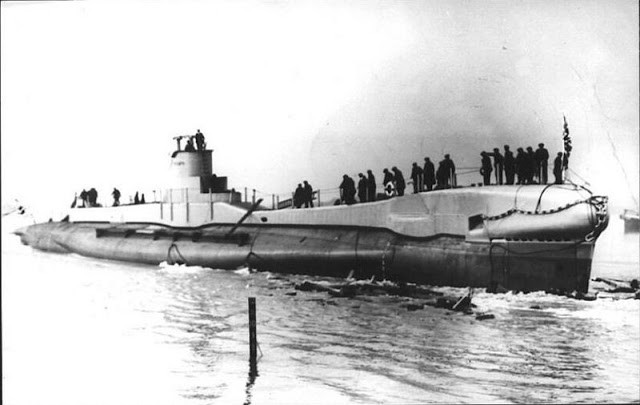
Photo provided by the Royal Navy Submarine MuseumDuring the second world war, some 40 British submarines were sunk in the Mediterranean.
Many have been found, but HMS Triumph, lost with all hands in January 1942, is still unaccounted for.
HMS Triumph (Lt. John Symons Huddart,
RN) sailed from Alexandria on 26 December 1941 to land a party on
Antiparos Island, before making a patrol in the Aegean Sea.
Despite the fact that several historians and modern day Nazi apologists are trying to exonerate the Germans for the countless atrocities and crimes against humanity they committed in Greece during WW2, the truth cannot be hidden.
In Greece, from 1941 to 1944, the civilian deaths resulting from the Nazi German, fascist Italian (until 1943, when the Italians swiftly changed sides) and Bulgarian occupation, adds up to about 578,000 persons.
Τον κίνδυνο της «αποξένωσης» από την εικόνα των ελληνικών λέξεων, λόγω της αυξανόμενης χρήσης των «greeklish», επισήμανε ο καθηγητής της Γλωσσολογίας Γεώργιος Μπαμπινιώτης.
«Εγώ θα έλεγα στον κόσμο που μας …ακούει: ‘’τη γλώσσα και τα μάτια σας’’. Θα έλεγα ότι σε ημέρες κρίσης θα πρέπει να σκύψουμε σε ό,τι καλύτερο διαθέτει αυτός ο τόπος, που είναι ο πολιτισμός μας, η παράδοση μας και με τον πιο εύγλωττο τρόπο η γλώσσα μας.
Δεν είναι απλό εργαλείο η γλώσσα. Είναι ο πολιτισμός μας, είναι η ιστορία μας, είναι η σκέψη μας, είναι η νοοτροπία μας, είναι η ταυτότητά μας. Πάνω από όλα η γλώσσα είναι αξία».
Στη δίκη του Γερμανού ιστορικού Χάιντς Ρίχτερ στο Ρέθυμνο αναφέρεται δημοσίευμα της Süddeutsche Zeitung.
Ο 76χρονος συγγραφέας του βιβλίου “Επιχείρηση Ερμής” (Operation Merkur, 2011), κατηγορείται με βάση τον αντιρατσιστικό νόμο, όπως σημειώνει η εφημερίδα του Μονάχου, για “δυσφήμηση και γελοιοποίηση της κρητικής αντίστασης ενάντια στους εθνικοσοσιαλιστές”.
Όπως υπενθυμίζει η Γερμανίδα ανταποκρίτρια της εφημερίδας, “η Κρήτη δέχθηκε το 1941 επίθεση από τη γερμανική Βέρμαχτ, τον Μάιο συμπληρώνονται 75 χρόνια από τη ‘Μάχη της Κρήτης'”. Η αρθρογράφος επισημαίνει ότι στην Κρήτη συντηρείται μέχρι και σήμερα η μνήμη της “ηρωικής” αντίστασης ενάντια στους Γερμανούς κατακτητές. Όπως γράφει, “ο Ρίχτερ λέει ότι η αντίσταση (σ.σ των Κρητών) παρουσιάζεται με ‘ρομαντικό τρόπο’, οι φρικαλεότητες των κρητών ανταρτών όμως αφήνονται στο περιθώριο. ‘Ήταν ένας πόλεμος στην πιο άγρια, πρωτόγονη μορφή του'”, γράφει ο Γερμανός ιστορικός στο βιβλίο του, αναφέροντας μεταξύ άλλων ότι “τραυματίες θανατώθηκαν, νεκροί ατιμάστηκαν”.







 Τον κίνδυνο της «αποξένωσης» από την εικόνα των ελληνικών λέξεων, λόγω της αυξανόμενης χρήσης των «greeklish», επισήμανε ο καθηγητής της Γλωσσολογίας Γεώργιος Μπαμπινιώτης.