 Source: DKFindOut
Posted By: Dattatreya Mandal
March 7, 2019
Introduction –
When it comes to the historically rich region of Mesopotamia,
Babylon is arguably the most renowned of all cities. An ancient
settlement that harks back to the dominions of Sargon of Akkad (circa
24th century BC), Babylon possibly started out as a small town in the
backdrop of mighty cities like Ur,
Uruk, and Nippur. However, by the time of the ascension of Hammurabi
the Great (the sixth king of the Amorite dynasty) in 1792 BC, Babylon
became the major capital of the city-state of ‘Babylonia’, known as Mât Akkadî
or ‘the country of Akkad’ in contemporary Akkadian. The very term
‘Babylon’ is of Greek origin and it is possibly a rough translation of Babillu (or bav-ilim in Akkadian)– which in Semitic pertains to the conjunction of two words Bâb (gate) and ili (gods), thus suggesting the location of Babylon as the ‘gate of the Gods’.
On the Biblical side of affairs, Babylon is presented with a rather
critical narrative. And arguably the most popular of these presentations
pertains to the Book of Genesis, chapter 11, which deals with the
infamous Tower of Babel – an architectural edifice that angers God, thus
leading to the ‘curse’ of different languages of humanity, thereby
mirroring the confusion and strife between cultures. Ironically, the
rather captious Biblical emphasis on Babylon is what attracted
historians and archaeologists in the first place to find this ‘fabled’
city – ultimately resulting in its discovery in 1899 by Robert Koldewey.





 Η
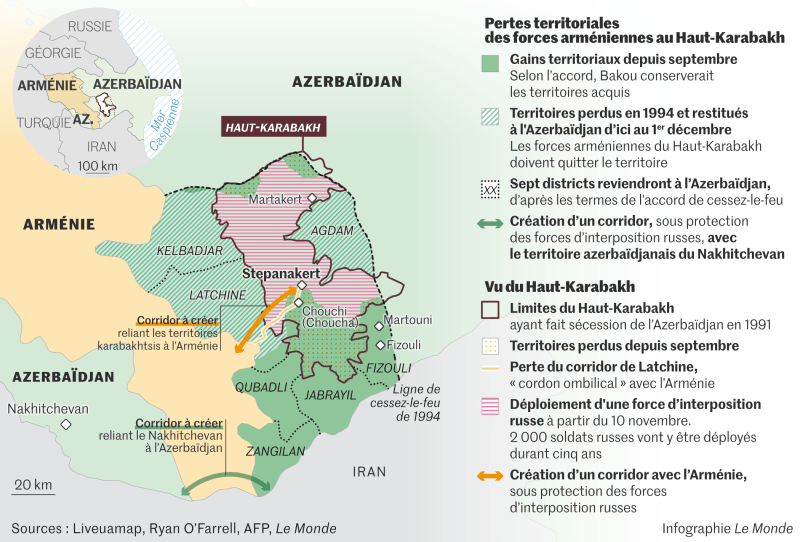
υπόθεση Καραμπάχ σας θυμίζει κάτι απο την ιστορία; Κάτι, έστω λίγο απο
τη δεκαετία του 1910; Η Ρωσία υπεράσπισε τα ωμά συμφέροντά της. Ναι. Θα
μπορούσε να τα υπερασπιστεί με πιο αποδεκτό τρόπο. Αλλά ο υπόλοιπος
κόσμος γιατί να επικροτήσει αυτήν την τραγωδία που μπορούσε να
αποφευχθεί αν ήθελε η Μόσχα; Βρισκόταν σε εξέλιξη διάλογος που θα
μπορούσε να διευθετήσει τις εκκρεμότητες μεταξύ Αζέρων και Αρμενίων. Και
μέσα απο αυτήν την ρύθμιση να ικανοποιηθεί και η Ρωσία. Δεν χρειαζόταν
αυτή η νέα εθνοκάθαρση. Γιατί περί εθνοκάθαρσης πρόκειται. Στο Κόσοβο
ευαισθητοποιήθηκαν στο Καραμπάχ σιωπούν.
Η
υπόθεση Καραμπάχ σας θυμίζει κάτι απο την ιστορία; Κάτι, έστω λίγο απο
τη δεκαετία του 1910; Η Ρωσία υπεράσπισε τα ωμά συμφέροντά της. Ναι. Θα
μπορούσε να τα υπερασπιστεί με πιο αποδεκτό τρόπο. Αλλά ο υπόλοιπος
κόσμος γιατί να επικροτήσει αυτήν την τραγωδία που μπορούσε να
αποφευχθεί αν ήθελε η Μόσχα; Βρισκόταν σε εξέλιξη διάλογος που θα
μπορούσε να διευθετήσει τις εκκρεμότητες μεταξύ Αζέρων και Αρμενίων. Και
μέσα απο αυτήν την ρύθμιση να ικανοποιηθεί και η Ρωσία. Δεν χρειαζόταν
αυτή η νέα εθνοκάθαρση. Γιατί περί εθνοκάθαρσης πρόκειται. Στο Κόσοβο
ευαισθητοποιήθηκαν στο Καραμπάχ σιωπούν.
 του Δημήτρη Μακροδημόπουλου.


 της Δρ Άννας Κωνσταντινίδου


