Ετικέτες

Κυριακή 18 Οκτωβρίου 2020

Το εξοπλιστικό εμπάργκο του Καναδά στην Τουρκία μας δείχνει το αδύναμο σημείο του Ερντογάν


Cevheri Güven

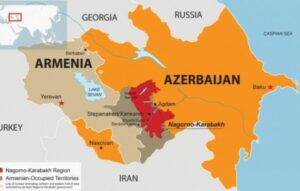
Τα φερόμενα εγχώρια αεροσκάφη της Τουρκίας, τα οποία παράγονται κυρίως από τον γαμπρό του Προέδρου Ρετζέπ Ταγίπ Ερντογάν, βρίσκονται ξανά στο προσκήνιο, μετά από μια απόφαση του Καναδά να αναστείλει τις άδειες εξαγωγής για την τεχνολογία drone στην Τουρκία, δεδομένου ότι χρησιμοποίησε τα drone της πρόσφατα κατά την σύκγπρουση Αζερμπαϊτζάν-Αρμενική σύγκρουση για το Ναγκόρνο-Καραμπάχ.

Τη Δευτέρα ο Καναδός υπουργός Εξωτερικών Φρανσουά-Φιλίπ Σαμπάνια ανακοίνωσε ότι η κυβέρνησή του θα αναστείλει την εξαγωγή βασικών ανταλλακτικών drone στην Τουρκία, συμπεριλαμβανομένων των οπτικών και συστημάτων αισθητήρων που παράγονται από την καναδική εταιρεία WESCAM. Όπως συμβαίνει με τις τεχνολογίες κινητήρων, οι οποίες εισάγονται από την Αυστρία και την Ουκρανία, αυτά τα συστήματα υψηλής τεχνολογίας που εμφανίζονται σε τουρκικά αεροσκάφη δεν μπορούν να παραχθούν τοπικά, καθώς η εγχώρια βιομηχανία της Τουρκίας δεν διαθέτει την απαραίτητη υποδομή.

Μέσω του εναερίου χώρου της Γεωργίας η Τουρκία και το Ισραήλ στηρίζουν τους Αζέρους


Μέσω του εναερίου χώρου της Γεωργίας η Τουρκία και το Ισραήλ στηρίζουν τους Αζέρους

Σχόλιο: Η Γεωργία το 2008 είχε βρεθεί σε ένοπλη σύρραξη με την Ρωσία (στον λεγόμενο πόλεμο της Νότιας Οσετίας), η οποία εφάρμοσε για πρώτη φορά το υβριδικό δόγμα μάχης της (προοίμιο εκείνου της Κριμαίας) με σκοπό να κατακτήσει Γεωργιανά εδάφη πλησίον σημαντικών αυτοκινητοδρόμων που ένωναν Κίνα-Κεντρική Ασία-Ευρώπη. Άξιο αναφοράς είναι πως η Γεωργία εξαπέλυσε επίθεση έναντι της περιοχής της Οσετίας μη αναγνωρίζοντας την ”ανεξαρτητοποίηση”  της υποκρατικής οντότητας της περιοχής. Η επίθεση έγινε μετά από Αμερικανική πιθανώς παρέμβαση η οποία ποτέ δεν επιβεβαιώθηκε από τον τότε πρωθυπουργό,με σκοπό την αποσταθεροποίηση του Καυκάσου.

«Βόμβα» από τον πρωθυπουργό της Αρμενίας: «Πακιστανικές ειδικές δυνάμεις μάχονται στο Αρτσάχ στο πλευρό των Αζέρων»


Ο πρωθυπουργός της Αρμενίας Νικολ Πασινιάν στις 15 Οκτωβρίου δήλωσε στο ρωσικό πρακτορείο ειδήσεων Σούτνικ, ότι η Τουρκία δεν χρησιμοποιεί μόνο το στρατό της στο Καραμπάχ, αλλά σύμφωνα με τις υπηρεσίες πληροφοριών της χώρα του, μετέχουν και ειδικές δυνάμεις του πακιστανικού στρατού, που για ακόμα μια φορά δείχνει τις άριστες σχέσεις μεταξύ των μουσουλμανικών χωρών αν ισχύει η δήλωση.

Στη δήλωσή , ο ίδιος ανέφερε: «οι τουρκικές δυνάμεις δεν συμμετέχουν μόνο στον σχεδιασμό των επιθέσεων, αλλά και με ειδικές μονάδες απευθείας από τον τουρκικό στρατό (επί τόπου)».

Ο Αρμένιος πρωθυπουργός πρόσθεσε: «Σύμφωνα με ορισμένες πληροφορίες, υπάρχουν ειδικές δυνάμεις και του πακιστανικού στρατού που συμμετέχουν στις στρατιωτικές επιχειρήσεις κατά των δυνάμεων μας».

Ο Πασινιάν δεν διευκρίνισε από πού προέρχονται οι αναφορές για τον πακιστανικό στρατό στις μάχες του Καραμπάχ, αλλά η Αρμενία κατηγόρησε επανειλημμένα την Τουρκία ότι προμηθεύει το Αζερμπαϊτζάν μισθοφόρους από τη Συρία.

Μάλιστα για το θέμα εξέδωσε και ανακοίνωση το πακιστανικό ΥΠΕΞ με την οποία αρνήθηκε κάθε εμπλοκή.

Το ερώτημα είναι κατά πόσο αντίστοιχα προβλήματα θα μπορούσαν να δημιουργήσουν στα μετόπισθεν από αντίστοιχες μονάδες που μέλη τους θα έχουν σταλεί με την μορφή παρανόμων μεταναστών στην Ελλάδα.

https://www.pronews.gr/amyna-asfaleia/enoples-sygkroyseis/925810_vomva-apo-ton-prothypoyrgo-tis-armenias-pakistanikes

«Βόμβα» από τον πρωθυπουργό της Αρμενίας: «Πακιστανικές ειδικές δυνάμεις μάχονται στο Αρτσάχ στο πλευρό των Αζέρων»

από pcuser

Which people gave the Greeks the most trouble militarily?


, lived in Greece


From a military standpoint, there can be none other than the Romans.

It was an accident of history that most Greek states were in decline at the very moment that Rome showed up and took an interest in them, starting with Italy and Sicily and moving from Epirus all the way to Asia Minor, Syria and Egypt.

O Πούτιν, ο Ερντογάν και η Ελλάδα


Είμαστε υποχρεωμένοι να καταδεικνύουμε τις αρνητικές συνέπειες της συμμαχίας Πούτιν και Ερντογάν για τα ελληνικά εθνικά συμφέροντα.

Τα τελευταία χρόνια, έχει μεγαλώσει η σύγχυση στην Ελλάδα και την ελληνική κοινή γνώμη, σχετικά με τις σχέσεις Ρωσίας Τουρκίας και Ελλάδας.Τα πράγματα έμοιαζαν σχετικά εύκολα  όσο Τουρκία και Ρωσία συγκρούονταν στη Συρία αλλά έπαψε να είναι από τη στιγμή που άρχισαν να συνεργάζονται, μετά το 2016Έτσι, παράλληλα με την έντονη αποδοκιμασία της γερμανικής αλλά και της αμερικανικής πολιτικής, είμαστε υποχρεωμένοι να καταδεικνύουμε τις αρνητικές συνέπειες της συμμαχίας Πούτιν και Ερντογάν για τα ελληνικά εθνικά συμφέροντα. 

Το ρωσικό άνοιγμα στην Ελλάδα, η «αλεπού της διπλωματίας» που έρχεται και η Τουρκία


Λίγο πριν την επίσκεψη Λαβρόφ στην Αθήνα, η Ρωσική Πρεσβεία στην Αθήνα υπενθυμίζει την πάγια θέση της για το δικαίωμα επέκτασης των χωρικών υδάτων στα 12 νμ και το διεθνές δίκαιο για τις ΑΟΖ, υπογραμμίζοντας ότι η σύμπραξη με την Τουρκία είναι τακτική και οχι στρατηγική

Αδωνις Γεωργίαδης "Λέω-ξελέω" (για πολοστή φορά) ή τι κάνει μια βράβευση )


Μπορεί κάποτε ο Άδωνις Γεωργιάδης να κατηγορούσε τα στελέχη του ΠΑΣΟΚ (μαζί με αυτά της Νέας Δημοκρατίας, όταν ήταν στέλεχος του ΛΑΟΣ), οι καιροί όμως αλλάζουν και μαζί αλλάζει και ο κ. Γεωργιάδης.

Και η αλήθεια είναι ότι ο υπουργός Ανάπτυξης έχει αλλάξει πολύ και συνεχώς αλλάζει κατά το δοκούν και κατά τις εκάστοτε συνθήκες. Δεν πάνε πολλά χρόνια, για παράδειγμα, που χαρακτήρισε Ν.Δ. και ΠΑΣΟΚ «και κλέφτες και ψεύτες», όμως σήμερα είναι αντιπρόεδρος του πρώτου κόμματος και… αποθεώνει το δεύτερο.

Ο Ερντογάν επιδιώκει μια Ισλαμική Ένωση ως αντίπαλο δέος στην ΕΕ και οι Ευρωπαίοι τον χαϊδεύουν


Του Μιχάλη Ψύλου

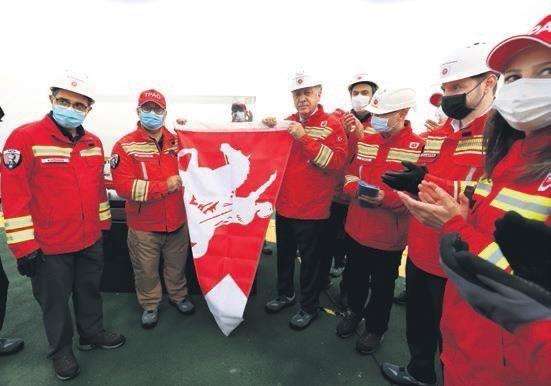
Μια φωτογραφία-χίλιες λέξεις. Ο Τούρκος πρόεδρος Ερντογάν στο πλωτό γεωτρύπανο Φατίχ, στη Μαύρη Θάλασσα να επιδεικνύει μια σημαία του …Οθωμανικού ναυτικού. Τη σημαία αυτή που δείχνει έναν άνδρα πάνω σε ένα άλογο χάρισαν συμβολικά στον Ερντογάν οι υπεύθυνοι του πλωτού γεωτρύπανου κατά τη χθεσινή επίσκεψη του Τούρκου προέδρου. Τι συμβολίζει η σημαία; Στη διάρκεια της Οθωμανικής αυτοκρατορίας όταν ο τουρκικός στόλος επικρατούσε σε ναυμαχίες οι κυβερνήτες συνήθιζαν να ανεβάζουν τη σημαία αυτή στο ιστίο ως ένδειξη της νίκης!

Σαφής λοιπόν ο συμβολισμός: Η σημαία στον …Σουλτάνο για τη χθεσινή ανακοίνωσή του ότι το κοίτασμα φυσικού αερίου στη Μαύρη Θάλασσα μετρήθηκε αυξημένο κατά 85 δισεκατομμύρια κυβικά μέτρα στα 405 δισεκατομμύρια. Παρουσιάζοντας τον εαυτόν του ως τον σύγχρονο σουλτάνο Μωάμεθ τον Πορθητή, ο Ερντογάν δεν σηκώνει φυσικά μύγα στο σπαθί του. Εν πλώ στη Μαύρη Θάλασσα ,την επομένη της «άσφαιρης» ως προς την Τουρκία συνόδου κορυφής της ΕΕ, ο Τούρκος πρόεδρος δεν δίστασε να καταφερθεί και πάλι εναντίον της Ευρωπαϊκής Ενωσης , της Ελλάδας και της Κύπρου. «Δεν πρόκειται να υποκύψουμε σε οποιαδήποτε φοβέρα και στήσιμο παιχνιδιών που καταλήγουν να μοιάζουν με κωμωδία» είπε ο Τούρκος πρόεδρος και απείλησε την ΕΕ ότι «έχει γίνει όμηρος της Ελλάδας και της ελληνοκυπριακής διοίκησης, γεγονός που βλάπτει κυρίως την ίδια την Ευρωπαϊκή Ενωση».

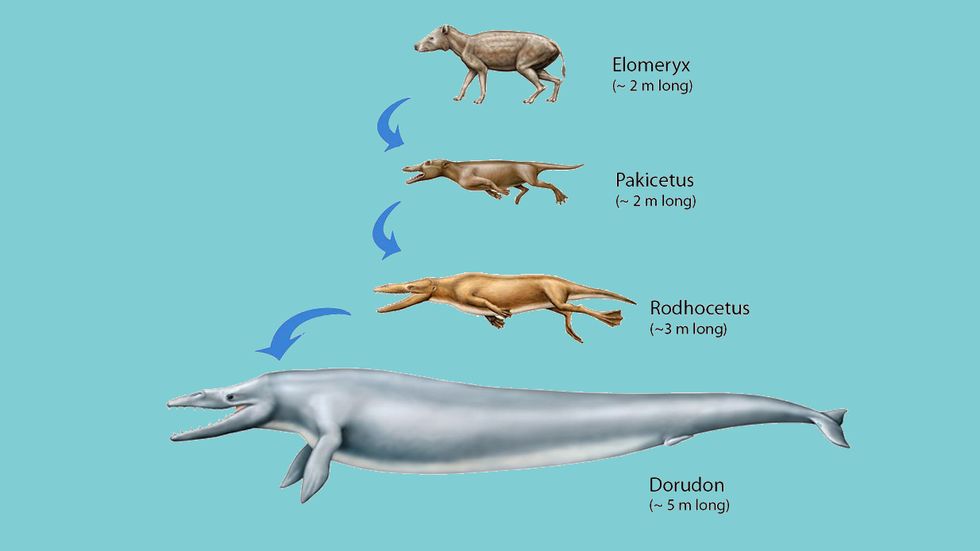
Ancient deer-like creatures returned to the ocean to become whales. But why?


 Whale evolution. Image: John Klausmeyer/University of Michigan Museum of Natural History

Researchers are starting to get a handle on why ancient creatures returned to the ocean after their ancient ancestors climbed out of it. Philip Perry 22 March, 2018 Whale evolution. Image: John Klausmeyer/University of Michigan Museum of Natural History The evolution of whales. Image: John Klausmeyer/University of Michigan Museum of Natural History The ocean may be the origin of all life on Earth, but that isn’t to say that all the animals who evolved on land left the water behind forever. In fact, we’re starting to get a pretty good picture of why certain species that returned back to the water decided to do so and how they developed into the marine animals we know today. Paleontologists say creatures began exploring the land during the Silurian period (440-410 million years ago). No one is sure why this occurred. Some scientists say it may have been tight competition for resources in marine environments that pushed species to look for food elsewhere. The first land explorers were arthropods, who started spending just a little bit of time on the surface and then began doing so more and more.

Σάββατο 17 Οκτωβρίου 2020

Fossil Site Reveals How Mammals Thrived After the Death of the Dinosaurs

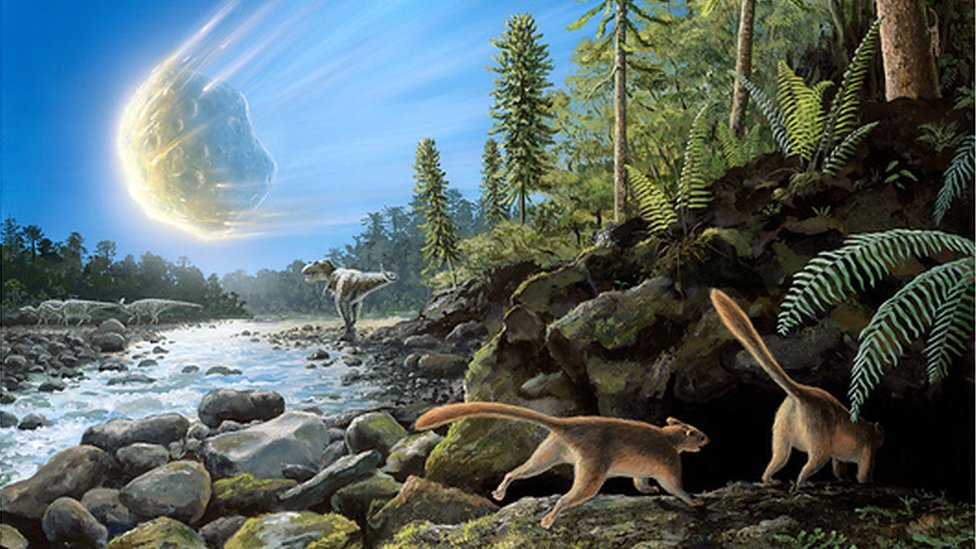
Recent discoveries highlight how mammals lived before and after the asteroid impact that triggered the world’s fifth mass extinction Loxolophus CGI rendering of ancient Loxolophus mammal taken from the PBS NOVA special, Rise of the Mammals. In this recreation, Loxolophus scavenges for food in the palm dominated forests found within the first 300,000 years after the dinosaur extinction. (HHMI Tangled Bank Studios) By Riley Black smithsonianmag.com October 24, 2019
In central Colorado, at a place called Corral Bluffs, there lies an unusual graveyard. The ranks of the dead aren’t filled with people, but animals that lived 66 million years ago. Preserved in hardened concretions of stone lie the remains of turtles, crocodiles, and most of all, mammals that lived in this place during the first million years after the terrible impact that triggered the extinction of the dinosaurs. These animals form a part of our own evolutionary narrative—the story of how mammals went from scurrying around the feet of larger creatures to dominating the continents of the world, evolving into a variety of unique beings, including ourselves. Mammals are not recent additions to the world that came after the time of the dinosaurs. The oldest mammals go back much further in time, and contrary to the standard story of shrew-like critters kept in check by monstrous reptiles, mammals thrived during Mesozoic era. The asteroid impact that felled the “terrible lizards” was also a portentous event for the mammals that had already been plying their own success for tens of millions of years.
The mammalian story is a complicated one. Paleontologists still don’t entirely agree about the identity of the very first mammals. Modern mammals are easy to spot—they have mammary glands and produce milk, among other traits like delicate inner ear bones and fur. These characteristics are what gives our family the name “mammal.” But further back into the fossil record, the only way to identify a mammal is from bones, teeth and shared anatomical features. Mammal Skulls A collection of four mammal skulls collected from Corral Bluffs (Left to right: Loxolophus, Carsioptychus, Taeniolabis, Eoconodon.) (HHMI Tangled Bank Studios) Depending on who you ask, mammals can be regarded as a broad group called mammaliformes that appeared by the Late Triassic—when dinosaurs were just beginning to diversify themselves—around 220 million years ago. But mammaliaformes is a broad group that includes lineages that are totally extinct today. The last common ancestor of all modern mammals lived sometime during the Jurassic, over 160 million years ago. Regardless of what was the earliest mammalian beast, though, animals very closely related to mammals have been around for nearly as long as the dinosaurs, and they underwent an evolutionary explosion during the Mesozoic. “Often people are surprised to hear that mammals were around at all in the Mesozoic,” a time usually associated with dinosaurs and other reptiles, says University of Oxford paleontologist Gemma Louise Benevento. And even when mammals are included in studies of the Mesozoic, they are often characterized as small, shrew-like insectivores like the 205 million-year-old Morganucodon from Wales and China. This picture, Benevento says, primarily comes from 100-year-old research carried out on North American fossil mammals, where the record of tiny teeth and bones ostensibly shows mammals scurrying in the shadows of caves until after the extinction event at the end of the Cretaceous period. But recent discoveries around the world have changed the story, revealing that mammals were thriving alongside the dinosaurs. Mesozoic beasts came in many forms. Castorocauda was the Jurassic equivalent of a beaver, complete with a scaly, flattened tail. Volaticotherium, from about the same time, resembled a flying squirrel. Fruitafossor, by contrast, was like a Jurassic aardvark, with powerful limbs that appear well-suited to tearing open termite nests. And the badger-sized Repenomamus was an omnivore that, thanks to fossil stomach contents, we know ate baby dinosaurs. Every year a few more mammal ancestors are added to the list. Then, one day 66 million years ago, a catastrophic asteroid impact triggered a devastating mass extinction that killed off nearly all dinosaurs—leaving only birds—and reshuffled the evolutionary deck for mammals. The event is often interpreted as a stroke of cosmic luck that allowed mammals to step out of the shadow of the reptiles and expand in size, shape, behavior and habitat. But as paleontologists continue to dig into the critical time after the impact, the story is becoming more complex. The rise of the mammals was not necessarily assured, and recovery from the disaster took far longer than expected. Corral Bluffs A scenic vista of Corral Bluffs, outside of Colorado Springs, Colorado. Corral Bluffs represents about 300 vertical feet of rock and preserves the extinction of the dinosaurs through the first million years of the Age of the Mammals. (HHMI Tangled Bank Studios) The fossils of Corral Bluffs are part of that story. Described by Denver Museum of Nature and Science paleontologist Tyler Lyson and colleagues, the stacks of fossils and rock in this pocket of Colorado document approximately the first million years of the Paleocene, the time period directly following the Cretaceous after the mass extinction. Correlating the mammal fossils to others from the site and a carefully calibrated timescale, the research team was able to come up with a rough timeline of how mammalian beasts transformed in a world where the likes of Tyrannosaurus no longer roamed. Mammals did not emerge from the extinction event unscathed. Before the asteroid strike, Lyson says, the largest mammals were about the size of a raccoon. Immediately after, the biggest mammals were about rat-sized. But in a world without towering dinosaurs, new opportunities opened for mammals. “Within 100,000 years after the extinction, we have a different type of raccoon-size mammals,” Lyson says, with additional fossils from Corral Bluffs revealing an increase size over time. By the 300,000-year mark, the biggest mammals were about the size of large beavers, and those that lived 700,000 years after the impact could weigh over a hundred pounds, such as Ectoconus ditrigonus, a herbivore unlike any mammal alive today. “This is a hundred-fold increase in body size compared to the mammals that survived the extinction,” Lyson says. Mammals wouldn’t go through this sort of rapid growth again for another 30 million years. Skulls and Jaws An overhead shot of the prepared mammal skull fossils and lower jaw retrieved from Corral Bluffs. (HHMI Tangled Bank Studios) The question facing paleontologists is what spurred this rapid growth. A combination of factors were likely at play. Not only did the dinosaurs that munched mammals disappear, but a warming global climate changed the makeup of forests and allowed for the evolution of new plants. Legumes—energy-rich plants and the ancestors of bean—evolved for the first time. The botanical changes may have helped provide the fuel for mammalian growth, Lyson says, with climate, plants and mammals all tied together in a story of recovery from one of the world’s most devastating mass extinctions. “For the first time, we are able to link changes in plants and animals together, and more importantly, we are able to place all of these changes in a high-resolution temporal framework,” Lyson says. Despite the relief of living in a world without rapacious dinosaurs, mammals took time to expand into the wildly varied family of beasts that diversified throughout the Cenozoic, from herbivorous “thunder beasts” to saber-toothed cats to walking whales. Earlier this year, Benevento and colleagues published a study looking at mammal jaws from the Mesozoic and into the following Cenozoic era. The researchers were interested in the different shapes that mammal jaws took as related to diet. What they found was that mammal jaw disparity—and therefore the variety of herbivores, carnivores, omnivores and insectivores—rose sharply during the Mesozoic, before the impact. Carsioptychus Rendering CGI rendering of ancient Carsioptychus mammal taken from the PBS NOVA special, Rise of the Mammals. In this recreation, Carsioptychus coarctatus eats plants in a newly diversified forest, ~300,000 years after the mass extinction that wiped out the dinosaurs. (HHMI Tangled Bank Studios) But the extinction changed mammalian luck. Even though the variety of jaw shapes stayed the same through the extinction event, Benevento says, different mammals rose while the old varieties died off. The extinction was terrible for the more archaic mammals but a boon to our distant relatives and ancestors, allowing more modern mammals to take up the ecological roles previously filled by other species. “Between the Cretaceous and Paleocene, we have an extinction and turnover of mammals with one group decreasing and the other increasing,” Benevento says. The rise of mammals took time. It wasn’t until the Eocene, more than 10 million years after the impact, that mammals became truly large and evolved into an array of beasts to rival the dinosaurs. “There are no known mammals filling the large grazer niche in the Mesozoic,” Benevento says, and it took about 10 million years for herbivorous mammals to grow big enough resemble today’s bison and antelope. It’s easy to take the evolutionary success of mammals as a foregone conclusion, especially given that we’re a part of the family, but new fossils are only just now revealing the deep and tangled roots of our own evolutionary tree.

Παρασκευή 16 Οκτωβρίου 2020

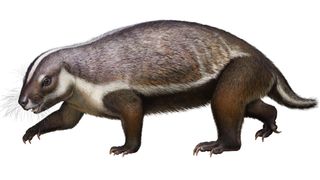
Ancient 'crazy beast' from Madagascar had mismatched body and teeth from 'outer space'


This life-like reconstruction of Adalatherium hui from the late Cretaceous of Madagascar shows off the creature’s weird-looking body and plentiful whiskers.
(Image: © Denver Museum of Nature & Science/Andrey Atuchin)

The oldest complete mammal fossil from the Southern Hemisphere is puzzling scientists with its mismatched body, strange skull holes and teeth that look like they're "from outer space."

Πέμπτη 15 Οκτωβρίου 2020

Rise of mammals 'began well before dinosaur extinction'


Published

Dinosaur extinctionimage copyrightRICHARD BIZLEY/SCIENCE PHOTO LIBRARY
image captionAn asteroid impact is thought to have wiped out most dinosaurs around 66 million years ago

Mammals began to flourish well before the end of the dinosaur age, a new study has found.

The study saw hundreds of mammal fossil teeth analysed by the Universities of Southampton and Chicago.

The findings showed those with varied diets began to adapt 10 to 20 million years before the dinosaurs died out.

Τετάρτη 14 Οκτωβρίου 2020

Ελληνικό πανό στην Αυστραλία υπέρ της Αρμενίας!

 nb armenia simaia afstralia ellas1


Συγκινητική είναι η στήριξη των απανταχού Ελλήνων στους Αρμένιους αδερφού μας και εκφράζεται με διάφορους τρόπους.

Ένα πανό που κρεμόταν πάνω από μια διάβαση πεζών στο προάστιο Oakleigh της Μελβούρνης, τράβηξε τα βλέμματα. Είχε την αρμενική σημαία με μια ελληνική επιγραφή: «Θα νικήσουμε. Η Αρτσάχ είναι Αρμενία».

Σε 13 χρόνια κάθειρξη καταδικάστηκε η διευθυντική ομάδα της Χρυσής Αυγής


Δεκατρία χρόνια κάθειρξη στους έξι από τους επτά της εγκληματικής οργάνωσης και ισόβια, αλλά και πρόσκαιρη κάθειρξη, στον Γιώργο Ρουπακιά, αποφάσισε το δικαστήριο. Σύμφωνα με την απόφαση που ανακοίνωσε η πρόεδρος Μαρία Λεπενιώτη, οι ποινές χωρίς τις συγχωνεύσεις είναι οι εξής:

Για τη διευθυντική ομάδα -Νίκος Μιχαλολιάκος, Χρήστος Παππάς, Ιωάννης Λαγός, Ηλίας Κασιδιάρης, Ηλίας Παναγιώταρος, Γιώργος Γερμενής- κάθειρξη δεκατριών ετών και επιπλέον ποινές για κάποιους από αυτούς για πλημμελήματα, καθώς και χρηματικές ποινές. Ο Αρτέμης Ματθαιόπουλος σε κάθειρξη δέκα ετών.

The Evolutionary History of Ichthyosaurs


By
inPaleobiology |
Score: 2.00 / 213

Imagine a world without dinosaurs, but where a diverse bunch of marine alternatives had their celebrity status instead. This is a world that did exist over 175 years ago. The word dinosaur and the scientific concept of dinosaurs as a group of extinct animals was not invented until 1842. Before then, the discovery of many remarkable marine reptile fossils, especially ichthyosaurs, captivated the public imagination in the way that dinosaurs do today (Figure 1).

Τρίτη 13 Οκτωβρίου 2020

Mammals in the Age of Dinosaurs


By
inPaleobiology |
Score: 3.87 / 422

Introduction

Sixty-six million years ago a worldwide cataclysmic event marked the end of the Mesozoic Era and changed the whole course of life on earth (Fig. 1). This was the end-Cretaceous mass extinction, and whether it was caused by a bolide strike or triggered by huge volcanic eruptions remains hotly debated. There is geological evidence for both at the time. The outcome, however, is indisputable. The dinosaurs that had dominated the land vertebrate fauna for the previous 125 million years completely and abruptly disappeared, along with the related flying pterosaurs, and the great marine reptiles, the ichthyosaurs, plesiosaurs and others. The vertebrate survivors included birds (which are technically miniature, feathered, flying dinosaurs) and the crocodiles, lizards, snakes and turtles. All of these groups soon proceeded to diversify, although none of them underwent any great evolutionary transformations in body form. A small number of the pre-existing mammals also survived the extinction, but their story was very different. Over the course of the following 66 million year Cenozoic Era, an astonishing array of entirely new kinds of mammals soon evolved. Small, nocturnal ancestors gave rise to numerous large bodied herbivores such as antelopes, camels, hippos, horses, rhinoceroses, kangaroos, and elephants, along with the carnivorous cats, wolves, bears, and hyaenas that preyed upon them. Completely novel forms such as anteaters with long sticky tongues and powerful digging claws, and monkeys, apes and sloths adapted for life in the trees evolved, and within just 25 million years the most specialised mammal groups of all appear in the fossil record: the bats are as accomplished fliers as birds, and the whales and dugongs are superbly adapted physiologically and anatomically for a permanent life in the sea.

Δευτέρα 12 Οκτωβρίου 2020

Η ιστορικότητα του όρου "Βυζαντινή Αυτοκρατορία" και η εφευρεση του στα χρόνια του Διαφωτισμού


(Σημ Φιλίστωρος; Μια ενδιαφέρουσα οπτική για το "Βυζάντιο" και την "Βυζαντινή Αυτοκρατορία" που αξίζει της προσοχής μας, ασχέτως αν μπορεί να μην συμφωνούμε με όλα τα σημεία της.)

Του Clifton R. Fox Καθηγητή Ιστορίας (Tomball College, USA)


Κατά τη τρέχουσα ορολογία η φράση "Βυζαντινή Αυτοκρατορία" αναφέρεται σε μια πολιτική πραγματικότητα που κάποτε κυριάρχησε στον κόσμο της Μεσογείου. Η πόλη που ονομάζεται Κωνσταντινούπολη ή (στους σημερινούς χάρτες) Ισταμπούλ ήταν η πρωτεύουσα της Αυτοκρατορίας. Η "Βυζαντινή Αυτοκρατορία" γεννήθηκε με την ίδρυση της Κωνσταντινούπολης τον 4ο αιώνα στη θέση του Βυζαντίου, της αρχαίας Ελληνικής αποικίας. Ο Ρωμαίος αυτοκράτορας Κωνσταντίνος ο 1ος (πεθ. 337) ονόμασε τη πόλη Νέα Ρώμη ή Κωνσταντινούπολη. Ο Κωνσταντίνος στην καινούργια πόλη μετέφερε την πρωτεύουσα του και αργότερα της έδωσε και το όνομα του. Οι διάδοχοι του Κωνσταντίνου του 1ου έζησαν στην Κωνσταντινούπολη χωρίς διακοπή μέχρι το 1204. Το 1204, οι Σταυροφόροι από τη Δυτική Ευρώπη, παρέκκλιναν από την πορεία τους προς τα Ιεροσόλυμα, κυρίευσαν και λεηλάτησαν την Κωνσταντινούπολη. Κράτησαν την πόλη μέχρι το 1261. Οι "Βυζαντινοί" επανίδρυσαν τη "Βυζαντινή Αυτοκρατορία" στην Κωνσταντινούπολη το 1261 μετά την εκδίωξη των " Φράγκων". Το 1453, οι Οθωμανοί Τούρκοι κατέλαβαν την Κωνσταντινούπολη. Η "Βυζαντινή Αυτοκρατορία έπαψε να υπάρχει.

Mammals and their relatives thrived, diversified during so-called 'Age of Dinosaurs'


Mammals and their relatives thrived, diversified during so-called ‘Age of dinosaurs,’ researchers show

Illustration of Didelphodon, a marsupial relative from the Late Cretaceous with the strongest pound-for-pound bite force of any known mammal. Credit: Misaki Ouchida

Paleontologists are trying to dispel a myth about what life was like when dinosaurs roamed the Earth. The false narrative has wormed its way into books, lectures and even scientific papers about this long-ago era.

The myth's focus isn't on dinosaurs. Its main characters are ancient mammals and their relatives, which together are known as mammaliaforms. According to the myth, a world crowded with dinosaurs left little room for mammaliaforms. As a result, mammals and their kin remained tiny, mouse-like and primitive. The myth posits that mammals didn't evolve diverse shapes, diets, behaviors and ecological roles until the K-Pg mass extinction event 66 million years ago killed off the dinosaurs and "freed up" space for mammals.

Κυριακή 11 Οκτωβρίου 2020

Mammal-like reptile survived much longer than thought


Mammal-like reptile survived much longer than thought

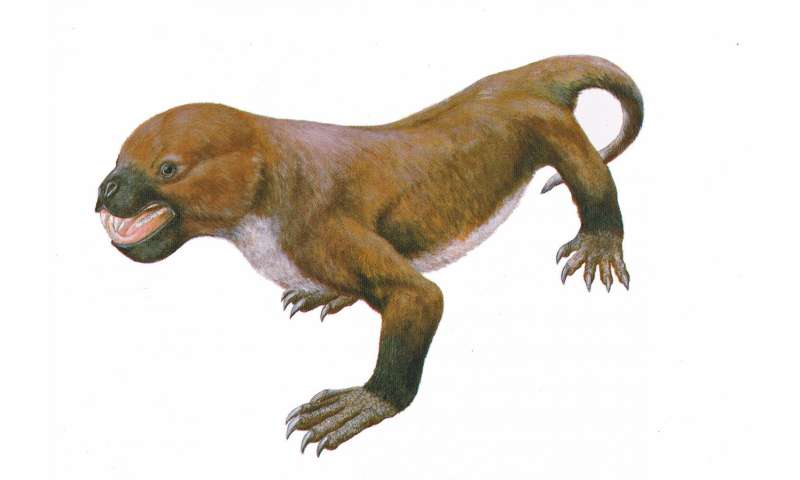
Tritylodontids are the last known family of near-mammalian reptiles, before mammals with features such as advanced hearing evolved. Researchers have uncovered dozens of fossilized teeth in Kuwajima, Japan and identified this as a new species of tritylodontid. This suggests that tritylodontids co-existed with some of the earliest mammal species for millions of years. Credit: Seishi Yamamoto/Hiroshige Matsuoka

Σάββατο 10 Οκτωβρίου 2020

Mammals from Early Cretaceous Epoch


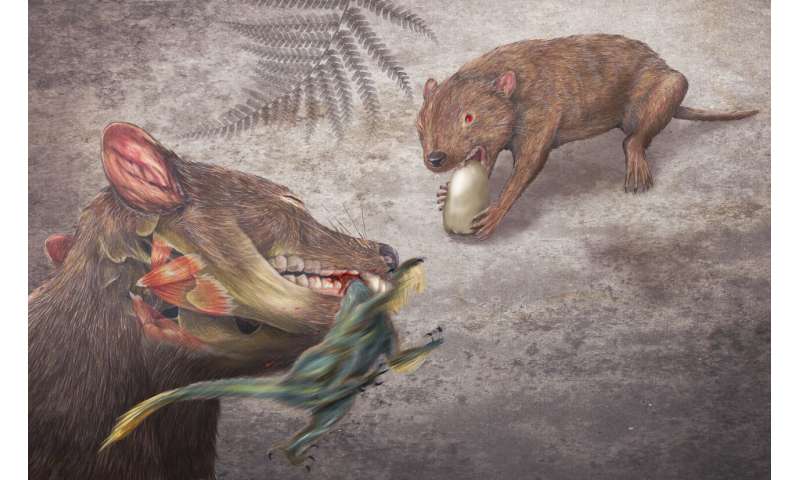
A group of paleontologists from the University of Portsmouth has discovered two new species of mammals that lived 145 million years ago in what is now Dorset county, southern England.

Artist’s impression of a lagoon at dusk with Durlstodon ensomi (left foreground), Durlstotherium newmani (right and center foreground) and the theropod Nuthetes holding a captured Durlstotherium newmani (center middle distance). Image credit: Mark Witton.Artist’s impression of a lagoon at dusk with Durlstodon ensomi (left foreground), Durlstotherium newmani (right and center foreground) and the theropod Nuthetes holding a captured Durlstotherium newmani (center middle distance). Image credit: Mark Witton