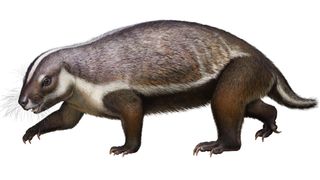
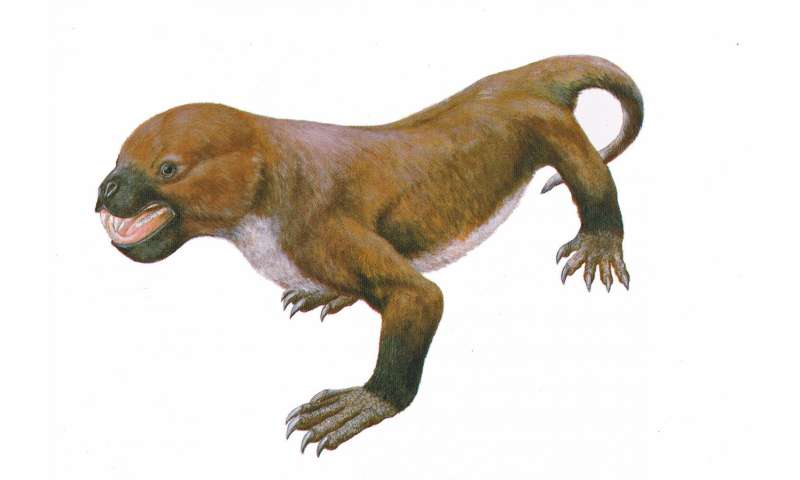
The oldest complete mammal fossil from the Southern Hemisphere is puzzling scientists with its mismatched body, strange skull holes and teeth that look like they're "from outer space."
By Stephanie Pappas - Live Science Contributor
Scientists can't even figure out how this weirdo walked.
The oldest complete mammal fossil from the Southern Hemisphere is puzzling scientists with its mismatched body, strange skull holes and teeth that look like they're "from outer space."
image copyrightRICHARD BIZLEY/SCIENCE PHOTO LIBRARYMammals began to flourish well before the end of the dinosaur age, a new study has found.
The study saw hundreds of mammal fossil teeth analysed by the Universities of Southampton and Chicago.
The findings showed those with varied diets began to adapt 10 to 20 million years before the dinosaurs died out.

Συγκινητική είναι η στήριξη των απανταχού Ελλήνων στους Αρμένιους αδερφού μας και εκφράζεται με διάφορους τρόπους.
Ένα πανό που κρεμόταν πάνω από μια διάβαση πεζών στο προάστιο Oakleigh της Μελβούρνης, τράβηξε τα βλέμματα. Είχε την αρμενική σημαία με μια ελληνική επιγραφή: «Θα νικήσουμε. Η Αρτσάχ είναι Αρμενία».

Δεκατρία χρόνια κάθειρξη στους έξι από τους επτά της εγκληματικής οργάνωσης και ισόβια, αλλά και πρόσκαιρη κάθειρξη, στον Γιώργο Ρουπακιά, αποφάσισε το δικαστήριο. Σύμφωνα με την απόφαση που ανακοίνωσε η πρόεδρος Μαρία Λεπενιώτη, οι ποινές χωρίς τις συγχωνεύσεις είναι οι εξής:
Για τη διευθυντική ομάδα -Νίκος Μιχαλολιάκος, Χρήστος Παππάς, Ιωάννης Λαγός, Ηλίας Κασιδιάρης, Ηλίας Παναγιώταρος, Γιώργος Γερμενής- κάθειρξη δεκατριών ετών και επιπλέον ποινές για κάποιους από αυτούς για πλημμελήματα, καθώς και χρηματικές ποινές. Ο Αρτέμης Ματθαιόπουλος σε κάθειρξη δέκα ετών.
Paleobiology | Imagine a world without dinosaurs, but where a diverse bunch of marine alternatives had their celebrity status instead. This is a world that did exist over 175 years ago. The word dinosaur and the scientific concept of dinosaurs as a group of extinct animals was not invented until 1842. Before then, the discovery of many remarkable marine reptile fossils, especially ichthyosaurs, captivated the public imagination in the way that dinosaurs do today (Figure 1).
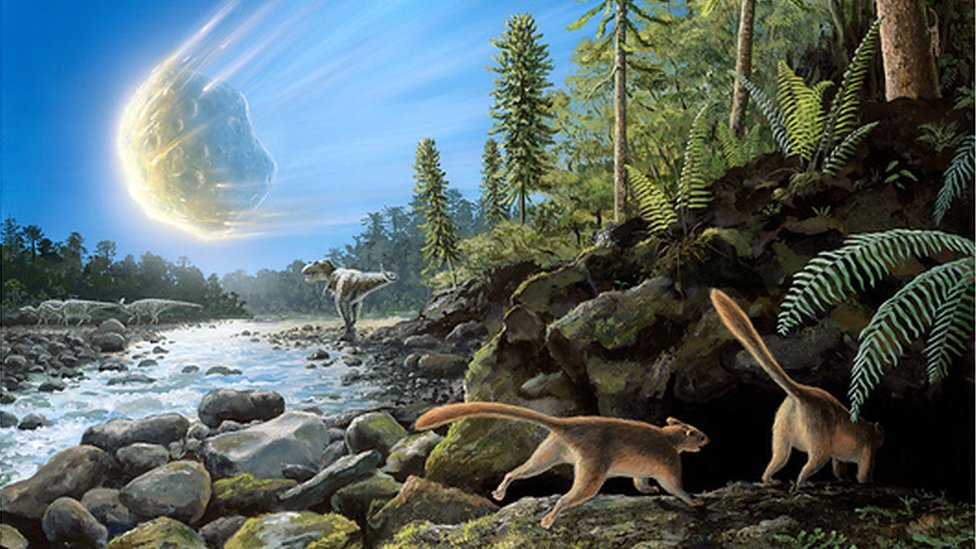
Paleobiology | Sixty-six million years ago a worldwide cataclysmic event marked the end of the Mesozoic Era and changed the whole course of life on earth (Fig. 1). This was the end-Cretaceous mass extinction, and whether it was caused by a bolide strike or triggered by huge volcanic eruptions remains hotly debated. There is geological evidence for both at the time. The outcome, however, is indisputable. The dinosaurs that had dominated the land vertebrate fauna for the previous 125 million years completely and abruptly disappeared, along with the related flying pterosaurs, and the great marine reptiles, the ichthyosaurs, plesiosaurs and others. The vertebrate survivors included birds (which are technically miniature, feathered, flying dinosaurs) and the crocodiles, lizards, snakes and turtles. All of these groups soon proceeded to diversify, although none of them underwent any great evolutionary transformations in body form. A small number of the pre-existing mammals also survived the extinction, but their story was very different. Over the course of the following 66 million year Cenozoic Era, an astonishing array of entirely new kinds of mammals soon evolved. Small, nocturnal ancestors gave rise to numerous large bodied herbivores such as antelopes, camels, hippos, horses, rhinoceroses, kangaroos, and elephants, along with the carnivorous cats, wolves, bears, and hyaenas that preyed upon them. Completely novel forms such as anteaters with long sticky tongues and powerful digging claws, and monkeys, apes and sloths adapted for life in the trees evolved, and within just 25 million years the most specialised mammal groups of all appear in the fossil record: the bats are as accomplished fliers as birds, and the whales and dugongs are superbly adapted physiologically and anatomically for a permanent life in the sea.

by James Urton, University of Washington
Paleontologists are trying to dispel a myth about what life was like when dinosaurs roamed the Earth. The false narrative has wormed its way into books, lectures and even scientific papers about this long-ago era.
The myth's focus isn't on dinosaurs. Its main characters are ancient mammals and their relatives, which together are known as mammaliaforms. According to the myth, a world crowded with dinosaurs left little room for mammaliaforms. As a result, mammals and their kin remained tiny, mouse-like and primitive. The myth posits that mammals didn't evolve diverse shapes, diets, behaviors and ecological roles until the K-Pg mass extinction event 66 million years ago killed off the dinosaurs and "freed up" space for mammals.

by Kyoto University
A group of paleontologists from the University of Portsmouth has discovered two new species of mammals that lived 145 million years ago in what is now Dorset county, southern England.
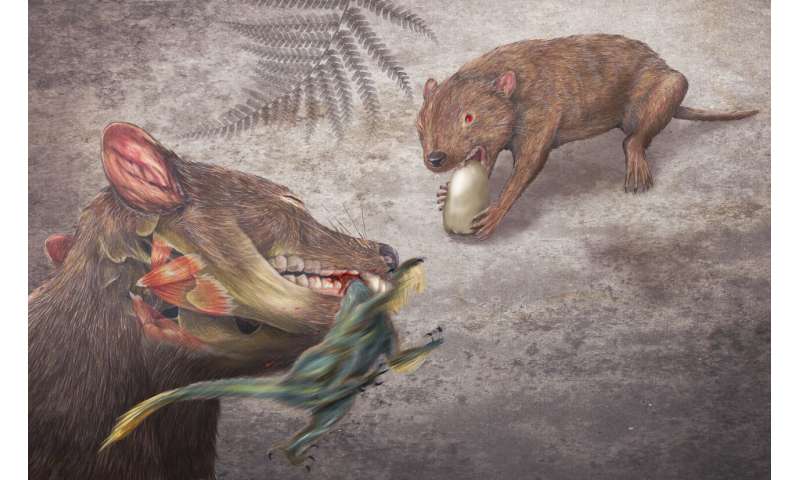
Artist’s impression of a lagoon at dusk with Durlstodon ensomi (left foreground), Durlstotherium newmani (right and center foreground) and the theropod Nuthetes holding a captured Durlstotherium newmani (center middle distance). Image credit: Mark Witton
Our mammalian ancestors were eking out an existence even before T. rex came stomping along. We can reveal their story by studying beautiful, new fossils from China.
When you think of fossils of prehistoric animals, you probably think of dinosaurs. And fair enough, they dominated the Earth for millions of years.
But they were far from the only animals living on Earth before the asteroid hit. Also roaming the Earth were the very first mammals. Tiny, primitive and sometimes quite bizarre, these creatures are the precursors of everything from deer to humans.
Here are some of the key animals that help paint a picture of how modern mammals evolved.
Size: 500-800 grams, 43-50 centimetres long
Origin: Inner Mongolia, Middle-Late Jurassic, around 166-157 million years ago
Facts: Adapted for life in the water, this early mammal had paddle-like limbs, a flattened tail, and specialised teeth for eating fish. Castorocauda is relatively small by today’s standards – it was about the size of a grey squirrel – but it’s one of the largest known Jurassic mammals.
Although it somewhat resembles a modern beaver or platypus, it’s not closely related.
Size: Equivalent to a large cat or mid-sized dog
Origin: Southwestern USA, Early Jurassic, around 200-183 million years ago
Facts: One of the closest relatives of true mammals. They had at least some hair, walked upright, and had a high metabolism.
Size: 70 grams, 12-14 centimetres long
Origin: Inner Mongolia, Middle-Late Jurassic, around 166-157 million years ago
Facts: With its skin membrane (patagium) stretching between its body and limbs, Volaticotherium could have glided between trees. When it was discovered in 2006, it was the oldest known fossil of a flying mammal.
Size: 160 grams, 15-20 centimetres long
Origin: Romania, Late Cretaceous, around 66-69 million years ago
Facts: Litovoi is a multituberculate, an extinct group that thrived in the Cretaceous, survived the asteroid impact, then wasted away to extinction about 35 million years ago. It had one of the smallest brains, proportional to body size, ever for a mammal.
Size: 20 kilograms, size of a medium-to-large dog
Origin: Southwestern USA, Early Paleocene, around 63.3-61.7 million years ago
Facts: Periptychus is a ‘condylarth’, a member of a cluster of primitive hoofed mammals that proliferated after the dinosaur extinction. It had robust teeth to eat roots, stems and other tough plants, and a stout skeleton well-suited for moving on land and navigating forest vegetation.
A few years ago, I visited Liaoning Province in China, to study the region’s famous feather-covered dinosaur fossils. One day, after many hours of measuring bones and photographing feathers in a museum, I needed a break.
My Chinese colleagues exchanged a few hushed words of Mandarin and motioned for me to follow. “We have something secret to show you,” one of them said. “And it’s not a dinosaur.”
We left the museum, hopped into a car, and snaked through the narrow streets of Beipiao city, clogged with bicycles and noodle vendors. We pulled into an alleyway that opened into a small courtyard. Into a dark apartment we ventured, sidestepping a clutter of boxes and wooden crates.
One of my colleagues ducked into a side room and came out holding two rock slabs that fitted together like a jigsaw puzzle. On the surface was a brown smear, about the size of an apple
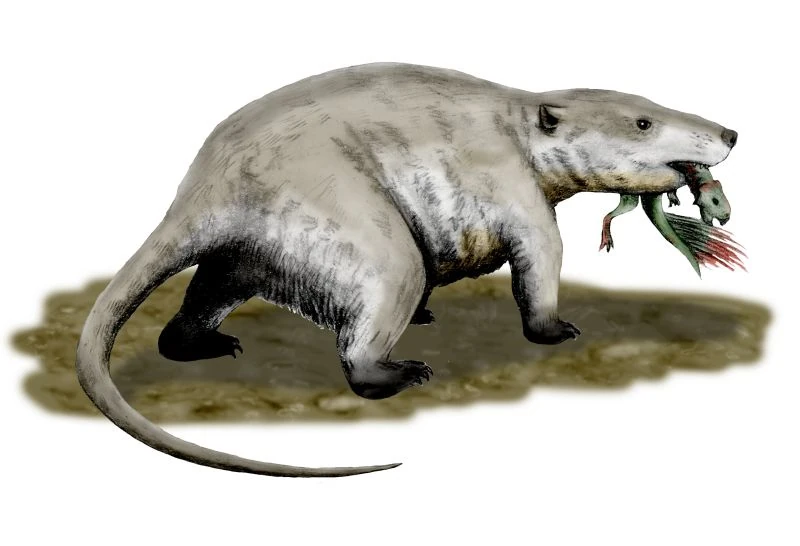
Repenomamus
Repenomamus was the largest mammal of the Age of Dinosaurs. It was the first evidence of a Mesozoic mammal that was bigger than a mouse. In fact, Repenomamus was 3 feet long and weighed 26 to 31 pounds. This made it bigger than most of the dinosaurs of Liaoning, where it lived. In fact, there is even evidence that some dinos should have hidden from Repenomamus. In the stomach of Repenomamus were the bones of a baby Psittacosaurus. This is evidence that mammals were starting to get their revenge on dinsaurs by eating them. This would make Repenomamus the T-rex of Mesozoic mammals.
On April 28, 2014, a fishing trawler intercepted an oil tanker in the Gulf of Oman, a day after the tanker had left Dubai for Greece. Three men climbed aboard the tanker and spent the night packing hundreds of small sacks of heroin, weighing at least two metric tons in total, into its ballast boxes. After they finished, two of the men sailed back to the coast. One stayed behind. He carried a handgun and ordered the tanker’s crew to keep sailing.
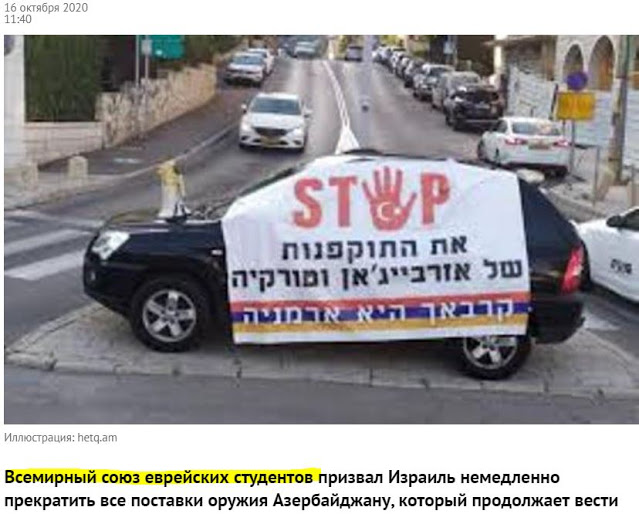
Η Παγκόσμια Ένωση Εβραίων Φοιτητών κάλεσε το Ισραήλ να σταματήσει αμέσως όλες τις προμήθειες όπλων στο Αζερμπαϊτζάν, το οποίο συνεχίζει να διεξάγει εχθροπραξίες στη ζώνη σύγκρουσης του Καραμπάχ, ανέφεραν τα αρμενικά ΜΜΕ στις 16 Οκτωβρίου.
Η ένωση πρότεινε στην ισραηλινή ηγεσία αντ 'αυτού να διαδραματίσει το ρόλο του μεσολαβητή στην εδραίωση της ειρήνης στον Νότιο Καύκασο.
Η συμφωνία με τα Σκόπια έχει υπογραφεί, επικυρωθεί και εφαρμόζεται.
antifono.gr

Η πελατειακή σχέση της Αγκυρας με το Πεκίνο – Η κινεζική χρηματοδότηση έργων μεγάλης κλίμακας με επενδύσεις σε υποδομές, ενέργεια και τηλεπικοινωνίες
Στην Κίνα στρέφει το βλέμμα του ο Ρετζέπ Ταγίπ Ερντογάν αναζητώντας έναν νέο εταίρο στο διπλωματικό αλλά κυρίως στο οικονομικό πεδίο, έναν εταίρο που θα μπορέσει να λειτουργήσει και ως σανίδα σωτηρίας όταν και όποτε χρειαστεί. Ηδη από το 2019 οι κινήσεις του προέδρου της Τουρκίας προβλημάτισαν την Ουάσιγκτον αλλά και τη Μόσχα μετά το πρόσφατο εντυπωσιακό άνοιγμα του Ερντογάν στον Κινέζο ομόλογό του, ένα άνοιγμα που έχει ξεκινήσει με μνημόνια συνεργασίας μεταξύ Κίνας και Τουρκίας ήδη από το 2015. Η σχέση είναι πελατειακή με ό,τι αυτό σημαίνει για την Τουρκία, την Κίνα αλλά κυρίως τη Δύση.

Το «Ουδέν νεώτερον από το Δυτικό Μέτωπο» είναι ίσως ένα από τα πιο διάσημα αντιπολεμικά έργα για τις τραυματικές εμπειρίες στα χαρακώματα του Α’ Παγκοσμίου Πολέμου και παραμένει μέχρι σήμερα επίκαιρο.
Το κλασικό αντιπολεμικό μυθιστόρημα του Έριχ Μαρία Ρεμάρκ «Ουδέν νεώτερον από το Δυτικό Μέτωπο» έχει γράψει τη δική του ιστορία και μέχρι σήμερα έχει πουλήσει πάνω από 20 εκατομ. αντίτυπα παγκοσμίως. Είναι, θα έλεγε κανείς, το πορτραίτο μιας ολόκληρης γενιάς που εγκατέλειψε το σχολείο για να πολεμήσει στο μέτωπο του Α‘ Παγκόσμιου Πολέμου, μιας αιματηρής σύρραξης που καθόρισε τον 20ό αιώνα και προετοίμασε το έδαφος για τον Β‘ Παγκόσμιο Πόλεμο.
του Κ. ΚΥΡΙΑΚΟΠΟΥΛΟΥ
Για να τελειώσει επιτέλους αυτός ο παραλογισμός με την ανεξέλεγκτη «εισβολή» εμμονικών, μωροφιλόδοξων και κάθε λογής ψεκασμένων, που διεκδικούν ρόλο πρωταγωνιστικό στον δημόσιο διάλογο, στο κοινωνικό γίγνεσθαι και εν τέλει στην ίδια την πολιτική διεργασία, καλό θα είναι να ξεκαθαρίσουμε τα αυτονόητα…
Κάθε κυρίαρχη άποψη είναι ex officio και συστημική. Και αυτή η σχέση είναι διαλεκτική, χαρακτηρίζεται από έναν ιδιαίτερο δυναμισμό, και είναι εκ των πραγμάτων μια σχέση ανατροφοδούμενη. Επομένως κανένας δεν ανακάλυψε την Αμερική μιλώντας για το αυτονόητο, αλλά και ουδείς χρίζεται «επαναστάτης» και αντισυμβατικός, επειδή «πουλά» κίβδηλο «αντισυστημισμό» με τους βαρύγδουπους και συχνά άφρονες ισχυρισμούς του