By Dr Stephen Brusatte
When you think of fossils of prehistoric animals, you probably think
of dinosaurs. And fair enough, they dominated the Earth for millions of
years.
But they were far from the only animals living on Earth before the
asteroid hit. Also roaming the Earth were the very first mammals. Tiny,
primitive and sometimes quite bizarre, these creatures are the
precursors of everything from deer to humans.
Here are some of the key animals that help paint a picture of how modern mammals evolved.
Castorocauda
Castorocauda © Masato Hattori
Size: 500-800 grams, 43-50 centimetres long
Origin: Inner Mongolia, Middle-Late Jurassic, around 166-157 million years ago
Castorocauda skeleton © AAAS Science
Facts: Adapted for life in the water, this early
mammal had paddle-like limbs, a flattened tail, and specialised teeth
for eating fish. Castorocauda is relatively small by today’s
standards – it was about the size of a grey squirrel – but it’s one of
the largest known Jurassic mammals.
Although it somewhat resembles a modern beaver or platypus, it’s not closely related.
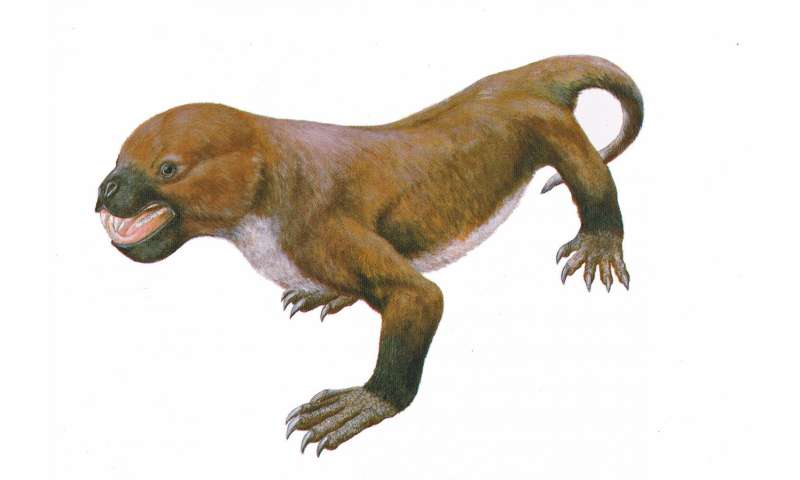
Kayentatherium
Kayentatherium © Alamy
Size: Equivalent to a large cat or mid-sized dog
Origin: Southwestern USA, Early Jurassic, around 200-183 million years ago
Facts: One of the closest relatives of true mammals. They had at least some hair, walked upright, and had a high metabolism.
Volaticotherium
Volaticotherium © Masato Hattori
Size: 70 grams, 12-14 centimetres long
Origin: Inner Mongolia, Middle-Late Jurassic, around 166-157 million years ago
Facts: With its skin membrane (patagium) stretching between its body and limbs, Volaticotherium could have glided between trees. When it was discovered in 2006, it was the oldest known fossil of a flying mammal.
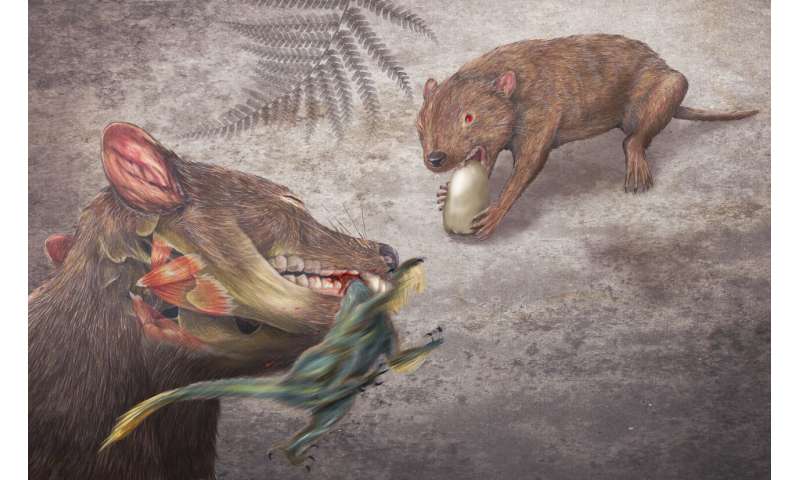
Litovoi
Litovoi © Ceri Thomas/Nix Draws Stuff
Size: 160 grams, 15-20 centimetres long
Origin: Romania, Late Cretaceous, around 66-69 million years ago
Facts: Litovoi is a multituberculate, an
extinct group that thrived in the Cretaceous, survived the asteroid
impact, then wasted away to extinction about 35 million years ago. It
had one of the smallest brains, proportional to body size, ever for a
mammal.
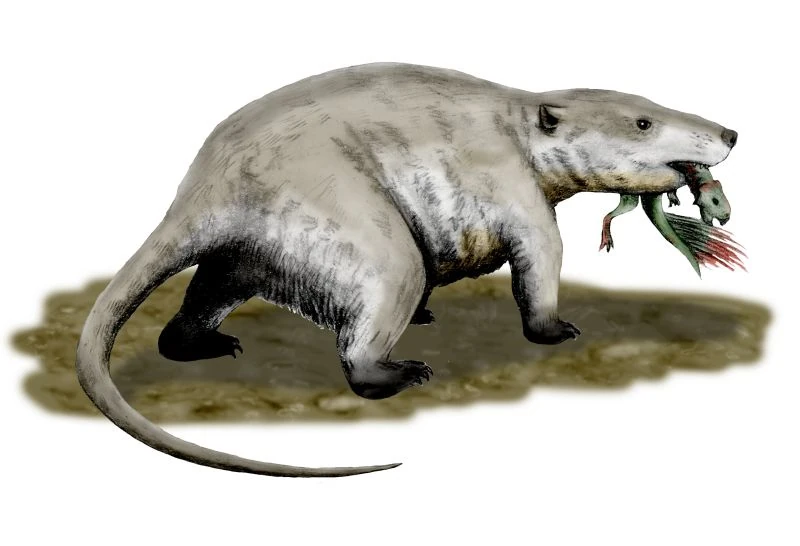
Periptychus
Periptychus © Alamy
Size: 20 kilograms, size of a medium-to-large dog
Origin: Southwestern USA, Early Paleocene, around 63.3-61.7 million years ago
Facts: Periptychus is a ‘condylarth’, a
member of a cluster of primitive hoofed mammals that proliferated after
the dinosaur extinction. It had robust teeth to eat roots, stems and
other tough plants, and a stout skeleton well-suited for moving on land
and navigating forest vegetation.
- This article first appeared in issue 349 of BBC Science Focus




 Paleobiology




 Η συμφωνία με τα Σκόπια έχει υπογραφεί, επικυρωθεί και εφαρμόζεται.


 του Κ. ΚΥΡΙΑΚΟΠΟΥΛΟΥ