Ετικέτες

Σάββατο 5 Νοεμβρίου 2016

STUNNING Pics of Allied Planes Pressed Into Nazi Service


The Luftwaffe P-38 Lightning & Other
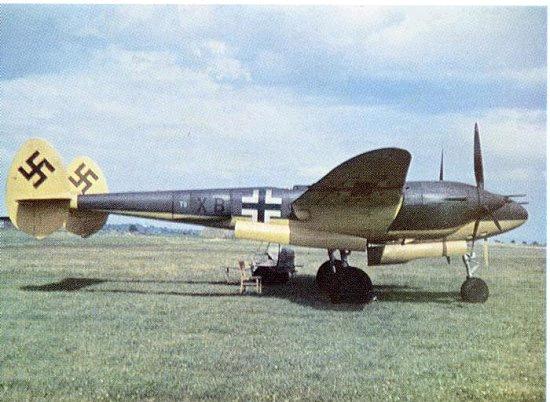


Ever wondered what happened with the airplanes that made an emergency landing in occupied territory? When captured (relatively) intact they were tested by the Germans and sometimes put into service!
Enjoy these amazing pictures of familiar Allied airplanes in very unfamiliar colors and markings!

Παρασκευή 4 Νοεμβρίου 2016

2,000-year-old skeleton salvaged from Antikythera shipwreck may hint at earliest evidence of human DNA


antikythera-shipwreck-evidence-human-dna_1
The waters off the coast of Antikythera in Greece hold many mysteries of the ancient world that are yet to be uncovered. Site of the largest shipwreck from antiquity, the region boasts a treasure trove of invaluable artifacts as well as the famous Antikythera Mechanism, a 2,000-year-old astronomical calculator that is widely considered the world’s oldest computer. Recently, researchers working at the site have discovered a well-preserved skeleton of a young man, which they believe could provide the earliest DNA evidence ever retrieved from a sunken vessel.

Πέμπτη 3 Νοεμβρίου 2016

Much More Than Code Talking – The Native Americans’ Role in World War II


 Lincoln Riddle


Native Americans made an enormous contribution to the World War II effort. Sadly, their involvement in the conflict is widely overlooked. Sometimes, they are portrayed as codebreakers and nothing more. This is not the case. Native Americans played a huge role in the war from its beginning to its end.
From the time the Europeans began settling in the New World, the population of the Native Americans began decreasing at an alarmingly rapid rate. The group’s population was seeing a little bit of a rise during the beginning of the 21st century. However, another large chunk of this growing population would fall prey to another harsh crime of the Western world – World War II. In fact, 44,000 Native American individuals participated in the war.

Τετάρτη 2 Νοεμβρίου 2016

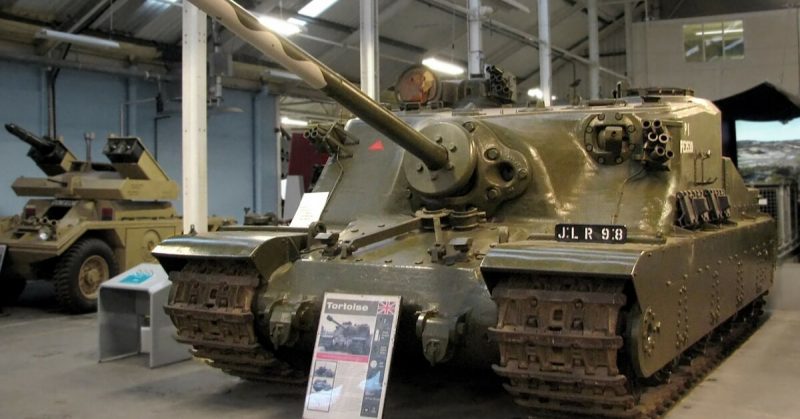
The Tortoise, An Unknown WW2 Heavy Tank – Video from The Tank Museum


The Heavy Assault Tank or Assault Gun, Tortoise, was a British tank design developed in World War II but never put into mass production. It was developed for the task of clearing heavily fortified areas and as a result favoured armour protection over mobility.
In the early part of 1943, the Allied forces anticipated considerable resistance in the projected future invasion of Europe, with the enemy fighting from heavily fortified positions such as the Siegfried Line. As a result, a new class of vehicles emerged, in the shape of Assault tanks, which placed maximum armour protection at a higher priority than mobility.

Δευτέρα 31 Οκτωβρίου 2016

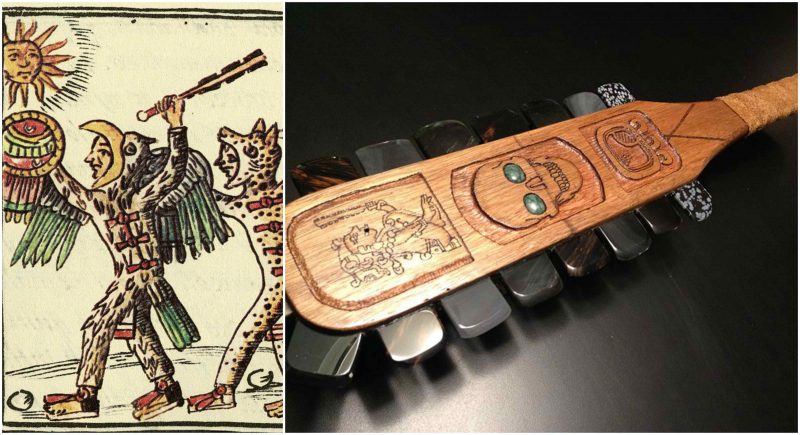
The macuahuitl was a sword with obsidian blades used mostly by the Aztecs. It was sharp enough to decapitate a man, and even a horse


Macuahuitl
 
 
SHARE:
A macuahuitl, a type of macana, is a wooden sword with obsidian blades. The name is derived from the Nahuatl language. Its sides are embedded with prismatic blades traditionally made from obsidian, famous for producing an edge far sharper than even high-quality steel razor blades. It was a common weapon used by the Aztec military forces and other cultures of central Mexico. It was described during the 16th-century Spanish conquest of the region.

Κυριακή 30 Οκτωβρίου 2016

‘Sheriff Rosco P. Coltrane’ Was A B-17 Gunner In WWII


He joined the Army Air Force in 1945 and was qualified as a B-17 “Flying Fortress” Radio Operator/Aerial Gunner, serving in Europe at the end of WWII. He was awarded the American Campaign Medal, WWII Victory Medal and German Occupation Medal.
James Best (born Jewel Franklin Guy; July 26, 1926 – April 6, 2015) was an American actor, who in six decades of television is best known for his starring role as bumbling Sheriff Rosco P. Coltrane in the CBS television series The Dukes of Hazzard. He also worked as an acting coach, artist, college professor, and musician.

Σάββατο 29 Οκτωβρίου 2016

10 things you should know about the Anglo-Saxon warriors


10-facts-anglo-saxon-warriors
While comprising a group of Germanic tribes from continental Europe, the Anglo-Saxons established themselves in Great Britain from the 5th century. This consequent Anglo-Saxon epoch (from roughly 449 – 1066 AD) led to the creation of the English nation and the resurgence of Christianity in Britain. And even beyond culture and religion, one of the lasting legacies of these Germanic people is their contribution to the ambit of language – what we know today as Old English. However in this article we have decided to explore one of the lesser known avenues relating to the Anglo-Saxons, and it pertains to their incredible military that bridged the gap between the ancient ‘barbarian’ Germans and the ordered medieval armies. So without further ado, let us take a gander at ten fascinating things you should know about the Anglo-Saxon warriors.

1) The Roman influence? 

10-facts-anglo-saxon-warriors_1
Illustration by Angus Mcbride
While the diminishing of Roman imperial rule set the tone for Anglo-Saxon arrivals at the shores of the British islands (circa 5th century AD), it should be noted that the late Roman Empire already followed an ‘inclusive’ military doctrine that allowed the employment of auxiliary units. By 4th century, in the northern frontier, these auxiliary units were often composed of entire Germanic sub-tribes, who were settled as foederati (allied troops) in marches, buffer zones and areas of conflict. During the same time-period, the Romans (or Romano-British) had already begun to set up coastal defenses to protect their shores from the forays of the independent Anglo-Saxon tribes.

Πέμπτη 27 Οκτωβρίου 2016

Archaeologists may have located the ancient theater at the famed Greek city of Akragas


ancient-theater-greek-city-akragas_1Google Earth top-view of the possible theater at Akragas. Credit: AgrigentoSette
The ancient city of Akragas (or Ἀκράγας) in Sicily was one of the major Greek-populated settlements of Magna Graecia, during what is termed as the golden age of Greek city-states (circa 5th century BC). The city was originally founded in early 6th century by Greek colonists from Gela (in Sicily), and by the turn of the century it possibly had a population of more than 100,000 people. In fact, even after numerous political and military upheavals during the Punic Wars, the city managed to regain its prosperity, so much so that its inhabitants (the city being renamed Agrigentum) were granted Roman citizenship after the death of Julius Caesar in 44 BC.

Τρίτη 25 Οκτωβρίου 2016

Does an ancient Hebrew treatise reveal the ‘doom’ of the Ark of the Covenant?


Ancient_Text_Hebrew_Ark_Of_The_Covenant_1Carrying the Ark of the Covenant: gilded bas-relief at the Auch Cathedral.
Last month we showcased the (what if) 3D reconstruction of the Solomon’s Temple in accordance to its Biblical measurements. Now beyond its religious status as the grand First Jewish Temple built on the Temple Mount, Solomon’s Temple is also known for its housing of the fabled Ark of the Covenant. This naturally brings us the million-dollar question – what exactly was the Ark of the Covenant? Well as literary sources mention, the legendary artifact was possibly a gold-plated chest that stored the sacred tablets containing the original Ten Commandments. But as every Indiana Jones fan worth his salt would know, the Ark is elusive (or perhaps even ‘illusory’) – and as such is still lost to the researchers of our modern age. But an ancient Hebrew text translated in 2013, might provide some (possibly fancy) insights into the whereabouts and status of this puzzling artifact, along with the other treasures of King Solomon – who was said to be the richest man of his time in Biblical sources.

Δευτέρα 24 Οκτωβρίου 2016

Listen to the ‘accurate’ reconstruction of Ancient Greek music with the world’s oldest known complete song


accurate-reconstruction-ancient-greek-musicSymposium scene, circa 490 BC. Wikimedia Commons.
From the historical perspective many scholars believe that music played an integral role in the lives of ordinary ancient Greeks, given its role in most social occasions – ranging from religious rites, funerals to theater and public recitation of ballads and epic-poetry. Both archaeological and literary evidences rather bolster such a theory that points to the crucial nature of music in ancient Greece. In fact, the Greeks attributed the ‘creativity’ of musical compositions to divine entities, and as such etymologically the very word ‘music’ is derived from ‘Muses‘, the personifications of knowledge and art who were the nine daughters of Zeus and Mnemosyne. Interestingly, Mnemosyne herself was the personification of memory, and was also one of the Titans, the children of Uranus the Sky and Gaia the Earth.

Furthermore when it came to the ancient Greek musical instruments, the musicians had a penchant for lyres (and kithara), aulos pipes and syrinx, and even the hydraulis – a setup that was the precursor to the modern organ. And with the aid of the flurry of archaeological and literary evidences of vocal notations and musical ratios, combined with the identification of these instruments, researchers have been able to recreate precise renditions of ancient Greek music. For example, Dr David Creese, Head of Classics & Ancient History at the University of Newcastle, has devised the following reconstruction of a musical piece that was etched on the ‘Seikilos epitaph’ dating from 1st century AD –
Now in case you are interested, the ‘song’ that was recreated by Dr David Creese is actually the world’s oldest known complete song. Inscribed on the Seikilos epitaph, the ancient Greek characters on the slab allude to the piece’s Hellenistic Ionic origin. Interestingly, the completeness of its composition is partly due its short nature. To that end, the lyrics has been roughly translated to English, excluding the musical notation –
While you live, shine
have no grief at all
life exists only for a short while
and time demands its toll.
This lyrical part is also accompanied by a poignant etching that takes narrative of the epitaph itself – “I am a tombstone, an image. Seikilos placed me here as an everlasting sign of deathless remembrance.” In any case, as opposed to the Hurrian Hymns (the oldest known song in the world), the Greek composition on the Seikilos epitaph is complete – and thus is less open to interpretation. Simply put, there is more chance of hearing the originally ‘intended’ rendition of this Ionic song, even when recreated in our modern times. So if interested, you can check out this vocal rendition of the enchanting ‘Song of Seikilos’ – the oldest known complete song in the world –

And in case you are in mood for something more jovial, take a gander at the modern guitar-fueled cover of the ‘Song of Seikilos’, sung and played by famous internet teacher Hank Green

Κυριακή 23 Οκτωβρίου 2016

Elegantly contrived vase animation presents the Greek Hoplites at war


vase-animation-greek-hoplites-war
The Greek word for military equipment roughly translates to hopla, and thus a hoplite simply pertained to the ancient Greek version of the ‘man at arms’ or ‘armored man’. But as opposed to their late medieval counterparts, the ancient hoplites were first and foremost citizen-soldiers. Simply put, these conscripted men were expected to take part in battles to safeguard their own interests, freedoms and farms, in contrast to viewing military as a contractual well-paying career. And while the ‘classic’ well-armored and trained Greek soldier was ultimately eclipsed by the tactical Macedonian phalanx in late 4th century BC, hoplites (and their predecessors) had dominated the Mediterranean battlefields for almost three centuries before that.

On the other cultural spectrum, the development of ancient Greek art was rather mirrored by the pottery designs that were made between the time-fame of 1000 – 400 BC. Continuing the artistic legacy of the earlier Minoan pottery and Mycenaean pottery, the vase painting in the late Archaic Age (620 to 480 BC) mainly comprised the so-termed ‘black figure’. As Mark Cartwright wrote (for Ancient Encyclopedia) in regard to the predominance of black figures during the aforementioned period –

Σάββατο 22 Οκτωβρίου 2016

Crusader-era hand grenade found among archaeological artifacts collected by electric company worker


crusader-era-grenade-artifacts-israel_1Credit: Amir Gorzalczany, Israel Antiquities Authority.
The unique legacy left behind by late Marcel Mazliah is something to boast about when it comes to a historical scope. Over the years, the electric company worker had made a personal collection of priceless artifacts (with one of the items being around 3,500-years old) that were salvaged from the Mediterranean Sea bordering Israel. And fortuitously, his family has now decided to hand over the incredible treasure trove to the Israel Antiquities Authority (IAA), which would earn them a good citizen award from the state. But beyond ownership and recognition, one particular artifact from the collection stands out – and it entails an actual Crusader-era hand grenade that rather showcases its medieval brand of fine craftsmanship.

From the perspective of etymology, the term ‘grenade’ was most probably derived from Old French ‘pomegranate’ (possibly influenced by Spanish granada) circa 1590 AD, since the fruit resembles the fragmented-form of the weapon. As for the historical side of affairs, grenades in their rudimentary designs were probably used in the 8th century AD Eastern Roman armies, with Greek Fire concoctions sometimes being stashed inside pots and jars, to be thrown at enemies.
crusader-era-grenade-artifacts-israel_2
Credit: Diego Barkan, Israel Antiquities Authority
Greek Fire in itself is said to be originally created by a Syrian Engineer named Callinicus (who was a refugee from Maalbek). The technology was sort of a precursor to napalm, and it entailed vicious ‘liquid fire’ that continued to burn even while floating in water. In fact, some writers have gone on to explain how the viciously efficient Greek Fire could only be mitigated by extinguishing it with sand, strong vinegar or old urine.
As for the hand grenade in question here, the embellished metal-made bomb-like item probably harks back to the period circa 13th century AD, thus coinciding with the time-frame of the Crusaders, Ayyubids and early Mamluks. The military forces of this time possibly used some variation of an inflammable substance, including a combination of materials like naphtha, pitch (obtained from coal tar), sulfur and resin – for their grenades. On the other hand, a few scholars believe that as opposed to chemical warfare, these ‘grenades’ only had ornamental purposes for storing perfume.
crusader-era-grenade-artifacts-israel_3
Credit: Diego Barkan, Israel Antiquities Authority.
In any case, archaeologists from the IAA were pleasantly surprised by a slew of other metal objects that were stashed by Mazliah. According to his family, the electric company worker got hold of the artifacts from under the sea, as a result of numerous ancient and medieval shipwrecks that dot the Israeli coast. Ayala Lester, a curator with the IAA, stated –
The finds include a toggle pin and the head of a knife from the Middle Bronze Age from more than 3,500 years ago [see above]. The other items, among them, two mortars and two pestles, fragments of candlesticks, and so on, date to the Fatimid period. The items were apparently manufactured in Syria and were brought to Israel.
Lastly beyond the scope of the treasure trove accumulated by Mazliah, the occurrence of shipwrecks around the coastal regions of Levant could be attested by a fascinating find in May of this year. Touted to be the largest hoard of marine-based objects in the last 30 years in Israel, IAA announced that the treasure stash contained both bronze statues and coins, along with other assorted stuff. And interestingly enough, the discovery was made quite by chance when two divers identified the remains of the ancient ship and reported back to the authorities.
crusader-era-grenade-artifacts-israel_4
Credit: Amir Gorzalczany, Israel Antiquities Authority.

Παρασκευή 21 Οκτωβρίου 2016

Scholar translates 1700-year old Greek epitaph of a Jewish Egyptian woman


1700-year-greek-epitaph-jewish-egyptian_2Credit: Jaren Wilkey/BYU
A 1700-year old limestone epitaph slightly bigger than an iPad sheds light into the fusion of different religious entities prevalent in early 3rd century AD ancient Egypt. Salvaged from a collection of Greek and Coptic artifacts from University of Utah’s J. Willard Marriott Library, this engraved object commemorates a woman named Helene. And while she is identified (in the epitaph itself) as a Jewish woman, Helene is also referred by a title that was usually associated with Christian women in this late-antiquity time period of Egypt, thus alluding to an inclusive societal scope.

The translation was made by BYU associate professor of ancient scripture Lincoln H. Blumell. The inscription reads like this –

Τετάρτη 19 Οκτωβρίου 2016

10 of the greatest ancient warrior cultures you should know about


10-greatest-ancient-warrior-culturesIllustration by Angus McBride.
The episodes of war and human conflicts are persistent when it comes to the rich tapestry of history. And in such a vast ambit of wanton destruction and death, there have been a few civilizations, tribes and factions that had accepted warfare as an intrinsic part of their culture. So without further ado, let us take a gander at ten of the incredible warrior cultures from the ancient times that pushed forth the ‘art of war’ (or rather the art of dealing with war) as an extension of their social system.

Τρίτη 18 Οκτωβρίου 2016

Jewish Second Temple courtyard’s ‘regal’ floor tiles restored by archaeologists


second-temple-floor-tiles-restored_2The Jewish Second Temple replica.
Researchers from the Jerusalem-based Temple Mount Sifting Project has accomplished quite a feat by restoring a unique architectural scope of the once-monumental Second Jewish Temple. This fascinating ambit mainly entails the richly decorated floor tiles that adorned the porticoes on the Temple Mount. Simply put, these ancient specimens probably played their decorative role along the courtyards of the huge temple complex, corresponding to the period when King Herod ruled over the Roman client realm of Judea (circa 37 – 4 BC). Now interestingly if the project is assessed to be accurate, this would be the first time that archaeologists had been able to successfully restore any element from the Second Temple.

Δευτέρα 17 Οκτωβρίου 2016

New pterosaur species discovered in the Patagonia region of Argentina


new-pterosaur-species-patagonia-argentina_1Reconstruction of a ptesosaur. Credit: Gabriel Lío
Researchers announced the discovery of a new (extinct) species of pterosaur from the Patagonia region of South America. The discovery was made from the cranial remains of a specimen that were found to be a pretty well preserved condition, probably dated from the Early Jurassic period (around 200 – 175 million years ago). Interestingly enough, the new species was named as the Allkauren koi, from the native Tehuelche language – with ‘all’ roughly translating to ‘brain’ and ‘kauren’ meaning ‘ancient’.

The very name ‘Pterosaur’ comes from the Greek for ‘winged lizards’. These astounding flying reptiles ruled the skies between the late Triassic to the end of the Cretaceous Period; and quite unsurprisingly, one of the largest known flying animals of all time – Quetzalcoatlus, comes from this extinct clade. In terms of size, the larger variant of Quetzalcoatlus’ is estimated to have had an incredible wingspan of over 36 ft. But interestingly this was just one end of the size spectrum, with some Pterosaur specimens also showcasing the diminutive dimensions of small sparrows.

Κυριακή 16 Οκτωβρίου 2016

31 Rolls Of Film From A WWII Soldier Were Found & Processed; The Results Are Extraordinary

Joris Nieuwint

 
Just one of the amazing pictures uncovered from the mysterious rolls of film by the Rescued Film Project. (Image captured from the vIdeo below)


The Second World War is considered to be one of the most filmed and photographed conflict in recorded history. There were photographers attached to the armies, recording every battle. They filmed and photographed destroyed cities, piles of bodies, scared and shaken citizens and starving Holocaust survivors.
Recent studies show that there were many individuals filming the conflict, but that most of those films were either lost during the war or were not developed in the years following.
Photographer Levi Bettwieser discovered an amazing set of rolls in 2014. He runs the ‘Rescued Film Project’, paying tribute to the unknown photographer who had created the film during the war.
The Rescued Film Project is a short documentary about the processing of these mysterious film rolls. The process itself was quite an exhilarating experience for him, but when he developed and saw the pictures, he was astonished by his discovery.

Σάββατο 15 Οκτωβρίου 2016

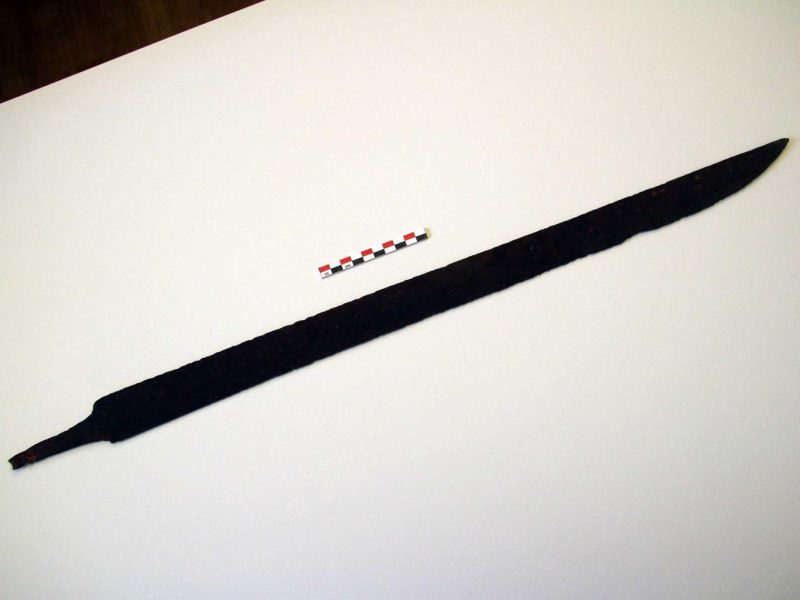
A 1,200-year-old Viking sword found in Norway could still be used today


viking-sword

While hiking an old mountain trail in Haukeli (on the border of Telemark County, Norway),  Goran Olsen was surprised to discover a 1250 year old Viking sword among some rocks near the road when he sat down to rest. The sword was in excellent condition, especially considering its immense age.
The sword was taken to Hordaland County Council, where local archaeologists working for the council were elated to have the opportunity to study such a beautiful artifact. County conservator Per Morten Ekerhovd said, “It’s quite unusual to find remnants from the Viking age that are so well-preserved. It might be used today if you sharpened the edge

Παρασκευή 14 Οκτωβρίου 2016

VB-107 Attacks U-848 Off Ascension Island, South Atlantic

wwii0202.jpg
Caption: 
U-848 is bracketed by five depth charges dropped by United States Navy PB4Y-1 Privateer "107-B-4" flown by Lieutenant Samuel K. Taylor of Patrol Bombing Squadron VB-107. Lieutenant Taylor attacked from seventy feet (21 meters) at 225 knots (415 kilometers per hour). This ninth attack in one day on U-848 was followed by another run by Lieutenant Taylor, who destroyed the U-Boat with two depth charges. U-848, a Type IXd2 U-Boat, was commissioned on February 20, 1943 under the command of Korvettenkapitan Wilhelm Rollman (August 5, 1907 - November 5, 1943).