The Habsburg Roman Empire (unofficially known as the Roman Empire ) is an elective monarchy. That was first establish in 14 BC, by Augustus Cesar. By 285 AD, the Empire split in two on the orders of Diocletian. Then later, it was united by again Emperor Constantine in 312. Then, it split again into two in 398. During its nineteen hundred years, it was the most powerful empire in Europe, despite setbacks and land losses. It down fall was it became very loosely held together and after it lost in the Great War. There was nothing holding it together.
In 460, the new Emperor Mojorian I decides lead a campian againist vandals in order to restore food supplies. After gathering the Roman Navy, they landed 10 miles away from Carthage, the vandal kingdom's capital. The battle plan was to send half of the army to blocade the wall and half to blocade the sea. They used catapult sea and land to wreck the docks and houses. After one mouth of the seige, carthage surenders. After that most of the battles were easy victories, due to the fact that most leaders were during the seige. So most of the army fell apart. After the conquest of North Africa, they began plans for the campain of Spain.
Other achevements are restoring the economy, by minting more gold and laws againist forgeries. Restore the romans trust in money and reorganized food suppilies. He also helped and bult many aquducts, baths, churchs and forums. The suebi the inhabitants spain have become weakned, by the fact that their allie the vandals have been distroyed by the romans, And become esay pray for the roman army. None of the battles are big or had big looses. The romans were well mached by the visigoth. Who took three years to conqor.
Mojoran spent his final years rebulting rome. By 474, Mojoran had now died. The eastern emperor apointed Julius Nepos as emperor. Who fortified spain and finished Mojorians uncompleted projects.
In 475, Orestie the half-bararian commander was 15 miles away form Ravanna. Insted of fleeing he decide to fight. This is proven to be the right choice. After the battle, he planed his revenge by invadeing Ostrogoth Kingdom. Many of the battles where successful , when they began seige it very easy becaese the walls they were bult in the 2nd centrey and have fell into decay . Nepos plans a campian of Southern Gual.
In 475, the western europe was divied like this. Italy, Hispania, north africa was under the romans most of the empire was stable. Gaul and southern germany was burgundians, allemage, visigoth, franks and roman soissons. Germany was under the saxons, thuringia and rugians and frisians. Nepos first started his campian on southeast gual. The battle had medium losses and had conqored their ill fortified capial. The weathy land owners of these kingdoms begged to still by in power, so disided that they will make a governers court that would help him govern the povince. This will happen all over the reconqored territorty. They were able the conqor allmage who were well matched. Other achievements are bulting 12 unniversties to ravanna and rome and paid techers from constantinople to come to these new unniversties , making skill workers for rome. Nepos began to plan fruther campians but died in 502 before he could start. His plans were left to his son Jullian Nepos the 2nd , who was born in 480. He started a campian of the visigoth kingdom in 504. The visigoth were cornered by the romans, the southern front was lead by Genral Antony and the northern front was lead by Jullian the 2nd. The visigoth put up a good fight, but at end were defeted. As the roman empire grew in terriory in became more repected in reliam. When Jullian died his son, Romulus the 1st became emperor. During his rule he had conqored salian franks, making a treaty with ripuarian franks. He also expaned trade, uncompeted projects by his father and expanded the miliatry. After his death in 580, their were a series of emperors that expended the empire bit by bit. By 600 most germany was under roman control. In 601 a new emperor, Charlemagne the 1st has been crowned. He had big plans for rome. First he started campian on north east germany. The was only inhabited by small tribes,this was biggest conquest since Jullan the 2nd. Then in 602 had sent message eastern emperor. That the empire is too weak control itself, he want him to be emperor and he will be his ceasar. It really a plan to murder him. He went to the imperial court room where he was greeted and killed. With the eastern half under his thumb, was able to reunite the empire. This is to strengthen the army ten fold. But he had a problem, Avar in the north where attacking forts and garrisons on the danube. With the united roman army it was very esay to take it down. They had many battles took place lower dacia were they defeted the avars and there leader. He made them sign a treatie that would give the romans dacia, most of their gold and army.
After his victory over avars. He returned to ravanna where he declared as great as trajan and also restored much of the old roman world. He started to fortified the borders lerning form past mistakes, he also started spereding roman culture in other parts of the empire by paying people form italy to move to outer regions of the empire. The rest of his rule was defending the borders. Charlmagne died in 625 feeling very compelted. After his death rome remained mainly peaceful for the next 92 years. This peace can be compered to the first pax romana. Most romans had returned to having confidnce in there government and the most violence were againist invading arabs and halted their expansion. Most people in the empire where consider roman ethnicly or culturly in the west and the population of cities grew raipedly too. Rome grew form 500,000 in 611 to 800,000 in 641.
By 715, the east and west were to different be together. For exmple the west spoke latin while the east spoke greek. So in 717 the emperor Constintine the 7th disided to spilt the empire a 3rd time and gave it to his bother Romulus II to make the empire more manageable.
The romans have been dealing with lombards since the late 6th centrey, but became ferce in 721. The lombards began to become more powerful and started annaxing small tribes all over poland. By 726 had taken over most of poland. And became more of a menice to the empire. They planed an attack on the lombards due to attacks on villages, forts and barracks. This started the frist lombard war. They gathered the bavarian mercenaries to attack the lombards. The romans destroy many villages but are driven out by lombard army. In 729, They countered with an attack on northern germany, thoa were driven out by an army of saxons. Lead by the emperor Magnus, who became emperor this year. He came form a middle class mercant famlily, Magnus enroll in the army were he rose throse the ranks all away to the imperial court. The previous emperor died with no sugsessor an the senate elected magus as emperor. He lead several roman campians againist the lombards. Some campians were sugsessful some were not. The lombards began their own series of campian. Every time a lombard campian started it got farther into the empire. Many were unsugsessful but some were. In 742, Magnus died leaving the thone to his son Fulvianus. Under his rule farist lombard invation was atempted witch would reach gaul and northern italy. The lombards destoryed many towns and villages. Leaving italy in ruins and taking severval villages. But could not take well fortified cities like Ravanna and Rome. Many tribes got angery witch united tribes along with the romans. They conforted the lombards in a vally in northern france. The romans won the battle witch was a turning point in the war. After that most of the battles were lombard defets and the armies of rome,ravanna and ostrogoth mercenaries drove out the lombards. Fulvianus lead a campian againist the lombards. This attack cripled the lombard econemy, sending the government into termoil. And by 762 the lombard kingdom collapes form lack of military contol. This war is compared to the punic wars in size and destruction.
During this period was a time of medium level of war. The empire recovers form the lombard war and emperor romanus helps rebuids war torn italy . But a another invasion is coming form the east. The arab had broken thougth the byzantine army and were hadding towards rome. The roman army halt their expansion again but many attacks happened after. The late 700s was an age of recovery and stability. With little conflict in the court and the senate. And the econemy was stable. The towns in the empire after the became more fortified and relided on nobles more and more and less on the governers. In order to became more centralized. Esepcialy germany were by 814 disolved governers in germany. Their were also an expansion of farming in gual, germany and italy. Witch lowered the price of wheat and other farm products. Many ostrogoth farms where destroyed and nobles bought their land to make villas. With these changes futalism grew about all over europe.
In 824 the empire experiance a huge baby boom. Their was a large growth of in the cities. Rome grew form over one and half million to about over two million. And cities and town sprouted all over italy and germany. By now Rome was consitered a continental power with a people more educated and helthy than people outside the empire. Another proplem came to the empire a sea fairing people call the vikings began raiding the costlines of gaul and germany and sank roman trade ships. This became a problem for the romans. So it is bagining the war againist piratcy and the first gaul costal war. The Declare of war againist the vikings was made by emperor Mark I the nepew of Romanus. This lead to many naval battles on the english channal and the gulf of Gual. Their was also land battles in where fougth in northern Gallia Lugdunensis. Most of these battle where victorys on the romans part. And as these raids got more common, Rome disided to send solders and mercenaries to villages and towns to protect them. These raids and battles lasted for 82 years. But the their were time during the war were viking settled the cost. And these settlements have lasted all the way to modern times. The emperor who won the war and drove the vikings out of gaul was emperor Constantius IV. Constantius was genrial who was apoved by the senate to be emperor. He used the entire army of ravanna to drive out their precents in normandy and ending the war againist piratcy. Thoa the viking settlements were still around even after the campian. And raids continued to but where
100 years after the campian, Constantius has died and a new invader has come. These people were called the magyers who have settled hungary. The romans have been dealing with them since 907 at the battle of pressburg where they were defeted. The magyers have been attacking them ever since. But would change at the battle of lechfeld in 955. Where a large army of German knights and roman solders. This army lead by emperor Honorus II, crushed the magyers and forced them to sign a treaty. After this victory the pope desided to add holy to the emperors title. Even know the emperor was considered the protecter of the papacy, but is now official. The empire remained in the same shape it was before. And the towns and cities had berily changed architecturely, but most grew. During the 1000s was a time of good trade with lots trade with their former enemy the viking and africa. Giving them much wealth. The senate now elects the emperor, due to the rule of Mark II which was one of much abuse. During the popes infulace over italy was esepcialy strong during this time, because of the weath of the church. In fact most people thougth that the pope was more powerful than the emperor. The sturgle would also affected the amount of the senate and the nobles, becuase this was also how centralized the government should be. This would lead to constat power sturgle between the six government bodies which would weaken the empire with time. Most of the Gual-German Praetorian prefecture was protected by Frankish and German knights. These knights most of time lead the Roman army their. Due to this power sturgle would make the knights to preoccupied to gurd gual leaving it unprotected. This would interst the normans. A sea fairing people disened form the viking and settled east england. In 1109 had invaded normendy, easily taken the costal towns. This is begining of The Second Terbulent Period of the empire.
The empire was in cheos, with six government bodies fighting eachother and invaders on both sides. This was the arabs time to attack and easy to take. It was also easy for the normens to take to, in fact by 1119 they had taken all of Gaul. And in 1121 forth and final wave started and took all of in 20 years. This Dramaged their econimy. The romans were still figthing invading tribe form eastern europe were attack but became hard and as time goes on. Many people fled to italy due to invaders attacking north africa and spain. And the roman way of life outside of italy begins to die out. The emperor at this time period were weak and began to relay on german nobles to help them rule. Emperor Augustus IV had disolved the old imperial government and replaced it with a more aristicratic government. The Roman Empire is now very similar in government to other kingdoms in europe. And had many aristicratic families, the most powerful was the Habsbergs who controled all of austria. They had much infulense over the imperial court. They became only more powerful with time. The empire also started becoming more loosely united and even more bureacratic then it was before. Due to the many aristicratic Families tangling with imperial administration. The other families powerful too and had a good amont of infulnce. For about 300 years the empire was under a series of weak emperors. They ran econamy irreasponible and ignored the aristicratic families and senate. The Families gained some of the powers of the emperor and made up most of the imperial adimastration. They would also became populur with people and became more liked than the emperor. This would to Charles X becoming emperor. He was apointed by the habsberg to be senator in rome. During his time as senator he clened up the city and the old auqaducts of rome. This would make him very populur and by peoples' choice became emperor. This was made official by the senate in 1503. And ended the second Terbulent period.
This was a great new age for the Roman Empire, the empire was under good hands. Technology was booming across italy, setting in the renaissence in Europe. And Charles marry into spanish royal family making him King of Spain. This is common amongist the Hasburgs. Then later bought a chunk of southern Italy
Τιμή και δόξα στον τραγουδιστή της λευτεριάς της Κύπρου, Εθνο μάρτυρα Ευαγόρα Παλληκαρίδη
Αναρτήθηκε από τον/την olympiada στο Μαρτίου 13, 2012
«Βγήκαν αντάρτες στα βουνά
της Κύπρου διαλεχτά παιδιά
της ΕΟΚΑ παλικάρια
της Ελλάδας τα καμάρια»
Στις 14 του φετινού Μάρτη (Μάρτης 2012) συμπληρώνονται πενήντα πέντε χρόνια από τότε που οι Άγγλοι αποικιοκράτες απαγχόνισαν στις Κεντρικές Φυλακές της Λευκωσίας τον Ελληνοκύπριο έφηβο επαναστάτη, ποιητή και τραγουδιστή της λευτεριάς της Κύπρου ΕΥΑΓΟΡΑ ΠΑΛΛΗΚΑΡΙΔΗ.
Οι Άγγγλοι δυνάστες της Κύπρου, ξετσίπωτοι εγκληματίες όντες, στέρησαν από ένα παιδί το εξαίσιο θαύμα της ζωής και τα ελληνική γράμματα, και γιατί όχι και την παγκόσμια λογοτεχνία, από ένα ταλέντο με ποιητικό κάλαμο γραφής αξιολογότατο και πολλά υποσχόμενο.
Motto: Senatus Populusque Romanus
(Latin: The Senate And the People of Rome)
Capital:
Rome (27 BC- AD 1056), Byzantium (1056-1417), Rome (1417-1418)
Largest city:
Rome
Other cities:
Byzantium, Paris, Londinium, etc.
Language:
official:
Latin
Other languages:
Persian, Italian, etc.
Religion:
main:
Christianity
Other religions:
Roman folk religion, Islam, etc.
Ethnic groups:
main:
Latin people
other:
Greeks, Etruscans, Gauls, etc.
Type of government:
Absolute Imperial Monarchy
Governing Body:
Roman Imperial Court (de facto) and Roman Senate (de jure)
Population:
1.2 Billion inh.
Currency:
denarii, sestertius
The Roman Empire was the post-Republican phase of the ancient Roman civilization, characterized by an autocratic form of government and large territorial holdings in Europe and around the Mediterranean. The term is used to describe the Roman state during and after the time of the first emperor, Augustus.
The Roman Republic, which preceded it, had been weakened and subverted through several civil wars. Several events are commonly proposed to mark the transition from Republic to Empire, including Julius Caesar's appointment as perpetual dictator (44 BC), the Battle of Actium (2 September 31 BC), and the Roman Senate's granting to Octavian the honorific Augustus (4 January 27 BC).
The Latin term was Imperium Romanum (Roman Empire), probably the best-known Latin expression where the word imperium denotes the sphere of human life (for example some countries - lands with people) subdued to military commander - imperator, under Roman rule. Roman expansion began in the days of the Republic and continued until its decline. Because of the Empire's vast extent and long endurance, Roman influence upon the language, religion, architecture, philosophy, law, and government of nations around the world lasts to this day.
Main article: Roman Empire (Wikipedia)
In 161 AD, Marcus Aurelius became the emperor of the mighty Roman Empire. He was the last of the "Five Good Emperors". After his death in 180 his son Commodus succeeded him and the Empire plunged into the Crisis of the Third Century. Constantine the Great briefly united the empire for about 30 years but it split up again after his death. The Eastern Roman Empire survived until it was conquered by the Ottoman Empire in 1453, while the Western Roman Empire collapsed after barbarians invaded in 476.
In this time-line, the first son and heir of Marcus Aurelius, Marcus Annius Verus Caesar, does not die of natural causes like in OTL. Instead, he becomes the next emperor after his father's death and becomes Emperor Verus in 180. He turned out to an aggressive monarch who led his gigantic army to Northern Europe to pacify the "barbarians" of the north. By 203, Rome was in control of all of Europe except Russia, Iceland, Scotland, and Ireland.
Verus is succeeded by his son Pertinax, who continues his father's conquests and begins the lengthy conquest of Northern Africa. He and his successors led the Roman army as it swept through Africa, conquering most of East Africa (including Ethopia, Somali, and Sudan) and the rest of OTL Algeria. Beginning in the late 4th Century, Huns from Asia struck the Northeastern part of the Roman Empire, plundering as they head toward Rome. The Roman army fell apart as the swift Hunnic army led by Attila the Hun invaded. Rome was sacked twice, but soon recovered. After Attila died in 453, Emperor Avitus recovered the lost European land and reestablished order. Many of the new African colonies had been lost due to lack of military aid and political attention. After Avitus died in 461, the empire fell into chaos. The Empire was reunited by Emperor Justinian I, a devout Christian, who moved the capital from Rome to Byzantium. After he died on November 14, 565; his son Justin II succeeded him and reclaimed the lost provinces of Aegyptus (OTL: Egypt) and Germania (OTL: Germany). During Justinian's reign, a deadly plague killed millions of people and greatly weakened the empire.
In the early 13th Century, Emperor Timothy III's army invaded Iraq, Azerbaijan, and southwestern Iran. These conquests made it possible for the Romans to meet the Serican Empire .
On the third month of 1278 of the Roman calendar, the Roman army entered the city of Shahr-e-Rey in Persia unopposed, as the force of 40 thousand crushed all who resisted. A month later, just as the Roman soldiers were about to exit, a force of 45 thousand Serican soldiers approached the city. The Romans were frightened, as the army had brought archers, cannons, and other siege weapons that rivaled their Roman counterparts. The Roman general stopped the advancing army and inquired their identities. The Sericans misunderstood them and thought it was a declaration of war. And so the two great armies clashed in what would be known as the Rey Incident.
Both sides suffered light casualties, but after a day of fighting both sides withdrew and sent negotiators. According to Serican sources, a Roman archer yelled, "Sorry!" in Persian to a Persian-speaking officer during the battle and the officer ordered to stop and withdraw. Roman sources say that a Serican officer shouted, "We are from the Land of the Silk, the great Song!" to the Romans and they withdrew. And yet Muslim sources claim that the people of Rey, tired of the destruction, ran out of their homes and between the two armies. They claim after the battle the Generals of both the Serican army and the Roman army converted to Islam after-wards. However, what all three sides agree is that the Sericans and Romans immediately established diplomatic relations with each other and agreed to make Shahr-e-Rey a neutral city for trading purposes. Silk and paper arrived in mass amounts all over Europa, while Roman and Greek books are bought by the Serican people.
In 1321 Serican chancellor Yangzi Liang (扬子 亮)arrived in Byzantium to meet with Roman consuls Quintus Faenius Ignatius and Vibius Calvisius Nennius, marking a new era of Pax Eurasia. The Romans were eager to trade with the Sericans after a famine killed millions in Northern Europe. In 1356, the Romans force the Vikings to get out of Europe and crush English revolts in Britannia.
The Black Death was one of the deadliest pandemics in human history, peaking in Europe between 1348 and 1350. It is widely thought to have been an outbreak of bubonic plague caused by the bacterium Yersinia pestis, but this view has recently been challenged. Usually thought to have started in Central Asia, it had reached the Crimea by 1346 and from there, probably carried by fleas residing on the black rats that were regular passengers on merchant ships, it spread throughout the Mediterranean and Europe. Due to the wide extent of the Roman Empire, the plague spread to many places of Europa and Northern Africa. The Black Death is estimated to have killed 30% to 60% of Europa's population. This has been seen as creating a series of religious, social and economic upheavals which had profound effects on the course of European history. It took 150 years for Europa's population to recover. The plague returned at various times, resulting in a larger number of deaths, until it left Europa in the 19th century.
The Black Death caused many Jews, friars, foreigners, beggars, and pilgrims to be prosecuted and killed throughout Europa because they were thought to be the source of the problem. Differences in cultural and lifestyle practices also led to persecution. Because Jews had a religious obligation to be ritually clean they did not use water from public wells and so were suspected of causing the plague by deliberately poisoning the wells. Christian mobs attacked Jewish settlements across Europa; by 1351, sixty major and 150 smaller Jewish communities had been destroyed, and more than 350 separate massacres had occurred. This persecution reflected more than ethnic hatred. In many places, attacking Jews was a way to criticize the emperor who protected them (Jews were under the protection of the emperor, and often called the "imperial treasure"), and monarchic fiscal policies, which were often administered by Jews. The plague also caused several sects of Christianity to break off. These included the Church of Cross and Thorns (a hybrid Scandinavian Christian sect which promoted human sacrifice), the Gallic Church (a more moderate Church, much like OTL Episcopal Church), and Vrynnicism ( a sect much like the Calvinist hardliners in the OTL Netherlands, which involved into a criminal organization).
In 1393, war broke out between the Roman Empire and the Song Empire of Serica. Rome's allies, the Islamic Abbasid Caliphate and the Grand Duchy of Moscow joined the war. Although Allied forces outnumbered the scattered Serican forces in the Middle East, the Sericans had powerful cannons and gunpowder, weapons not familiar to the Romans at the time. After winning decisive victories in Persia, the Romans push the Sericans out.
The war cost the Roman Empire more money than they expected, and the government easily ran out of money. Discontent heavily-taxed provincial residents had rebelled against the central government and declared independence from the empire, forming several independent states. The Islamic Abbasid Caliphate captured the dioceses of Aegyptus and the Oriens. The Roman government, now divided into several political fractions, was unable to do anything and the empire collapsed into several smaller states when Emperor Manuel II was killed by a rioters in 1418. The empire was declared over and the remaining Roman territories formed the Roman Commonwealth, one of the first modern republics.
Although a there existed a democratic Roman Senate, the de facto ruler was actually the emperor. Emperors were worshiped as gods in the early Roman Empire. After Christianity became the state religion, the emperor would be hailed as the "earthly representative of divine will".
Emperors had the power to preside and control the senate, to declare war, to ratify treaties, and to negotiate with foreign leaders. They could also control senate membership. An Emperor was the de jure leader of the church in Byzantium, although the Ecumenical Patriarch of Byzantium managed most religious matters.
Realistically, the main support of an emperor's power and authority was the military. Being paid by the imperial treasury, the legionaries also swore an annual military oath of loyalty towards him, called the Sacramentum.
The death of an emperor led to a crucial period of uncertainty and crisis. In theory the senate was entitled to choose the new emperor, but most emperors chose their own successors, usually a close family member. The new emperor had to seek a swift acknowledgement of his new status and authority in order to stabilize the political landscape. No emperor could hope to survive, much less to reign, without the allegiance and loyalty of the Praetorian Guard and of the legions. To secure their loyalty, several emperors paid the donativum, a monetary reward.
When the empire was established in 27 BC, the Emperor and Senate were two equal branches of government. However, the senate was soon reduced to a vehicle through which the emperor disguised his autocratic powers under the cloak of republicanism.
Many emperors showed a certain degree of respect towards this ancient institution, while others were notorious for ridiculing it. During senate meetings, the emperor sat between the two consuls, and usually acted as the presiding officer. Higher ranking senators spoke before lower ranking senators, although the emperor could speak at any time. By the third century, the senate had been reduced to a glorified municipal body.
When Emperor Justinian I moved the capital to Byzantium, the Senate was replaced by leading members of the Church and officials of the Imperial Court.
During and after the civil war, Octavian reduced the huge number of the legions (over 60) to a much more manageable and affordable size (28). Several legions, particularly those with doubtful loyalties, were simply disbanded. Other legions were amalgamated, a fact suggested by the title Gemina (Twin).
In AD 9, Germanic tribes wiped out three full legions in the Battle of the Teutoburg Forest. This disastrous event reduced the number of the legions to 25. The total of the legions would later be increased again and for the next 300 years always be a little above or below 30.
During Avitus' reign, the number of legions rose to 50 to help fight the Huns and pacify the rebellious provinces. Later on the number increased to 60 during the Silk Wars.
Augustus also created the Praetorian Guard: nine cohorts ostensibly to maintain the public peace which were garrisoned in Italy. Better paid than the legionaries, the Praetorians also served less time; instead of serving the standard 25 years of the legionaries, they retired after 16 years of service.
While the Auxillia (Latin: auxilia = supports) are not as famous as the legionaries, they were of major importance. Unlike the legionaries, the auxilia were recruited from among the non-citizens. Organized in smaller units of roughly cohort strength, they were paid less than the legionaries, and after 25 years of service were rewarded with Roman citizenship, also extended to their sons. According to Tacitus there were roughly as many auxiliaries as there were legionaries. Since at this time there were 25 legions of around 5,000 men each, the auxilia thus amounted to around 125,000 men, implying approximately 250 auxiliary regiments. In 1209 AD the elite Northern Legion was formed. Using warriors recruited out of Britannia and Scandinavia, they were used as scouts, guards, and pursuit troops. Their duties were later expanded and they became somewhat like modern special operations forces. Later emperors used them to counter the power of the Praetorian Guard.
The Roman Navy (Latin: Classis, lit. "fleet") not only aided in the supply and transport of the legions, but also helped in the protection of the frontiers in the rivers Rhine and Danube. Another of its duties was the protection of the very important maritime trade routes against the threat of pirates. Therefore it patrolled the whole of the Mediterranean Sea, parts of the North Atlantic (coasts of Hispania, Gaul, and Britannia), parts of the Persian Gulf, and had also a naval presence in the Black Sea. Nevertheless the army was considered the senior and more prestigious branch.Model of a Roman warship.
The imperial government was, as all governments, interested in the issue and control of the currency in circulation. To mint coins was a political act: the image of the ruling emperor appeared on most issues, and coins were a means of showing his image throughout the empire. Also featured were predecessors, empresses, other family members, and heirs apparent. By issuing coins with the image of an heir his legitimacy and future succession was proclaimed and reinforced. Political messages and imperial propaganda such as proclamations of victory and acknowledgements of loyalty also appeared in certain issues.
Legally only the emperor and the Senate had the authority to mint coins inside the empire. However the authority of the Senate was mainly in name only. In general, the imperial government issued gold and silver coins while the Senate issued bronze coins marked by the legend "SC", short for Senatus Consulto "by decree of the Senate". However, bronze coinage could be struck without this legend. Some Greek cities were allowed to mint. bronze and certain silver coins, which today are known as Greek Imperials (also Roman Colonials or Roman Provincials). The imperial mints were under the control of a chief financial minister, and the provincial mints were under the control of the imperial provincial procurators. The Senatorial mints were governed by officials of the Senatorial treasury.


 Edit
Edit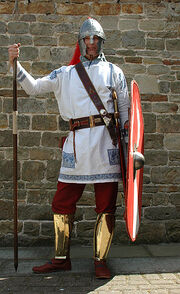
 Added by Mr.r


 Added by
