
 Aircraft
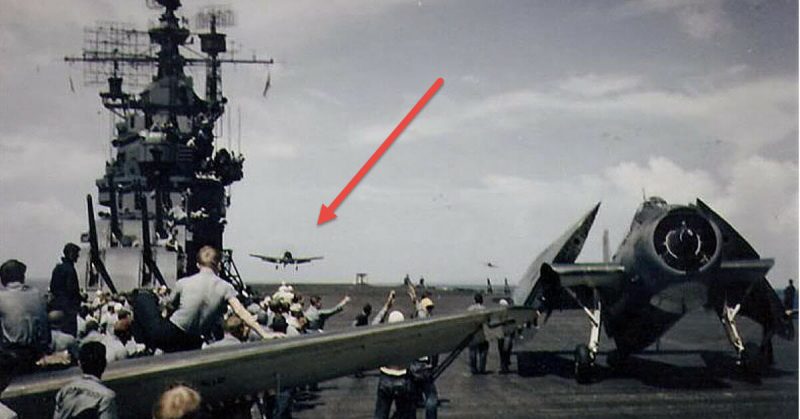
return to the carrier during the Gilberts operation, November 1943.
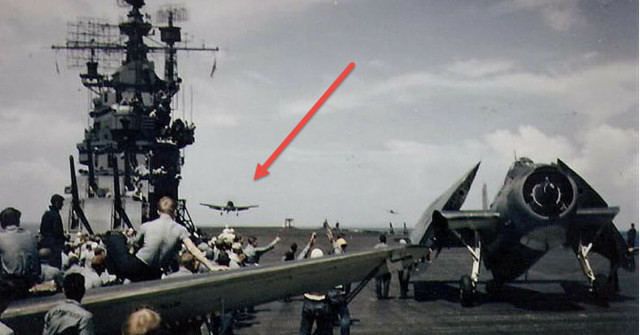
Crewmen in the foreground are sitting on the wing of an SBD-5, as an F6F-3 lands and a TBF-1 taxis to a parking place on the forward flight deck.
Aircraft
return to the carrier during the Gilberts operation, November 1943.
Crewmen in the foreground are sitting on the wing of an SBD-5, as an F6F-3 lands and a TBF-1 taxis to a parking place on the forward flight deck.The war in the Pacific was, for the first time, a war of Aircraft Carriers. They took over the leading role from the battleships which had been the queens of the sea for the previous centuries. For the first time, battles at sea were fought between fleets that were hundreds of miles from each other.
We have selected 22 images of the American side of the carrier war for you to enjoy, but also to show the sacrifice of those onboard the ships and planes that fought against the Japanese empire.
 A
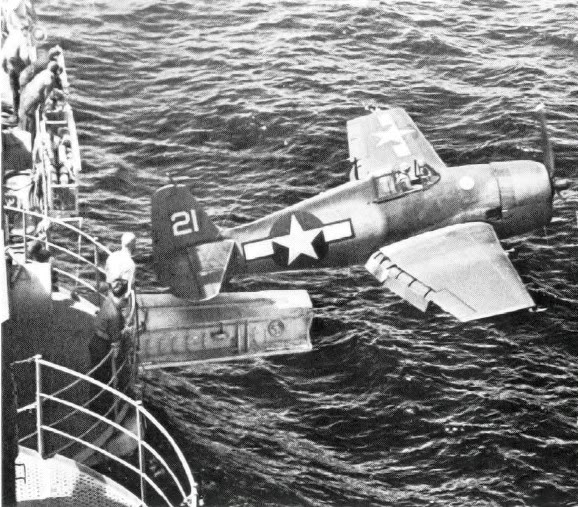
U.S. Navy Grumman F6F-3 Hellcat fighter of fighting squadron VF-2 being
catapulted from the aircraft carrier USS Hornet (CV-12) via the hangar
catapult, 25 February 1944.
A
U.S. Navy Grumman F6F-3 Hellcat fighter of fighting squadron VF-2 being
catapulted from the aircraft carrier USS Hornet (CV-12) via the hangar
catapult, 25 February 1944.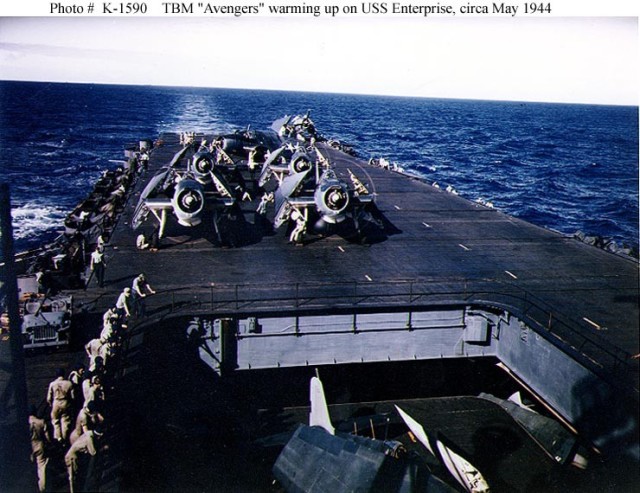 USS
Enterprise (CV-6) TBM Avenger torpedo bombers warming up on the after
flight deck during operations in the Pacific, circa May 1944. An F6F
Hellcat fighter is on the midships elevator, in the foreground. The
original Kodachrome color transparency was received by the Naval
Photographic Science Laboratory on 29 May 1944. Official U.S. Navy
Photograph, now in the collections of the National Archives.
USS
Enterprise (CV-6) TBM Avenger torpedo bombers warming up on the after
flight deck during operations in the Pacific, circa May 1944. An F6F
Hellcat fighter is on the midships elevator, in the foreground. The
original Kodachrome color transparency was received by the Naval
Photographic Science Laboratory on 29 May 1944. Official U.S. Navy
Photograph, now in the collections of the National Archives.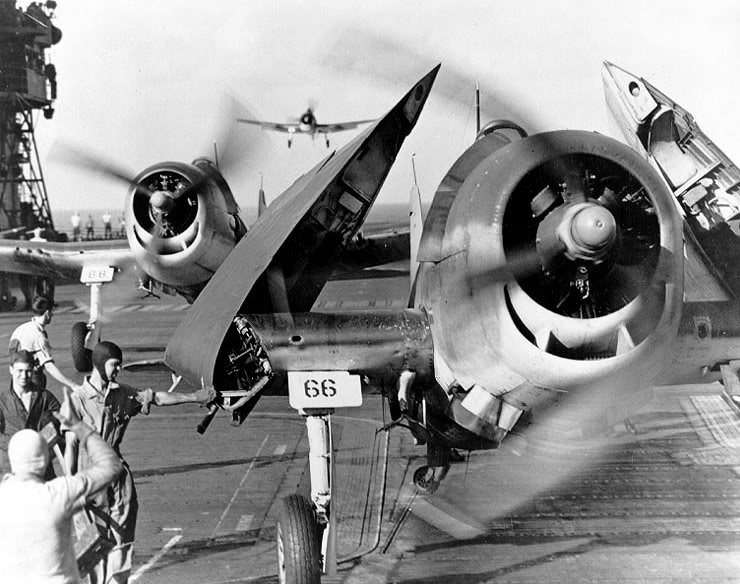 Grumman
F6F-3 “Hellcat” fighters of fighter squadron VF-10 Grim Reapers,
Carrier Air Group 10 (CVG-10), landing on the U.S. aircraft carrier USS
Enterprise (CV-6) after strikes on the Japanese base at Truk, 17-18
February 1944. Flight deck crewmen are folding planes’ wings and guiding
them forward to the parking area.
Grumman
F6F-3 “Hellcat” fighters of fighter squadron VF-10 Grim Reapers,
Carrier Air Group 10 (CVG-10), landing on the U.S. aircraft carrier USS
Enterprise (CV-6) after strikes on the Japanese base at Truk, 17-18
February 1944. Flight deck crewmen are folding planes’ wings and guiding
them forward to the parking area.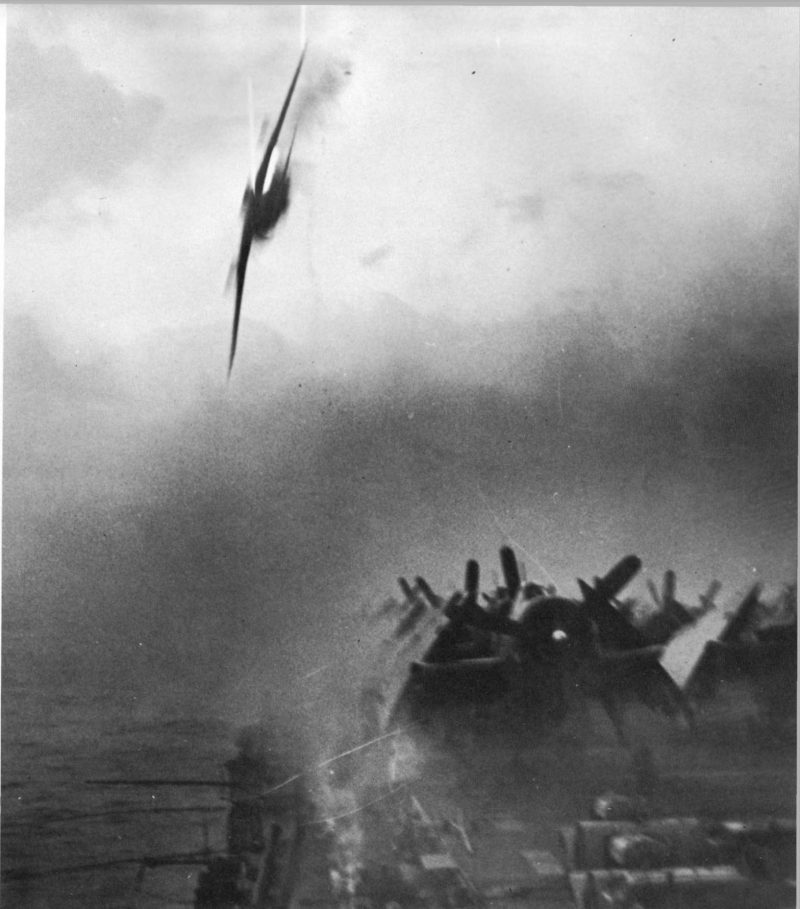 Japanese Kamikaze plunge that missed and crashed alongside the USS Sangamon (U. S. Navy Photo)
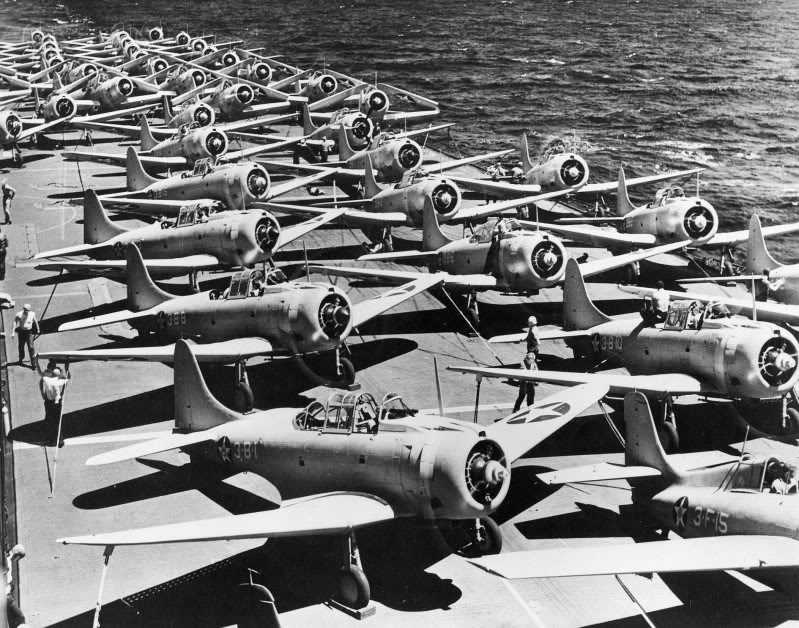 View
of the commencement of a launch of the Saratoga Air Group on board the
U.S. Navy aircraft carrier USS Saratoga (CV-3), 1941. The plane nearest
to the camera is a Grumman F4F-3 Wildcat of fighting squadron VF-3
(3-F-15), followed by Douglas SBD-3 Dauntless of bombing squadron VB-3.
Douglas TBD-1 Devastators are spotted on the aft part of the flight deck
(wings folded), followed by SBD-3s, probably of scouting squadron VS-6.
Note the overall light gray paint schemes with white lettering and
numbering that was carried aboard naval aircraft for a short time during
1941.
View
of the commencement of a launch of the Saratoga Air Group on board the
U.S. Navy aircraft carrier USS Saratoga (CV-3), 1941. The plane nearest
to the camera is a Grumman F4F-3 Wildcat of fighting squadron VF-3
(3-F-15), followed by Douglas SBD-3 Dauntless of bombing squadron VB-3.
Douglas TBD-1 Devastators are spotted on the aft part of the flight deck
(wings folded), followed by SBD-3s, probably of scouting squadron VS-6.
Note the overall light gray paint schemes with white lettering and
numbering that was carried aboard naval aircraft for a short time during
1941.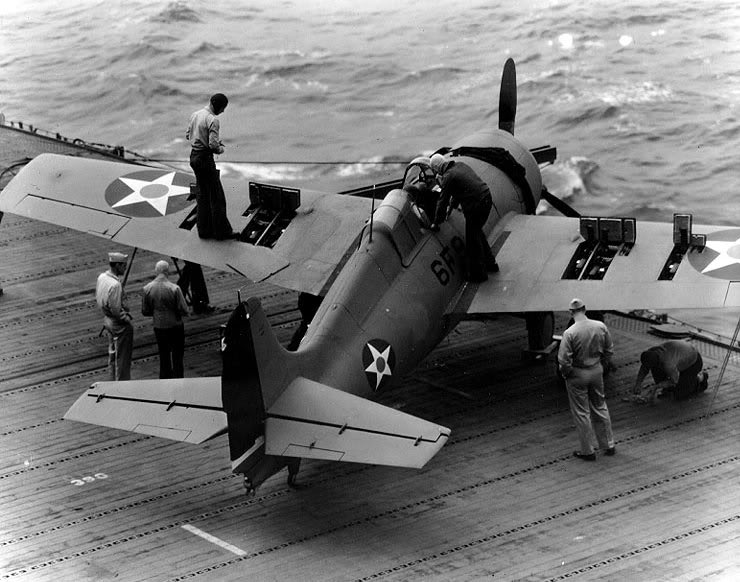 Grumman
F4F-4 “Wildcat” fighter, of Fighting Squadron Six (VF-6) has its six
.50 caliber machine guns tested on the flight deck of USS Enterprise
(CV-6), 10 April 1942. Note open gun bays in the plane’s wings and
markings below the cockpit (“6F9” with no dashes between letters and
numerals)
Grumman
F4F-4 “Wildcat” fighter, of Fighting Squadron Six (VF-6) has its six
.50 caliber machine guns tested on the flight deck of USS Enterprise
(CV-6), 10 April 1942. Note open gun bays in the plane’s wings and
markings below the cockpit (“6F9” with no dashes between letters and
numerals)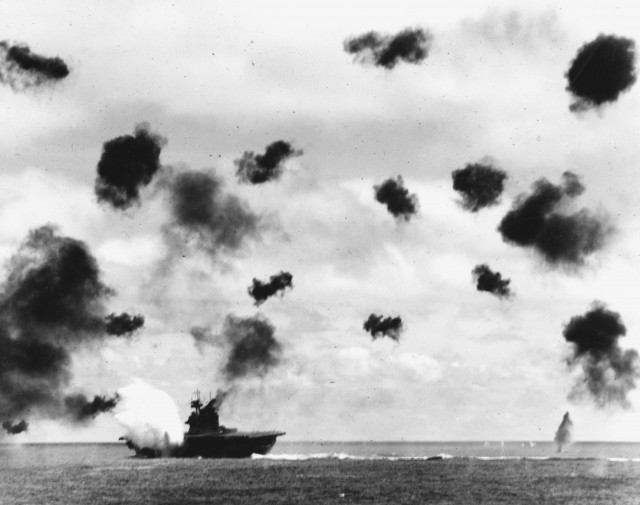 Yorktown at the moment of impact of a torpedo from a Nakajima B5N of Lieutenant Hashimoto’s 2nd chūtai.
Continued from Page 1
 Douglas
SBD Dauntless scout bomber Takes off from USS Enterprise (CV-6) during
operations in the Pacific Ocean, circa early 1944. The original
Kodachrome color transparency was received by the Naval Photographic
Science Laboratory on 29 May 1944. Official U.S. Navy Photograph, now in
the collections of the National Archives.
Douglas
SBD Dauntless scout bomber Takes off from USS Enterprise (CV-6) during
operations in the Pacific Ocean, circa early 1944. The original
Kodachrome color transparency was received by the Naval Photographic
Science Laboratory on 29 May 1944. Official U.S. Navy Photograph, now in
the collections of the National Archives.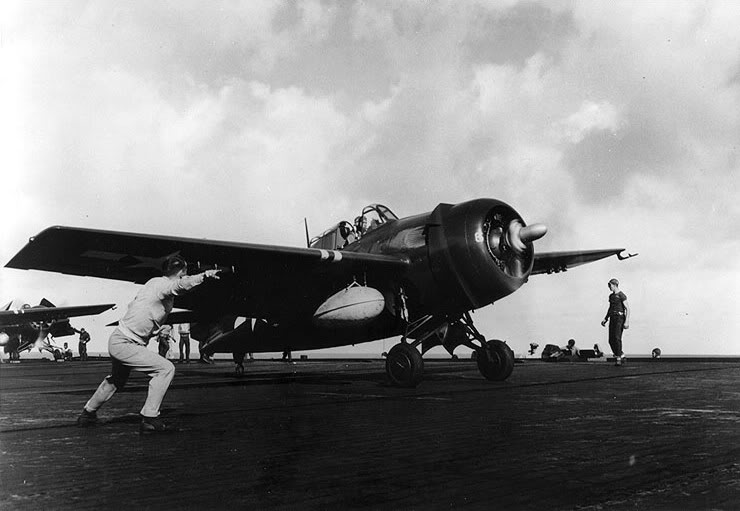 U.S.
Navy Grumman FM-2 Wildcat fighter of composite squadron VC-84 launching
from the escort carrier USS Makin Island (CVE-93) in the Pacific in
1945.
U.S.
Navy Grumman FM-2 Wildcat fighter of composite squadron VC-84 launching
from the escort carrier USS Makin Island (CVE-93) in the Pacific in
1945.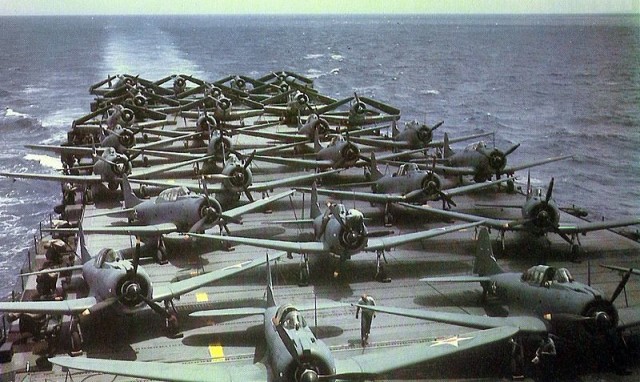 U.S. Navy Douglas SBD-2 Dauntless dive bombers and Douglas TBD-1 Devastator torpedo bombers (aft) on the flight deck of the aircraft carrier USS Enterprise (CV-6) in early 1942.
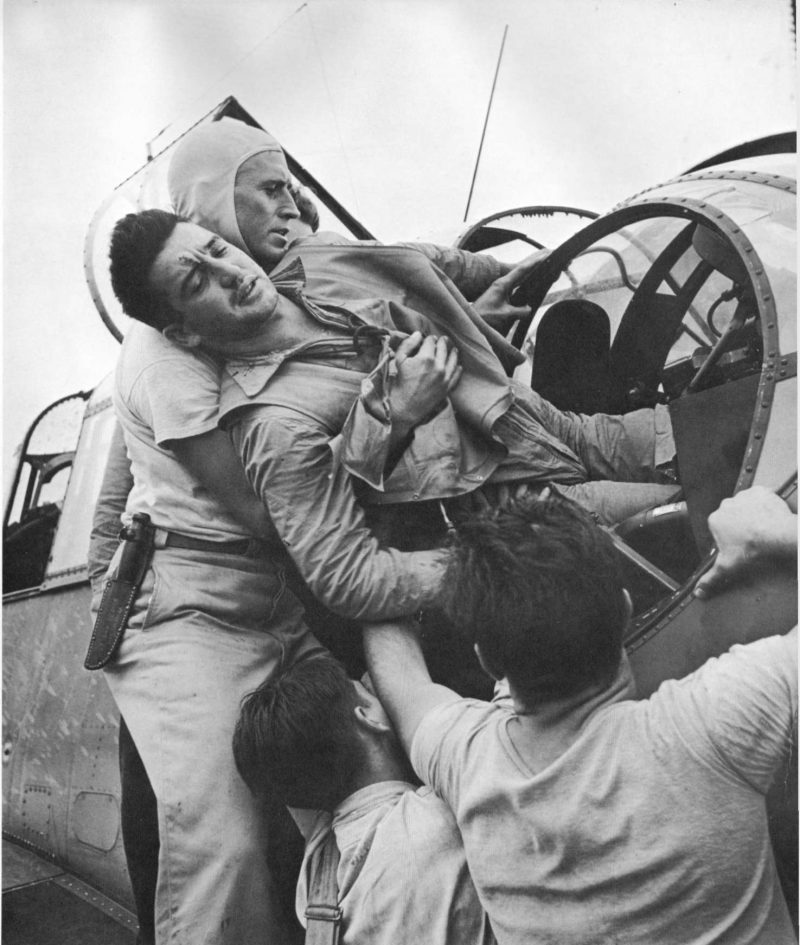 Aircrewman wounded in strike on Rabaul, on the Aircraft Carrier USS Saratoga, November 5 1943.
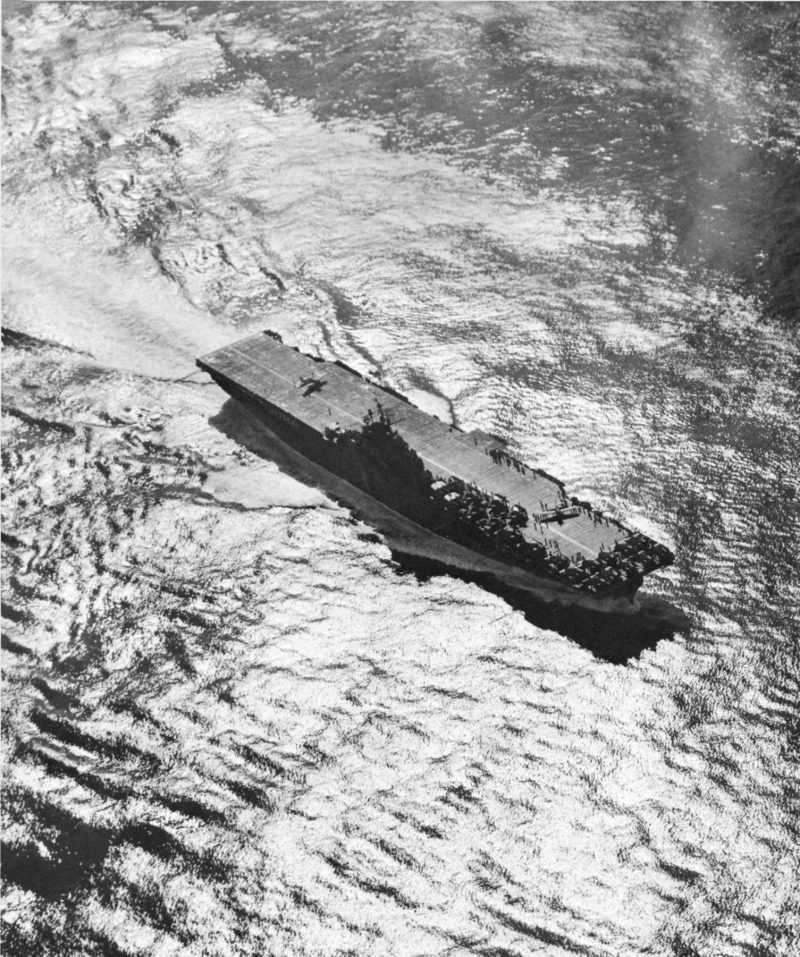 An aerial view shows the USS Yorktown landing her planes. Most of the footage for the motion picture The Fighting Lady was shot on the USS Yorktown. Photographed by Lt. Comdr. Charles Kerlee, USNR. U. S. Navy Photo
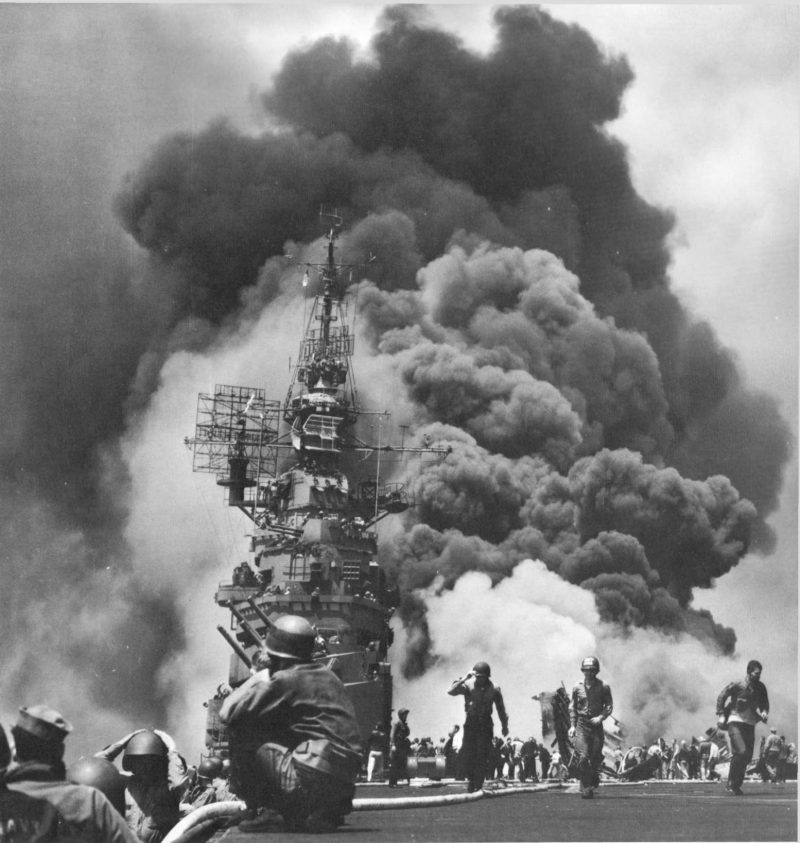 The USS Bunker Hill takes two kamikazes in 30 seconds on May 11, 1945.
While operating with a fast carrier task force in the “slot” between Okinawa and Kyushu, these two suicide hits, acting as fuses to the gasoline-filled and bomb-laden planes, set the stage for one of the most heroic battles of the Pacific. Fighting suffocating flame and exploding rockets and bombs, the gallant crew, her heroes unnumbered, sacrificed 392 dead or missing and 264 wounded to save their ship. Photographed by a USS Bunker Hill photographer. U.S. Navy Photo
Continued from Page 2
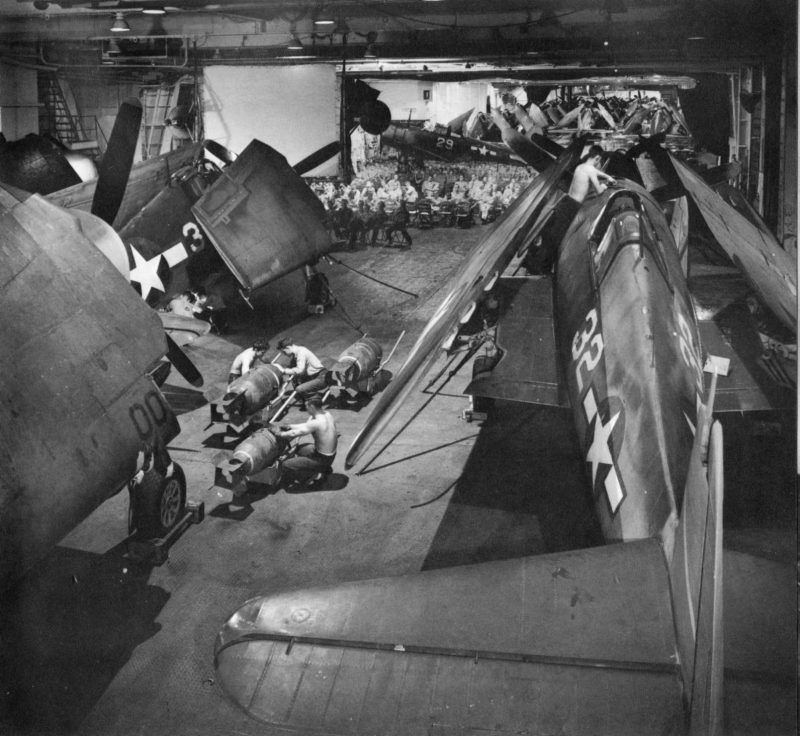 Ordnance men arming planes on the hangar deck of the USS Yorktown, while in the background men off duty are watching a movie. Photographed by Lt. Comdr. Charles Kerlee, USNR. U. S. Navy Photo
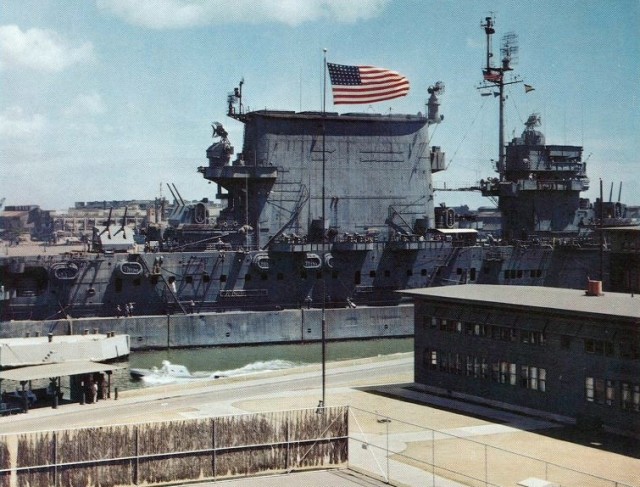 The U.S. Navy aircraft carrier USS Saratoga (CV-3) moored at Ford Island in Pearl Harbor, Hawaii (USA), circa in June 1945
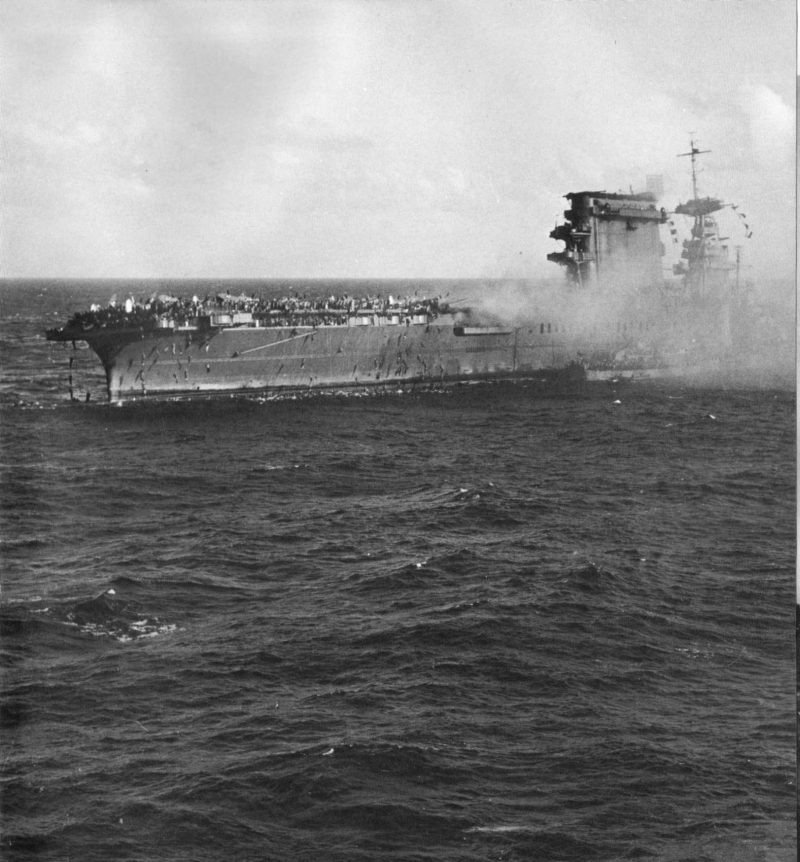 The old USS Lexington orders “abandon ship” – Coral Sea, May 1942. The
destroyer alongside is taking off the sick and wounded while the
able-bodied are sliding down ropes and being picked up by small boats.
Not a man was lost in abandoning the ship. U. S. Navy Photo
The old USS Lexington orders “abandon ship” – Coral Sea, May 1942. The
destroyer alongside is taking off the sick and wounded while the
able-bodied are sliding down ropes and being picked up by small boats.
Not a man was lost in abandoning the ship. U. S. Navy Photo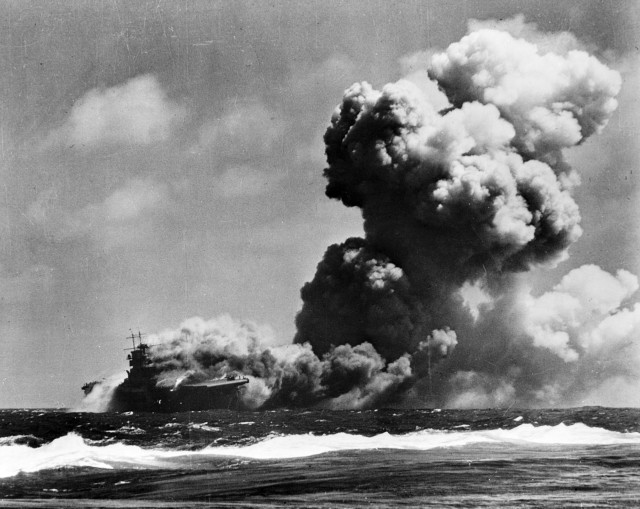 The U.S. aircraft carrier USS Wasp (CV-7) burning after receiving three torpedo hits from the Japanese submarine I-19 east of the Solomons, 15 September 1942.
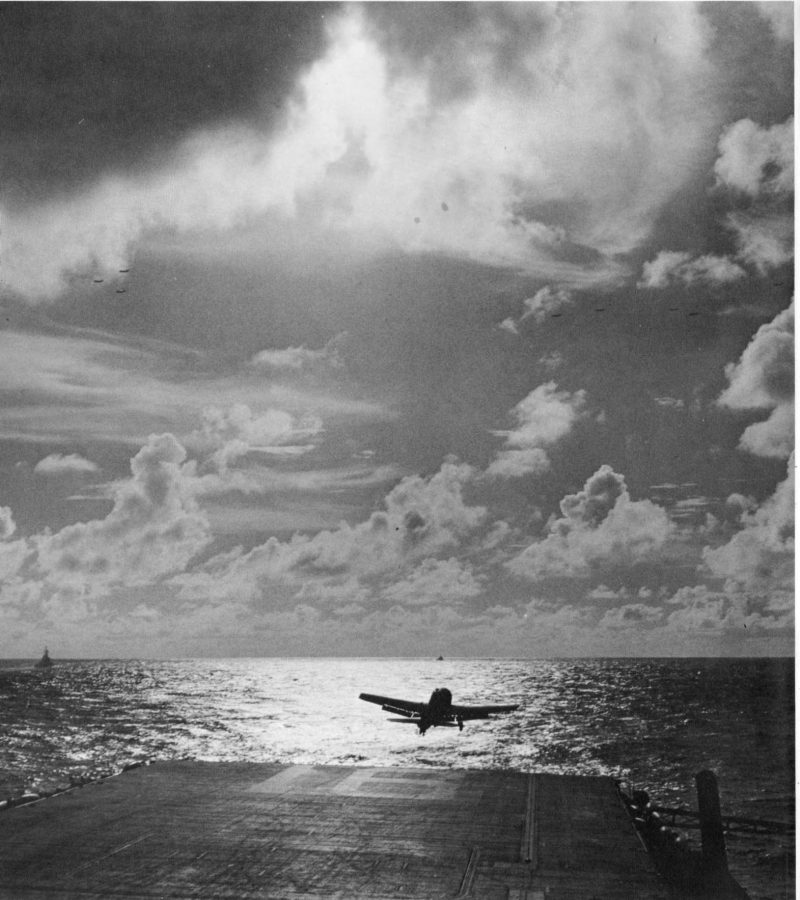 Takeoff from carrier USS Lexington for defense of Tarawa. Photographed by Capt. Edward Steichen, USNR. U. S. Navy Photo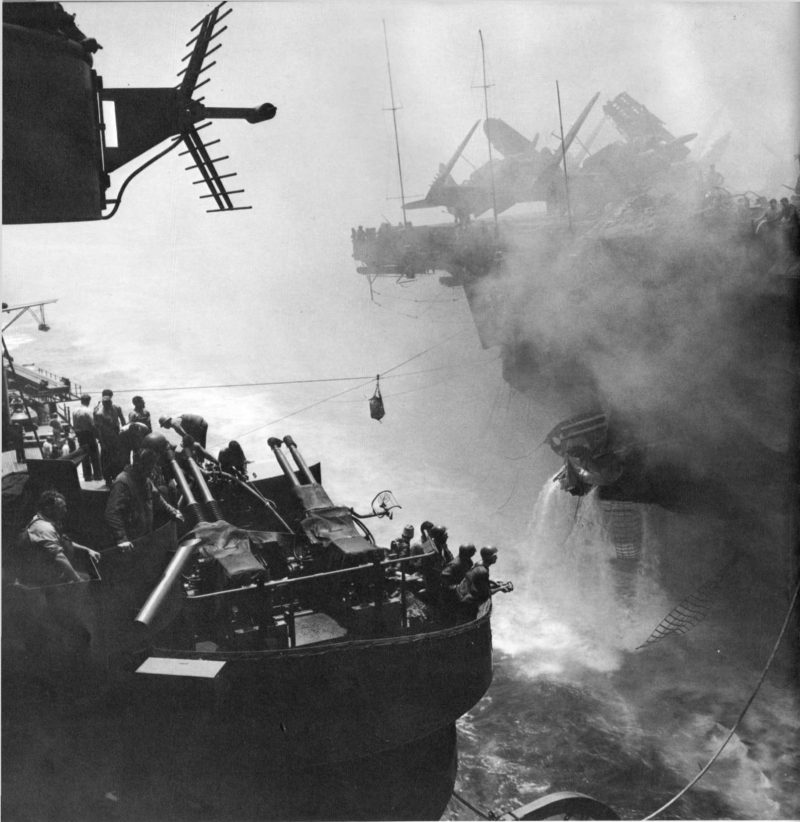
Transfer of wounded from the USS Bunker Hill to the USS Wilkes Barre, sick bays aboard carriers and battleships were actually medium-sized hospitals. U. S. Navy Photo
 Hellcat roars off the flight deck of “the blue ghost” – The USS Lexington
This photo taken aboard the USS Lexington was one of Capt. Steichen’s own. He had a special feeling for takeoff shots, contrasting action with a still background. Photographed by Capt. Edward Steichen. U. S. Navy Photo
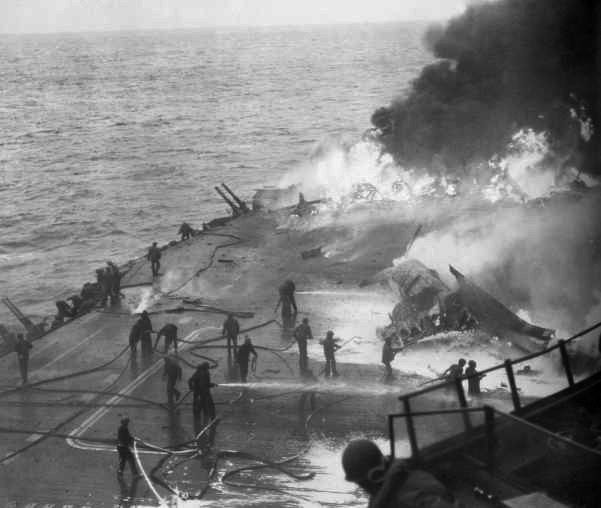 The U.S. Navy aircraft carrier USS Saratoga
(CV-3) burning after five “Kamikaze” suicide planes hit the forward
flight deck off Chi-chi Jima, shortly after 17:00h, 21 February 1945.
Another attack at 19:00h scored an additional bomb hit. 123 of her crew
were dead or missing as a result of the attacks. By 20:15h, the fires
were under control, and the carrier was able to recover aircraft, but
she was ordered to Eniwetok and then to the U.S. West Coast for repairs,
arriving at the Puget Sound Naval Shipyard, Bremerton, Washington
(USA), on 16 March. On 22 May,Saratoga departed Puget Sound fully repaired, and she resumed training pilots at Pearl Harbor on 3 June.
The U.S. Navy aircraft carrier USS Saratoga
(CV-3) burning after five “Kamikaze” suicide planes hit the forward
flight deck off Chi-chi Jima, shortly after 17:00h, 21 February 1945.
Another attack at 19:00h scored an additional bomb hit. 123 of her crew
were dead or missing as a result of the attacks. By 20:15h, the fires
were under control, and the carrier was able to recover aircraft, but
she was ordered to Eniwetok and then to the U.S. West Coast for repairs,
arriving at the Puget Sound Naval Shipyard, Bremerton, Washington
(USA), on 16 March. On 22 May,Saratoga departed Puget Sound fully repaired, and she resumed training pilots at Pearl Harbor on 3 June.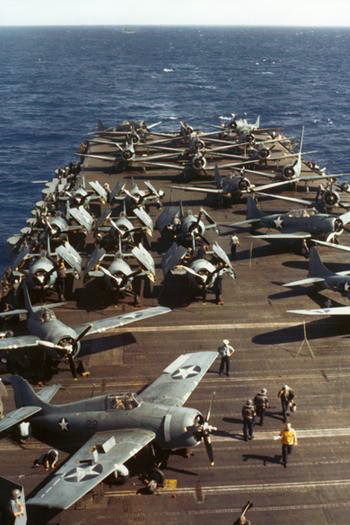 Grumman F4F Wildcat and Douglas SBD Dauntless on USS Wasp, 1942.

Δεν υπάρχουν σχόλια:
Δημοσίευση σχολίου