Άγγλος
ηθοποιός και σκηνοθέτης του βωβού κινηματογράφου, που απέκτησε διεθνή
φήμη ενσαρκώνοντας τον Σαρλό, και σκόρπισε και σκορπά άφθονο γέλιο σε
μικρούς και μεγάλους.
Ο Τσαρλς Σπένσερ «Τσάρλι» Τσάπλιν (Charles Spencer «Charlie» Chaplin) γεννήθηκε στις 16 Απριλίου
1889 στο Λονδίνο από γονείς θεατρίνους. Τα παιδικά του χρόνια κάθε άλλο
παρά γελαστά κι ευτυχισμένα ήταν. Μετά τον πρώιμο χωρισμό των γονιών
του πέρασε τη νηπιακή ηλικία του ανάμεσα σε μπουλούκια θεατρίνων,
συνοδεύοντας τη μητέρα του στις περιοδείες της ανά την αγγλική
επικράτεια. Όταν, όμως, βρέθηκε ορφανός από πατέρα και με μητέρα άνεργη,
η ζωή του μικρού Τσάρλι άρχισε να μοιάζει ολοένα και περισσότερο
βγαλμένη από τις σελίδες του Ντίκενς. Για να κερδίσει το μεροκάματο της
οικογένειας αυτοσχεδιάζει μικρά χορευτικά στους δρόμους του κακόφημου
Λονδίνου και μαζεύει τις πενταροδεκάρες των περαστικών.
Ιταλοί ερευνητές ισχυρίζονται πως ανακάλυψαν τους ζώντες συγγενείς του σπουδαίου καλλιτέχνη της Αναγέννησης Λεονάρντο ντα Βίντσι.
Παρά
το γεγονός ότι το σώμα του έχει εξαφανιστεί εδώ και αιώνες και δεν
υπήρχε υλικό για DNA, δύο ιταλοί ιστορικοί, ο Αλεσάντρο Βετσόζι και ο
Ανιέζε Σάμπατο, δήλωσαν σε συνέντευξη Τύπου στη Φλωρεντία πως εντόπισαν
τους σύγχρονους συγγενείς του καλλιτέχνη, μηχανικού και μαθηματικού του
15ου αιώνα. Μεταξύ αυτών και ο Ιταλός σκηνοθέτης Φράνκο Τζεφιρέλι.
Η πλήρης έκδοση της ημερομηνίας αυτής περιλαμβάνει 122 Γεγονότα, 35 Γεννήσεις και 19 Θανάτους.
Για να δείτε την πλήρη έκδοση ή να ενεργοποιήσετε τα φίλτρα θα πρέπει πρώτα να συνδεθείτε.
Δεν είστε ακόμα συνδρομητής; Μάθετε περισσότερα!
H Πλήρης Έκδοση διατίθεται και ως eBook στο Κατάστημα!
μ. Χ.
1821
Ο
πλοίαρχος Νικόλαος Παπαδόπουλος Σκλάβος από την Κεφαλλονιά περισυλλέγει
στη θαλάσσια περιοχή της Κωνσταντινούπολης το σώμα του οικουμενικού
πατριάρχη Γρηγορίου Ε', που απαγχονίστηκε με διαταγή του Σουλτάνου στις 10 Απριλίου 1821, ως αντίποινα για τον ξεσηκωμό των Ελλήνων.
Από
τους δυναμικότερους και πιο επιτυχημένους επιχειρηματίες του 20ου
αιώνα, με διεθνή αναγνώριση και καταξίωση. Εφοπλιστής, από τους
θεμελιωτές του μεταπολεμικού ελληνικού θαύματος στη ναυτιλία. Η
«βεντέτα» του σε προσωπικό και επιχειρηματικό επίπεδο με τον σύγγαμβρό
του Αριστοτέλη Ωνάση τροφοδότησε τις στήλες των εφημερίδων όλου του κόσμου και διαμόρφωσε μέρος του προσωπικό του μύθου.
Recently
in the UK there was a programe on TV that had caused outrage in the
academic world and beyond. Channel 5 had been accused of ‘disrespecting’
the war dead, after it decided to show a controversial TV series that
has already been scrapped for being too distasteful. Nazi War Diggers
was cancelled by the National Geographic channel in 2014, and by Foxtel
in Australia this year, after archaeologists slammed its gruesome
content.
The
series follows two metal-detecting enthusiasts, a Polish relic hunter
and an American military antiques dealer as they excavate battlegrounds
across Eastern Europe.According to Clearstory, the London production
company which made the show, it aims to ‘recover battlefield
artefacts…and bury the dead with honour’.However, respected
archaeologists and campaigners are furious over the way they approach
the excavations. A preview video posted on the National Geographic
website showed presenters removing body parts from a grave in Latvia. At
one point, the men mistook a leg bone for an arm bone, after wrenching
it from the ground. ‘It comes across as ghoulish,’ said Dr Tony Pollard,
director of the centre for Battlefield Archaeology at Glasgow
University, who was one of a number of leading academics who called for
the show to be scrapped.
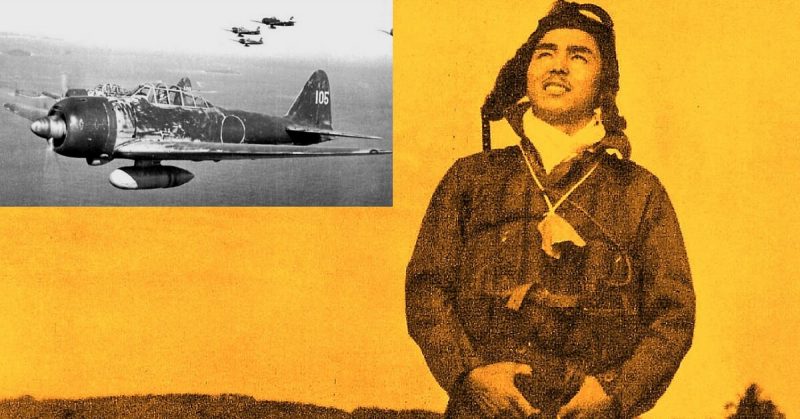
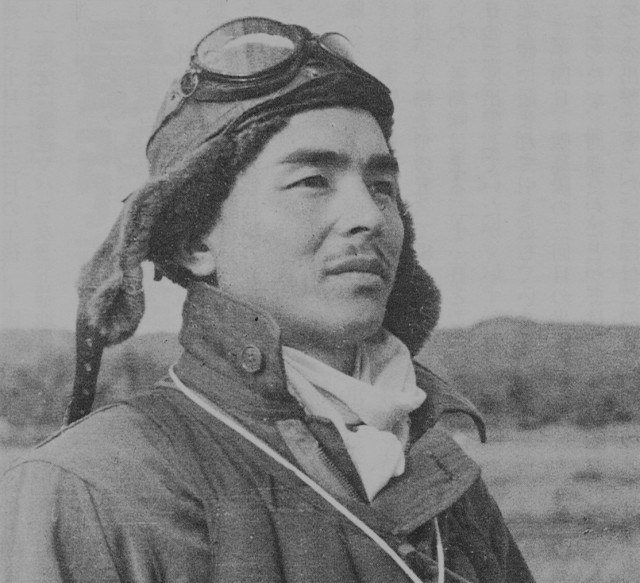
Hiroyoshi Nishizawa earned himself many names, but he's probably best known as The Devil of Rabaul (Wikipedia)
“In the ocean of the military, reflective of all distinguished pilots, an honored Buddhist person.”
So
translates the name awarded to Japanese pilot Hiroyoshi Nishizawa
following his death in 1944. His passing was sudden, unexpected; an
anticlimactic end to a remarkable tale. In death, his superiors honoured
him with a Zen Buddhist moniker; Bukai-in Kohan Giko Kyoshi. In life,
however, he earned himself a very different title.
The Devil of Rabaul, they called him, and not without good reason.
For
his enemies this young man bore a terrifying reputation. The Second
World War encompassed all corners of the world, but in the east, where
the Allies faced the deadly power of the Japanese air force, much of the
combat was defined by the rise of the aces.
Skilled pilots on
both sides fought terrifying aerial battles, carried out daring raids
against the enemy and engaged with combatants in the air, on the land
and on the sea. Yet even amongst the many outstanding Japanese aces,
there was no one quite like Nishizawa.
Hiroyoshi
Nishizawa was arguably the greatest Japanese ace in history, with some
historians attributing more than 100 kills to this one man (Wikipedia)
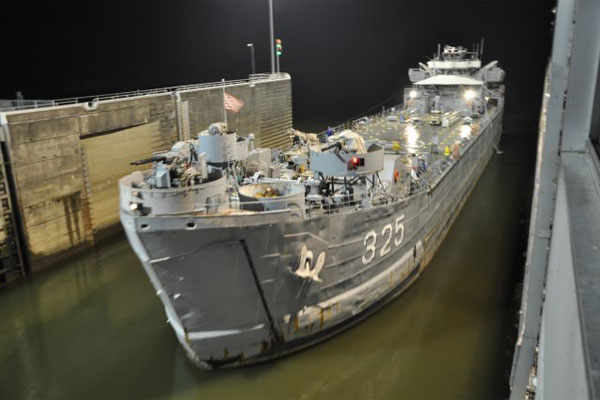
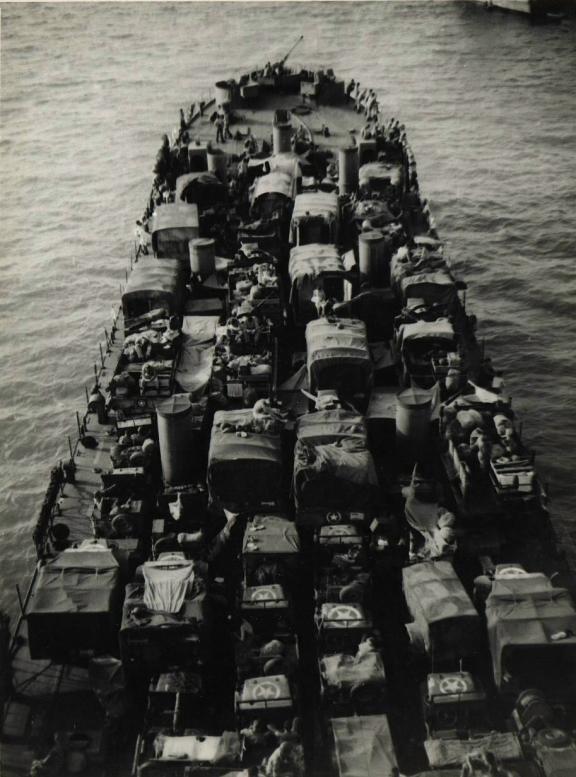
After the Second World War, many ships that were not sold for scrap metal, were transferred to allied countries.
One of those vessels, the LST-325 (Landing Ship Tank), which was built
in 1943, was given to Greece in 1964 and remained until decommissioning
in 1993 in the ranks of the Hellenic Navy.
Knights Templar (or simply Templars), mysteries and warfare –
these three avenues had an obscured connection when it came to the
mercurial times of the medieval Crusades. In fact, their full name ‘Poor
Fellow-Soldiers of Christ and of the Temple of Solomon’ (or Pauperes commilitones Christi Templique Salomonici
in Latin) directly pertains to the enigmatic Temple of Solomon. And
while the Templars did exhibit their fanatical martial prowess on the
battlefields (a ‘quality’ conducive to Crusades), the moniker of ‘Poor
Fellow-Soldiers of Christ’ didn’t really do the organization any
justice. That is because by 13th century AD, the Order administered an
incredibly well-managed economic infrastructure throughout Christendom
while also making innovations in early European banking systems. However
there was more to the Templars than deep fortunes and fervent warfare
tactics. So without further ado, let us take a gander at ten fascinating
facts you should know about the Templars.
1) From praying to fighting –
It is quite a well known fact that the Templars took a vow to defend
their fellow Christians from ‘foreign’ intrusions, especially in the
Outremer (the conglomeration of Crusader States in Levant). But
interestingly enough, their proclivity towards martial pursuits was only
developed as a reactionary measure, rather than a (starting) ideology
that dictated religious warfare. To that end, historically, in the
aftermath of the First Crusade, some of the Christians warriors actually
decided to put away their swords in favor of a monastic lifestyle based
around the Church of the Holy Sepulcher.
Τείχη για τους εργαζόμενους, ανοικτά σύνορα για την
απρόσκοπτη κυκλοφορία του κεφαλαίου. Αυτό είναι το κυρίαρχο δόγμα του
σύγχρονου καπιταλιστικού καθεστώτος, που βρίσκει τη πλήρη εφαρμογή του,
στο προεκλογικό πρόγραμμα του ακροδεξιού μπλοκ των ΗΠΑ, με επικεφαλής
τον Donald Trump.
Καθώς το κυρίαρχο επίδικο της προεκλογικής ατζέντας του Trump αφορά
στην στοχοποίηση των μεταναστών, ως τη κύρια αιτία των κοινωνικών και
οικονομικών προβλημάτων των ΗΠΑ. Ενδεικτικό αυτής της επιλογής που
συμπορεύεται με τις επιδιώξεις ακροδεξιών πολιτικών και οικονομικών
κύκλων, είναι η πρόθεσή του να κατασκευαστεί ένα τείχος τριών χιλιάδων
χιλιομέτρων στα σύνορα με το Μεξικό, ώστε να αποτραπεί η διέλευση των
μεξικάνων που αναζητούν εργασία στις ΗΠΑ.
Πρόκειται για ένα σχέδιο που παρουσιάστηκε με τη μορφή άρθρου στην εφημερίδα “The Washington Post”1,όπου ο Trump -πέραν των υπολοίπων-κάνει
σαφή τη πρόθεσή του, η χρηματοδότηση της κατασκευής του τείχους, να
προέλθει από τη παρακράτηση των εμβασμάτων που οι μεξικάνοι εργαζόμενοι
αποστέλλουν στις οικογένειές τους. Απαιτεί δηλαδή, ο Trump, οι μεξικάνοι εργαζόμενοι να χρηματοδοτήσουν από τα πενιχρά εισοδήματά τους, το μοντέλο εγκλεισμού και αποτροπής που προωθoύν οι ακροδεξιές καπιταλιστικές ελίτ.
By Andrew GelmanApril 15
Debates about economics often represent debates about politics.
Within the United States, we see arguments pitting Democratic-leaning,
high-tax states, such as New York and California, against
Republican-led, low-tax states, such as Texas.
When it comes to cross-national comparisons, the United States is
often pitted against the social democratic countries of Northern Europe.
The latest shot
in this battle comes from Ryan McMaken of the Mises Institute in
Alabama, who argues that European countries are in fact poorer than
almost every state in the United States.
According to McMaken, much of the discussion turns on how wealth or
poverty is measured. In particular, simple comparisons of GDP per capita
don’t capture the distribution of income, so when comparing different
states or countries on standards of living, maybe it makes more sense to
use the median. McMaken writes:
President Killary Με αυτόν τον τίτλο -που με ελαφρό αναγραμματισμό, θα σήμαινε
Πρόεδρος Φόνισσα- ο Δρ. Πωλ Γκραιγκ Ρόμπερτς, επί Ρέιγκαν υπουργός
Οικονομικών, αργότερα αρχισυντάκτης της Γουώλ Στρητ Τζέρναλ και
παγκόσμια γνωστός συγγραφέας, δημοσίευσε το κατωτέρω κατατοπιστικό
άρθρο. ΜετάφρασηΜιχαήλ Στυλιανού
«Αυτό είναι η αγγλική μετάφραση άρθρου που έγραψα για το γερμανικό
περιοδικό Compact. Με παρώθησε η υψηλής ευφυΐας προσφορά αυτού του
περιοδικού στους αναγνώστες του. Αν είχαν και οι ΗΠΑ περισσότερους
ανθρώπους ικανούς να φθάσουν πέρα από την ψυχαγωγία στην κατανόηση του
ποιες δυνάμεις επιδρούν στη μοίρα τους, τότε θα μπορούσε να υπάρξει
κάποια ελπίδα για την Αμερική.
The
“Illyrian” or “Greco-Illyrian” type helmet is a style of bronze helmet,
which in its later variations covered the entire head and neck, and was
open-faced in all of its forms. Helmets of this type have been
discovered in many sites in Albania, Bosnia, Croatia (near the coast),
Macedonia, Kosovo, and Serbia. Illyrian helmets are found more
abundantly in Illyrian graves because of their higher status. Its
earliest styles were first developed in ancient Greece, specifically in
the Peloponnese, during the 8th and 7th centuries BC (700–640 BC).
Accurate representations on Corinthian vases are sufficient to indicate
that the “Illyrian” type helmet was developed before 600 BC. The helmet
was misleadingly named as an “Illyrian” type due to a large number of
early finds coming from Illyria. Bronze
Funerary Helmet with gold foil mouthpiece depicting two heraldic lions
to indicate the valor of the deceased hero from the necropolis at
Archontiko, Greece 560-550 BCE. This helmet is from one of the earliest
burials in the cemetery’s central grave cluster. Funerary
bronze helmet with gold mask from the necropolis at Archontiko Greek
525-500 BCE. The bronze nail on the front of this helmet would have been
used to secure the crest. The small holes on the tips of the cheek
guards were used for lacing the helmet. The otherwise undecorated mask
includes open eyes and other facial features and is the most
naturalistic of the eight death masks excavated at the Archontiko
necropolis. Funerary
bronze helmet with gold mouth piece from the necropolis at Archontiko
Greek 560-550 BCE. The gold mouthpiece is decorated with an embossed
star. Embossed dots of various sizes in simple geometric forms cover the
remaining surface.According to
archaeological evidence, the “Illyrian” type helmet evolved from the
Kegelhelm (or Kegel type) of the Archaic Period found in Argos. The
earliest “Illyrian” type helmets were developed in a workshop located in
the northwestern Peloponnese (possibly Olympia), although the first
Type II “Illyrian” helmets were created in Corinthian workshops. The
first Type III helmets were created in workshops situated somewhere on
the Illyrian coast of the Adriatic. The “Illyrian” type helmet did not
obstruct the wearer’s critical senses of vision though the first two
varieties hampered hearing. Funerary
bronze helmet with gold mask from the necropolis at Archontiko Greek
after 530 BCE. The gold mask has two heraldic lions surrounded by
geometric and plant motifs representing the “king of the animals.” Funerary
bronze helmet with gold eye and mouth pieces from the necropolis at
Archontiko Greek 540-530 BCE. The deceased warrior was found lying on
his back holding a gilded sword in his right hand, which bore a gold
ring. A large embossed rosette, or the sun, decorates the center of its
gold mouth and eyepieces. Funerary
bronze helmet with gold mask from the necropolis at Archontiko Grave
279 Greek mid 6th century BCE. This warrior’s grave also included a
bronze shield, iron swords, spear points, gold ornaments, a chariot
model, figures, and more. This is one of the earliest gold funerary
masks found so far in northern Greece. It appears that the mask was
pressed against the deceased’s face so as to render the relief of the
nose, brows, and lips. Part of the permanent collections of the
Archaeological Museum of Pella. Funerary
bronze helmet with gold mouth piece from the necropolis at Archontiko
Greek mid-6th century BCE. This helmet features three narrow gold bands
with embossed plant motifs. A multi-petalled rosette surrounding the
hideous face of a Gorgon (a mythical creature) seals the lips of the
deceased warrior. Embossed lines and plant motifs cover the remaining
surface.There were four types of these
helmets and all were open faced: Type I (c. 700–640 BC) left the neck
unprotected and hampered hearing. Type II (c. 600 BC) offered neck
protection and again hampered hearing. Type III (c. 550 BC) offered neck
protection and allowed better hearing. Type IV (c. 500 BC) was similar
to Type III but hearing was not impaired at all.
Funerary
bronze helmet with gold eye and mouth pieces from the necropolis at
Archontiko Greek 550-525 BCE. Lacking any decoration apart from the
crest, this is one of the simplest helmets found in the necropolis of
Archontiko. The two embossed heraldic lions – symbols of power – on the
lozenge-shaped mouthpiece indicate the dead warrior’s valor. The
concentric circles embossed into the gold plaques over the eyes indicate
that the warrior’s eyes would forever gaze into the beyond. This
warrior was also buried with a black-glazed kantharos – a sumposium
vessel par excellence – with an incised inscription reading dolos e o
kalios (I [the kantharos] am a sly trap.)Funerary
bronze helmet with gold mask from the necropolis at Archontiko Greek
550-540 BCE. The burial was one of the richest at Archontiko. The helmet
was made with an unusual technique that involved hammering a thick
sheet of bronze, then adding a central band to support a crest. The mask
features plant motifs around the cut-out for the nose and mouth. A
complex rosette within a large embossed circle rises like a star over
the center of the face.The Illyrian type
helmet was used by the ancient Greeks, Etruscans, Scythians, and became
popular with the Illyrians who later adopted it. A variety of the helmet
had also spread to Italy based on its appearance on ivory reliefs and
on a silver bowl at the “Bernardini” tomb at Praeneste. The helmet
became obsolete in most parts of Greece in the early 5th century BC.
These helmets were a privilege limited to the minority of warriors who
could afford or obtain them. Its use in Illyria had ended by the 4th
century BC.
We
cannot even imagine how it was for Michel (4) and Edmund (2) to be
alone on a ship, surrounded by hysteria and terror, without being aware
that they will never see their father again who just had placed them on
the last lifeboat. Michel Marcel Navratil, Jr. (12 June 1908 – 30
January 2001).along with his brother, Edmond (1910–1953), were known as
the “Titanic Orphans”, having been the only children rescued without a
parent or guardian.
SourceMichel, Edmond, and their father boarded the Titanic
at Southampton , England on 10 April 1912, as second-class passengers.
For the journey, Mr. Navratil assumed the alias “Louis M. Hoffman”, and
the boys were booked as “Lolo and Momon”. On board the ship, he led
passengers to believe that he was a widower. He let the boys out of his
sight only once, when he allowed a French-speaking woman, Bertha
Lehmann, to watch them for a few hours while he played cards.
Jules
Schelvis, on of the last Dutch survivors of Sobibor, one of three Nazi
death camps in occupied Poland, has passed away at age 95.
After World War II ended, Schelvis documented what had occurred at Sobibor.
Approximately
a quarter million people, most of them Jews, were killed at Sobibor
between 1942 and 1943. Over 34,000 of the victims were from the
Netherlands. The victims were mostly killed in gas chambers. However,
many more were killed by the guards, deliberate starvation, disease, and
overwork.
Many local Jews were killed at Sobibor. Foreign Jews
from all over Europe were brought to the camp. The Nazis often told them
they were being resettled and they initially treated them well, only
for them to be delivered to the gas chambers in Sobibor.
Der
Fuehrer’s Face (originally titled Donald Duck in Nutzi Land) is a 1943
American animated propaganda short film produced by Walt Disney
Productions and released in 1943 by RKO Radio Pictures. The cartoon,
which features Donald Duck in a nightmare setting working at a factory
in Nazi Germany, was made in an effort to sell war bonds and is an
example of American propaganda during World War II.
The
film was directed by Jack Kinney and written by Joe Grant and Dick
Huemer from the original music by Oliver Wallace.The film is well known
for Wallace’s original song “Der Fuehrer’s Face”, which was actually
released earlier by Spike Jones.
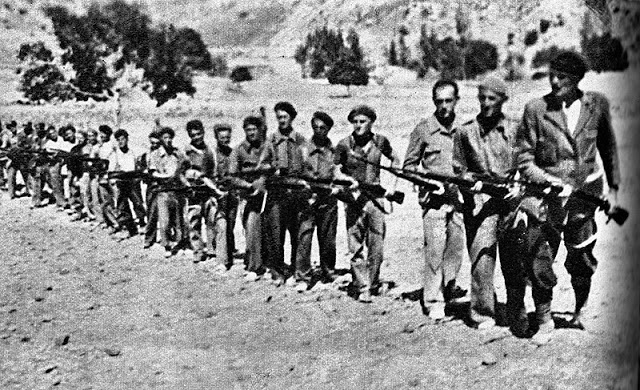
Yugoslavs,
who fought as volunteers in the Spanish Civil War on the Republican
side, are called “Spanish fighters” or “Yugoslav Spaniards.”
Belgrade
Association of Spanish troops is in possession of information that
there were 1.755 volunteers from Yugoslavia in international brigades
and other units of the Spanish Republican Army, of which 595 were killed
in Spain, and 116 were killed later in the National Liberation
Struggle.
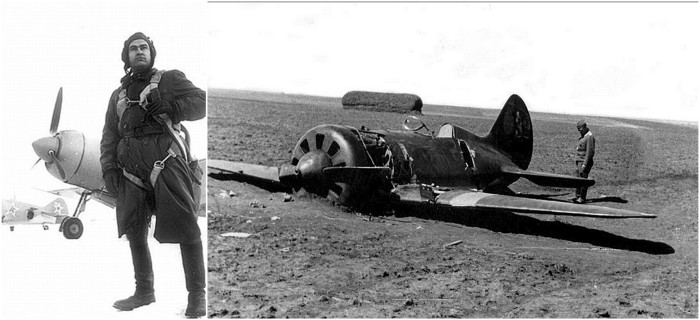
Left - Alexei Mareseyev; Right - A downed I-16 investigated by German soldiers
A)The Incredible Fate of the Soviet Fighter Ace, Alexei Maresyev – Hero With No Legs
Alexei
Maresyev was a celebrated Soviet pilot and a Hero of the Soviet Union,
who became famous for his determination to continue the fight, even
after his both legs were amputated due to wounds and frostbites. Born in
1916, in a family of four children, he was considered the weak one,
since he had experienced pain in his joints from a very early age. He
spent his childhood in a remote village which was four kilometres away
from his school. Due to his illness, his brother sometimes almost had to
carry him home.
Born
in 1916, in a family of four children, he was considered the weak one,
since he had experienced pain in his joints from a very early age. He
spent his childhood in a remote village, which was four kilometres away
from his school. Due to his illness, his brother sometimes almost had to
carry him home.
His health issues made it difficult for him
fulfil his dreams of becoming a pilot. He joined the political youth
organization of the Soviet Union, Komsomol, in his teens. As a member of
Komsomol, he was sent as a worker to participate in the construction of
Komsomolsk-on-Amur, a city in the Russian Far East, which was founded
in 1932.
The world’s first and only permanent museum dedicated to China’s
Tiananmen Square protests of 1989 will shutter by the end of the year,
with organizers citing political reasons for the closure. Known as the
June 4th Museum, the institution is facing a lawsuit concerning building
permits that its organizers, the Hong Kong Alliance in Support of Patriotic Democratic Movements in China, can no longer afford to fight, Agence France Press reported.
The nearly three-decade-old pro-democratic organization is known for
organizing annual vigils in Hong Kong to mark the anniversary of the
student demonstrations.
The first temporary June 4th Memorial Museum (photo via Wikipedia) (click to enlarge)
Located on the fifth floor of an office building in Hong Kong’s Tsim
Sha Tsui shopping district, the 800-square-foot memorial space would
have turned two in less than two weeks, on April 26. As Hong Kong
Alliance Chairman Albert Ho told the New York Times,
Stanly Chau Kwok-chiuthe, the chairman of the building owner’s
corporation, is suing the alliance for occupational violations, saying
that the space may be used only for offices. The buildings’ tenants,
according to AFP, have reportedly complained about the museum.
A tiger behind bars stares down at a man with no legs in a makeshift
wheelchair at a Frankfurt zoo. Taken in 1950, “Zwei Gefangene” (“Two
Prisoners”) this is one of many striking, rarely seen photographs by Elisabeth Hase
(1905–91), who documented Germany’s transition from the Weimar Republic
to the Third Reich and its postwar devastation. While Hase earned a
living through these years as a commercial photographer, working from an
independent studio she founded in 1932, she kept her personal art
photography a secret, fearing Hitler’s brutal censorship of “degenerate”
art. Her modernist private work, which critiqued traditional gender
roles and played with perspective in the New Vision style, was never shown during her lifetime.
Artist
Chico MacMurtrie and ‘The Robotic Church’ at Amorphic Robot Works in
Red Hook, Brooklyn (all photos by the author for Hyperallergic unless
noted)
“For the last 15 years, I’ve been trying to solve the human,” artist Chico MacMurtrie
explained, surrounded by the mechanical beings which he’s animated
with metal and air in this quest to give his sculptures life. From his
studio, the former Norwegian Seamen’s Church, in Red Hook,
Brooklyn, he’s now working on what might be his most ambitious project
yet, a bridge to cross the US-Mexico border. Deploying inflatable robots
on either side of the divide, the Border Crossersare as much a test of international collaboration as the capabilities of pneumatics to replicate organic movement.