Interestingly,
neither the Greeks nor the Turks call ‘Greek Independence’ with a term
that means ‘independence’, and the terms they choose reflects the
understanding of each side. The Greeks call it ‘επανάσταση’,
which actually means ‘revolution’ and the Turks call it ‘isyan’, which
means rebellion. From the Greek point of view (or perhaps Kapodistrias’s
view), this was more of a revolutionary than a nationalist movement
aimed against an oppressive and absolutist regime. From the Ottoman
point of view, this was an unnecessarily bloody rebellion, fomented by
foreign powers. Whatever the initial points of view may be, Greek
Independence was the spark for many revolutions and rebellions that
troubled the Ottoman Empire to its dying day. Greek Independence led the
way to constitutional reforms within the Ottoman Empire including the
Tanzimat declaration, parliamentary monarchy, and finally declaration of
the Turkish Republic. Ironically, Mustafa Kemal and his comrades were
the last of the rebels against the Ottoman Empire. Therefore, Greek
Independence can be viewed as the spark for a set of events that finally
led to Turkish Independence!
Κάθε γεγονός που
υπερβαίνει την καθημερινότητα και καθορίζει την κοινωνική και πολιτική
ζωή μιας χώρας τυγχάνει της κριτικής που το εντάσσει είτε στο μύθο είτε στην απομυθοποίησή του.
Η διαδρομή αυτή δεν άφησε ανέπαφη και το Πολυτεχνείο που εξακολουθεί να
αποτελεί αντικείμενο έρευνας τόσο των κοινωνιολόγων όσο και των
ιστορικών ή πολιτικών αναλυτών.
(Σημ Φιλίστωρος; Μια ενδιαφέρουσα
οπτική για το "Βυζάντιο" και την "Βυζαντινή Αυτοκρατορία" που αξίζει της
προσοχής μας, ασχέτως αν μπορεί να μην συμφωνούμε με όλα τα σημεία
της.)
Του Clifton R. Fox Καθηγητή Ιστορίας (Tomball College, USA)
Κατά τη τρέχουσα ορολογία η φράση "Βυζαντινή Αυτοκρατορία" αναφέρεται
σε μια πολιτική πραγματικότητα που κάποτε κυριάρχησε στον κόσμο της
Μεσογείου. Η πόλη που ονομάζεται Κωνσταντινούπολη ή (στους σημερινούς
χάρτες) Ισταμπούλ ήταν η πρωτεύουσα της Αυτοκρατορίας. Η "Βυζαντινή
Αυτοκρατορία" γεννήθηκε με την ίδρυση της Κωνσταντινούπολης τον 4ο αιώνα
στη θέση του Βυζαντίου, της αρχαίας Ελληνικής αποικίας. Ο Ρωμαίος
αυτοκράτορας Κωνσταντίνος ο 1ος (πεθ. 337) ονόμασε τη πόλη Νέα Ρώμη ή
Κωνσταντινούπολη. Ο Κωνσταντίνος στην καινούργια πόλη μετέφερε την
πρωτεύουσα του και αργότερα της έδωσε και το όνομα του. Οι διάδοχοι του
Κωνσταντίνου του 1ου έζησαν στην Κωνσταντινούπολη χωρίς διακοπή μέχρι το
1204. Το 1204, οι Σταυροφόροι από τη Δυτική Ευρώπη, παρέκκλιναν από την
πορεία τους προς τα Ιεροσόλυμα, κυρίευσαν και λεηλάτησαν την
Κωνσταντινούπολη. Κράτησαν την πόλη μέχρι το 1261. Οι "Βυζαντινοί"
επανίδρυσαν τη "Βυζαντινή Αυτοκρατορία" στην Κωνσταντινούπολη το 1261
μετά την εκδίωξη των " Φράγκων". Το 1453, οι Οθωμανοί Τούρκοι κατέλαβαν
την Κωνσταντινούπολη. Η "Βυζαντινή Αυτοκρατορία έπαψε να υπάρχει.
Όλες οι χώρες τελειώνουν. Κάθε κοινωνία έχει τον δικό της
πάτο, που κρύβεται από το σκοτάδι έως ότου η πρόσκρουση γίνει
επικείμενη. Ήδη τον έκτο αιώνα, έγραψε ο διορατικός Σοβιετικός
αντιφρονών συγγραφέας Andrei Amalrik που σκοτώθηκε στα 42 χρόνια του, οι
κατσίκες έβοσκαν στην Ρωμαϊκή Αγορά…
Στις 11 Νοεμβρίου 1980, ένα αυτοκίνητο γεμάτο με συγγραφείς περνούσε
κατά μήκος ενός δρόμου υπό βροχή προς ένα συνέδριο στη Μαδρίτη. Το θέμα
της συνάντησης ήταν το κίνημα για τα ανθρώπινα δικαιώματα στην Σοβιετική
Ένωση, και στο όχημα ήταν μερικοί από τους μακροχρόνιους ακτιβιστές του
κινήματος: ο Βλαντιμίρ Μπορίσοφ και ο Βίκτορ Φέινμπεργκ, οι οποίοι
αμφότεροι είχαν υποστεί τρομερή κακοποίηση σε ψυχιατρικό νοσοκομείο του
Λένινγκραντ˙ η Τατάρα καλλιτέχνις Gyuzel Makudinova, η οποία είχε
περάσει χρόνια εσωτερικής εξορίας στην Σιβηρία˙ και ο σύζυγός της, ο
συγγραφέας Andrei Amalrik, ο οποίος διέφυγε στην Δυτική Ευρώπη μετά από
περιόδους σύλληψης, επανασύλληψης και εγκλεισμού.
Όταν
ακούμε ότι ο Homo sapiens δεν κατάγεται από την Αφρική αλλά από τα
Πετράλωνα της Χαλκιδικής, ή ότι όχι μόνον ο Μέγας Ναπολέων αλλά και ο
Ιησούς Χριστός ήταν Έλληνας, ακριβώς όπως λέγεται ότι ήταν και ο
πρωτάνθρωπος των Πετραλώνων, αντιπαρερχόμεθα τον ομιλούντα άνευ περιττών
σχολίων. Δεν είναι όμως ομοίως εύκολο να αγνοήσουμε έγκριτο αρθρογράφο
του Βήματος,ειδικά αυτοί εξ ημών οι οποίοι τον θεωρούν
διανοούμενο, όταν διακηρύττει ότι η έννοια «έθνος» είναι μια νεόκοπη
και κενή περιεχομένου λεκτική «κατασκευή» και όταν μας διαβεβαιώνει ότι
«είναι εθνομηδενιστής επειδή είναι πατριώτης»! Και δεν πρέπει να τον
αγνοήσουμε διότι κάποιοι τουλάχιστον πρέπει να πιστεύουν ότι τα
αινιγματώδη του αυτά ρηματίσκια ίσως επικαλύπτουν μια βαθύτερη αλήθεια.
Μάλιστα, είναι νομίζω αναγκαίο, ειδικά αυτή την εποχή που ο κάθε ένας
οφείλει να πάρει θέση σε μείζονα θέματα όπως το μεταναστευτικό, να
εξεταστεί το αληθές τέτοιων δηλώσεων οι οποίες βεβαίως γίνονται με σκοπό
να επηρεάσουν την εν λόγω θέση του κάθε αναγνώστη.
The
six proposed corridors of the One Belt One Road Initiative. China is in
red; the members of the Asian Infrastructure Investment Bank are in
orange. Image by Lommes via Wikipedia, CC BY-SA 4.0
EXECUTIVE SUMMARY: Chinese
Eurasianism, which – if the Belt and Road Initiative (BRI) is
successful – will give Beijing new foreign policy tools to use against
Washington, could prove more threatening to the US in the long run than
the USSR was during the Cold War.
Edited, with an Introduction and Epilogue, by Alfred J. Andrea and Andrew Holt.
Hackett Publishing, 2015
After
languishing for long years in a post-Enlightenment intellectual backwater of
fabrication, speculation, and distortion, the historical Crusades of the High
Middle Ages began to attract serious scholarly attention in the nineteenth
century. Continuing into the twentieth, these early efforts to gain a fresh
understanding effectively culminated with Sir Steven Runciman’s A History of the Crusades, first
published 1951-54, in three volumes. For four decades following, A History of the Crusades served as the
standard Crusades reference for students, professors, and the reading public.
US President Obama’s recent visit to Hiroshima is not being used to “repair” the narratives about World War II.
“Not
a chance,” says Carol Gluck, a professor of Japanese history at
Columbia University. “They will not revisit history, they will not talk
about President Truman, they will not talk about the decision to
surrender.”
Some have suggest that reason the US president will
not be apologizing for the atomic bombs dropped on Japan may be to avoid
political attacks on both leaders. Obama gives an additional reason why
he will not apologize, saying:
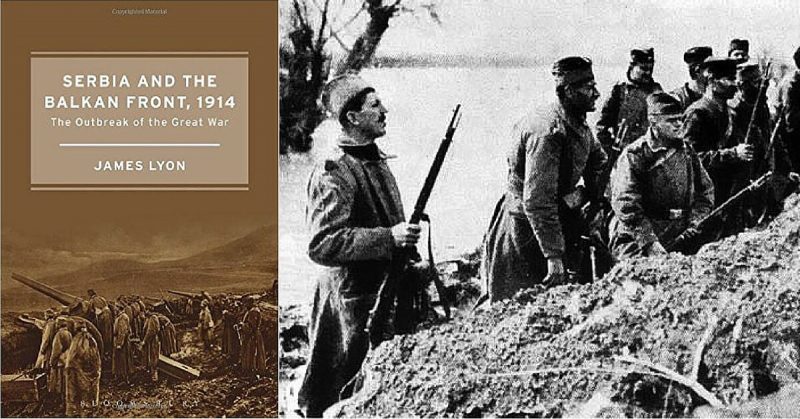
This
is an accessible, detailed, readable and thoroughly researched book.
It is a clear analysis of the Serbs in 1914 and of their early war
against the Austro-Hungarian Empire. Eloquently written by a historian
who has experience of the Balkans and a deep understanding of his
subject. The main theme of the book is that the little underdog state
did well against the evil empire. A common theme in all fairness but as
Lyon rightly points out Serbia gave the Entente Powers their first
victory of the war. How much do we hear about that in the West? Not
much, until now.
We
tend to think that we have found all the wrecks and relics from the
battlefields of the world wars. But, when you realise how vast the wars
were it shouldn’t really come as a surprise to us when machines of war
are discovered. Here is a collection of wrecks and relics that have been
found.
IL-2 Sturmovik
Freshly
retrieved from ‘Crooked Lake’ near the town of Severomorsk in the
Murmansk region of Russia is the IL-2 Sturmovik wreck pictured below.
The wreck was lifted on 21st June 2012 by a team named ‘Icarus’ from the
city of Zaozersk. This particular IL-2 served with 46th Air Assault
Regiment of the Northern Fleet and made an emergency landing on the ice
covered ‘Crooked Lake’ on November 25th 1943. It was part of a group of
16 IL-2s that were part of a raid on a German airfield at Luostari. 25
Me-109’s rose to intercept them and the resulting engagement cost the
Russians 11 planes and the Germans 23.
B-25
After
the B-25 had taken off from the Army Air Base outside Columbia, South
Carolina, on a skip-bombing training mission over the lake’s island
targets, its left engine had lost power. The base was a good six miles
away, so Henry Mascall, the bombardier, urged pilot William Fallon to
land on the lake. The airplane ditched about two miles west of Dreher
Shoals Dam. The crew climbed out onto the wings, then inflated a life
raft and set it in the water. Sewall Oliver eventually rescued them all
in his speedboat. About seven minutes after impact, the aircraft began
sinking. It finally ended up at the bottom of Lake Murray, at a depth of
150 feet—too deep for the U.S. Army Air Forces to salvage it. It was
written off as a loss.
Ο
μεγαλύτερος ιστορικός συγγραφέας της νεώτερης Ελλάδας. Αποκαλείται και
«εθνικός ιστορικός», διότι με το έργο του επηρέασε την ελληνική
ιστοριογραφία, αλλά και γενικότερα την πνευματική πορεία της χώρας.
Ο
Κωνσταντίνος Παπαρρηγόπουλος γεννήθηκε στην Κωνσταντινούπολη το 1815. Ο
πατέρας του, Δημήτριος, γεννημένος στην Βυτίνα Αρκαδίας, είχε
εγκατασταθεί στην Πόλη, όπου ασχολήθηκε με τραπεζιτικές εργασίες. Με την
κήρυξη της Ελληνικής Επανάστασης το 1821, οι Τούρκοι έσφαξαν τον πατέρα
του (4 Απριλίου) και
η μητέρα του πήρε τα παιδιά της και εγκαταστάθηκε στην Οδησσό. Εκεί, ο
Κωνσταντίνος άρχισε τις σπουδές του στο Λύκειο Ρισελιέ και τις συνέχισε
αργότερα στο Ναύπλιο με δάσκαλο το Γεώργιο Γεννάδιο.
Spectacular cavalry battles are to be restaged as part of an ambitious six-month exhibition
Roman imperial cavalrymen reconstructed.
Photograph: www.comitatus.net.
The popular image of a Roman soldier is of an infantryman armed with
sword and shield, marching in formation down one of the arrow-straight
roads of the empire. But leading archaeologists, historians and heritage
groups are now planning an exhibition to pay tribute to an unsung
section of the mightiest army of the ancient world – its cavalry.
Next year, between April and September, the world’s largest-ever
re-enactment of Roman cavalry battles will take place along Hadrian’s
Wall. The war games will form part of an ambitious six-month exhibition,
Hadrian and His Cavalry, bringing together treasures from
worldwide public and private collections that have been lent to 10
museums and heritage sites along the wall. These will include the
magnificent cavalry helmets and richly ornate armour that made Hadrian’s
equestrian troops an awe-inspiring sight.
Organisers hope to challenge the assumption that foot
soldiers dominated the frontier garrisons and to demonstrate the key
role played by the cavalry in projecting the power of Imperial Rome. Bill Griffiths,
head of programmes for Tyne & Wear Archives & Museums and chair
of the project steering group, described the cavalry’s armour as “shiny
and showy”. “It’s bling. Hadrian’s cavalry was a showy part of the
army, more highly decorated than the infantry’s equipment. Think of the
horseguards [today]. It’s very much in that vein of looking the part.” Dr Jon Coulston
of the University of St Andrews, a leading academic on military
equipment and the Roman army, said: “The objects are to die for –
visually gorgeous. The Roman army is probably the sexiest area of Roman
archaeology as far the public is concerned.”
As emperor between AD117 and 138, Hadrian focused his energy on
consolidating the empire, strengthening the frontiers’ defence rather
than pursuing further conquests. On a visit to Britain in 122, he
ordered the construction of the coast-to-coast defensive barrier that
became one of Britain’s most famous landmarks. His wall, made of stone
and turf was up to 4m tall and 3m thick, with watchtowers every third of
a mile, and spanned 73 miles from Wallsend (Segedunum) on the Tyne in
the east, to Bowness on the Solway Firth in the west.
A series of forts along the wall, half a day’s march apart, could house up to 1,000 men. Wooden tablets recovered from Vindolanda,
a frontline fort, record details of daily life and the practicalities
of keeping the “wretched little Britons” in order. One soldier received a
package from home with a note: “I have sent you … socks … two pairs of
sandals and two pairs of underpants.”
The cavalry was well-fed, dining on venison and oysters washed down
with beer and wine. An excavation at Segedunum discovered that cavalry
horses were stabled next to the troopers in customised barrack blocks.
The re-enactment will be based on eulogies from Hadrian himself and
from Arrian, the governor of Cappadocia, in modern Turkey. In one
speech, Hadrian said of his cavalry: “You shot stones from slings and
fought with javelins; everywhere you jumped nimbly on to your horses.”
Arrian wrote: “From the helmets hang plumes of yellow hair, not for
any practical purpose but to make a fine show. When the horses charge,
if there happens to be even a slight breeze, they present a splendid
spectacle.” He described training exercises in which horsemen hurled
javelins at “target” teams of men and horses in protective armour.
While re-enactment societies are increasing in popularity worldwide,
with various companies in India manufacturing Roman military equipment,
there is a serious academic side to these exercises, said Coulston.
“It’s not boys and their toys. It’s about technology, economy,
metallurgy, culture, art history. Most of the showy stuff was practical.
It made them distinctive on the battlefield. If they did something
brave, they would be instantly recognised and get military decorations.
That was all part of the ethos of achievement and attainment.” Their
bravery was often recorded on their gravestones.
The
re-enactments will also provide unique insights into the training and
tactics of the Roman cavalry, such as the design of cavalry saddles,
which enabled cavalrymen to lean out to the side with a long sword or
spear or to shoot in any direction with a bow.
Griffiths said: “This is a great archaeological experiment, and fun.”
Coulston spoke to the Observer ahead of a major Roman military equipment conference, entitled Cavalry in the Roman World,
which takes place this June in St Andrews. Archaeologists, military
historians and classicists are among around 50 speakers. There will also
be a small re-enactment, with armoured cavalry and horse-archery
displays. • This article was amended on 11 April 2016 to remove a reference to Roman infantrymen as toga-clad.
Many people tend to (misleadingly) identify the Bible as a single
book; whereas it actually encompasses a compilation of sacred texts
from both Judaism and Christianity. Simply put, from the historical
perspective, Bible consists of a collection of scriptures that were not
only composed by different authors, but were created at different time
periods in different geographical locations. Now beyond the multifarious
‘scope’ of the Bible, there has always been a debate on when the first
batch of these sacred texts was composed – with some scholars leaning
towards the hypothesis that they were created after the destruction of
Jerusalem (Judah’s capital city) in 586 BC, by Babylonian
king Nebuchadnezzar. But a new research, aided by advanced
technological ambit, has shed light into how the literacy level of Judah
was relatively high even during early 6th century BC. In essence, this
discovery alludes to how some of the earlier texts of the Torah (part of
the Old Testament) were possibly conceived just before the baleful
event when Jerusalem was sacked and its inhabitants were exiled, in 586
BC.
The pertinent connection to relatively high levels of literacy in
(very) early 6th century BC was found in a series of correspondence
between military forces of Judah. The scope pertains to around 16
inscriptions found inside the desert fortress of Arad, which was located
west of Dead Sea. These inscriptions comprised ceramic shards that were
etched with ink script, and all of them were dated from around 600 BC.
Better known as ostraca (pictured below), such shard-inscribed
forms of communication were pretty common during that period of time. As
for their content, the writings involved simple military-oriented stuff
– with commands relating to provision of wine and food, along with the
movement of troops. Here are two examples –
Last time around, we talked about how more than 800,000 Muslims
probably took part in First World War, thus harking back at the immense
scope of the ‘Great War’. But when it comes to the ambit of global
conflicts, it is the World War II that balefully casts its shadow on the
sheer scale of man-made destruction. To that end, the real ‘quotient’
of destruction brought on by the war really hits us when analysed from
the perspective of human casualties. And that is exactly what an
animated data visualization by Neil Halloran achieves, with the aptly
named ‘The Fallen of World War II’ project. The over 15 minutes video
graphically showcases three different statistical scopes – all
representing the loss of human lives. The first section of the video
deals with number of soldiers killed based on nationalities; the second
section entails civilian deaths (that also includes Holocaust); and the
third (and final) segment assesses the contextual ambit of World War II
fatalities when compared to both past and future conflicts.
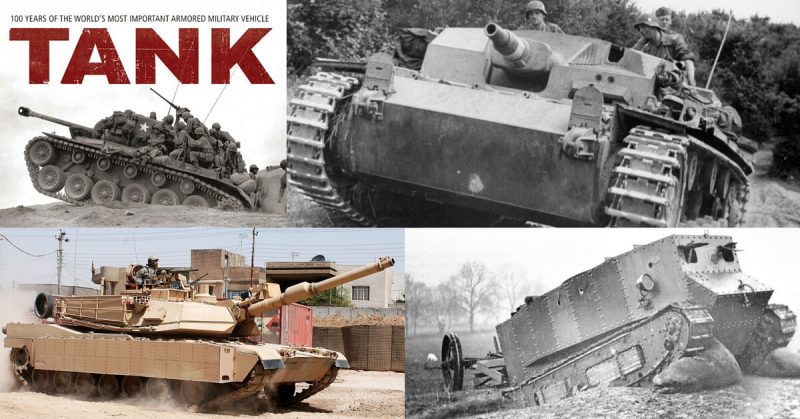
From
the Greek phalanx to Roman siege engines, plans by Leonardo da Vinci,
and the wondrous imagination of H. G. Wells, the idea of the armored
fighting vehicle– the tank–has crossed centuries and given rise to the
technologically advanced land warfare systems that populate the armies
of countries large and small today.
First
appearing during World War I as unwieldy boxes mounted on tractor
chassis and prone to mechanical failure, tank designs evolved into sleek
weapons with the now-classic characteristics of speed, mobility, and
firepower.
During the 1920s, American Maj. Gen. Adna Chaffee Jr.,
correctly predicted that mechanized armies would win the land battles of
the future. Young US Army officers such as Dwight D. Eisenhower and
George Patton risked their careers to champion the development of
armored divisions.
Caraktère
Presse et Éditions are based in sunny Aix-en-Provence in France. They
produce a number of vibrant looking magazines filled with superb archive
imagery and artwork on a range of military history subjects.
Unfortunately my schoolboy French isn’t good enough to appreciate much
of the text, so I am glad this colourful and dynamic book, typical of
their style; is published in English.
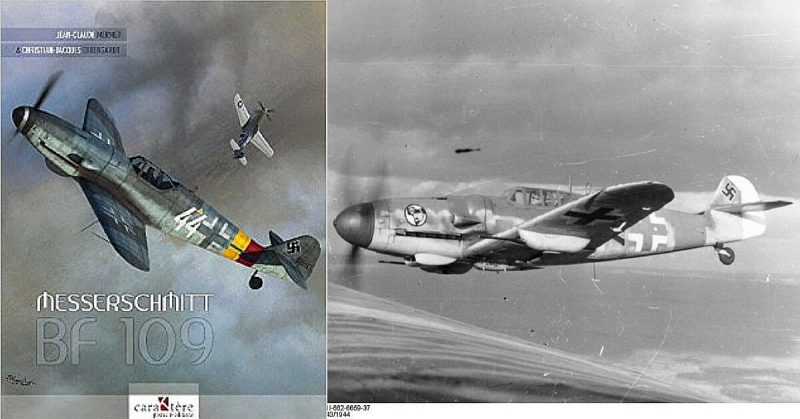
We
saw their look at German panzers towards the end of last year and this
time round the publisher turns our attention to the Messerschmitt Bf 109
fighter plane. The book takes the reader through the history of design
and development of the famous fighter before looking at the long
sequence of production variants including a phalanx of differences in
detail. The authors finish up by outlining the special versions of the
aircraft and the appendices include a wealth of technical information.
Η συγκεκριμένη εκπομπή «ΜΟΝΟΓΡΑΜΜΑ» έχει θέμα τη ζωή και το έργο του ΜΑΝOΛΗ ΑΝΔΡΟΝΙΚΟΥ.
Ο διακεκριμένος αρχαιολόγος κάνει αναφορά στην καταγωγή του, στην
οικογένειά του και τις πανεπιστημιακές του σπουδές. Περιγράφει τις
επιρροές του και τις πρώτες αρχαιολογικές του εμπειρίες κοντά στον
καθηγητή του Κ. ΡΩΜΑΙΟ και στη συμμετοχή του, για πρώτη φορά ως
φοιτητής, στην ανασκαφή της Βεργίνας (1938-1940). Επίσης, την επαφή του
με τον αρχαιολόγο Sir JOHN BEASLEY στην Οξφόρδη (1954-1955). Μιλάει για
τα επαγγελματικά του βήματα κατά τη διάρκεια 1945-1958, περίοδο που
δίδασκε στα ιδιωτικά εκπαιδευτήρια ΣΧΙΝΑ στη Θεσσαλονίκη, εκφράζοντας
την αγάπη του για την ποίηση του ΕΛΥΤΗ και του ΣΕΦΕΡΗ.
Ο Γάλλος συγγραφέας, βιογράφος και
ακαδημαϊκός Αλέν Ντεκό, το «πρόσωπο και η φωνή της ιστορίας», πέθανε την
Κυριακή στο Νοσοκομείο Πομπιντού του Παρισιού σε ηλικία 90 ετών, όπως
ανακοίνωσε η σύζυγός του, Μισελίν Πελετιέ-Ντεκό.
Ο Ντεκό εξελέγη μέλος της Γαλλικής Ακαδημίας το 1979 και ήταν
υπουργός Γαλλοφωνίας μεταξύ 1998-91, επί προεδρίας του Φρανσουά Μιτεράν.
Έγραψε περισσότερα από 60 ιστορικά βιβλία και βιογραφίες ενώ από τη
δεκαετία του 1950 δημιούργησε πολλές ραδιοφωνικές και τηλεοπτικές
εκπομπές με θέμα την ιστορία.
Last month we came across this brilliant animation of Rome
– the eternal city in its architectural peak in 320 AD. But this time
around things take a more ‘personal’ route, while still maintaining a
historical perspective. We are talking about the ordinary Roman citizen,
or more specifically a Roman teenager – and how he went on in his daily
routine. Well TED-Ed has contrived such a fascinating animated short
that aptly showcases the ‘adventures’ of Lucius Popidius Secundus, the
fictional 17-year Roman teenager in the year 73 AD, when the mighty
Roman Empire already held sway over a major chunk of the known world,
ranging from Spain to Syria, and from North African coasts and Egypt to
most of England (see this video for the changing territories of the Roman Empire every year)




 Η συγκεκριμένη εκπομπή «ΜΟΝΟΓΡΑΜΜΑ» έχει θέμα τη ζωή και το έργο του ΜΑΝOΛΗ ΑΝΔΡΟΝΙΚΟΥ.
Ο διακεκριμένος αρχαιολόγος κάνει αναφορά στην καταγωγή του, στην
οικογένειά του και τις πανεπιστημιακές του σπουδές. Περιγράφει τις
επιρροές του και τις πρώτες αρχαιολογικές του εμπειρίες κοντά στον
καθηγητή του Κ. ΡΩΜΑΙΟ και στη συμμετοχή του, για πρώτη φορά ως
φοιτητής, στην ανασκαφή της Βεργίνας (1938-1940). Επίσης, την επαφή του
με τον αρχαιολόγο Sir JOHN BEASLEY στην Οξφόρδη (1954-1955). Μιλάει για
τα επαγγελματικά του βήματα κατά τη διάρκεια 1945-1958, περίοδο που
δίδασκε στα ιδιωτικά εκπαιδευτήρια ΣΧΙΝΑ στη Θεσσαλονίκη, εκφράζοντας
την αγάπη του για την ποίηση του ΕΛΥΤΗ και του ΣΕΦΕΡΗ.

