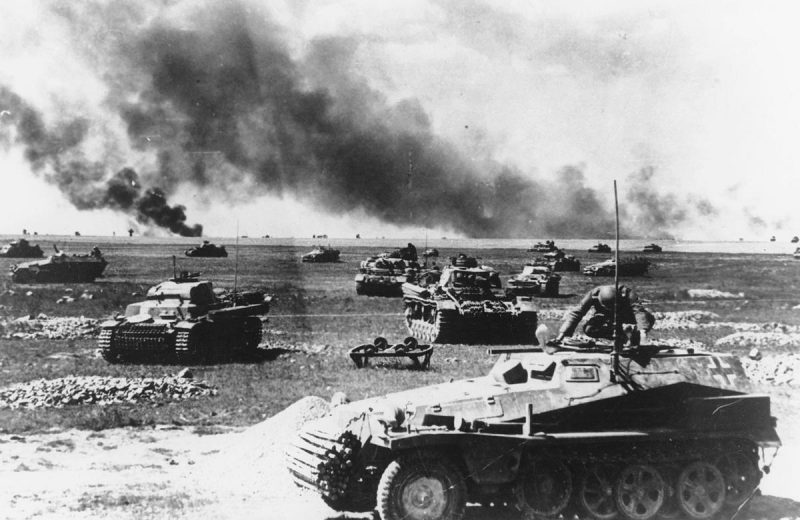
In
the early 1970s, many military officers worried that the armed services
in Southeast Asia were in a state of mutiny. A new word, “fragging,”
had entered the military vocabulary. Fragging referred specifically to
the murder of commanding officers in combat, usually when the officer
made an unpopular decision, was inept, demeaning to soldiers, or put his
men unnecessarily in harm’s way. The term comes from the small
percussion fragmentation hand grenades often used in such homicides. In
one such incident.
On
23 October 1970 the 1st Marine Division’s only death by fragging
occurred on Hill 190, west of Da Nang. That evening, Private Gary A.
Hendricks of Company L, 3d Battalion, 1st Marines, was one of two
Marines found sleeping on post by their platoon sergeant, Sergeant
Richard L. Tate.
Warning: Some readers may find the content of this article distressing
Dr. Beverley Chalmers’ latest book is Birth, Sex, and Abuse: Women’s Voices Under Nazi Rule (Grosvener House,
2015), which is undoubtedly a difficult read, but one that people
should not shy away from. The truth can be hard to accept and this
book’s subject is no exception to that rule. Her work sheds light on the
horrifying experiences of many Jewish and non-Jewish women who were
raped and brutalized, experimented upon, forced into prostitution, or
compelled to undergo sterilization or abortion without consent.
The U.S. Marine Corps landed in China exactly 116 years ago today.On May
31, 1900, an expeditionary force of 56 Marines and sailors arrived in
Beijing to protect the U.S. diplomatic mission in the face of mounting
militia attacks in what would be known as the Boxer Rebellion.
Over
a brutal 55-day siege, the Marines would fend off repeated assaults
through dense urban terrain by militias and Chinese government forces
determined to wipe them out.
"The Americans who have been besieged
in Peking desire to express their hearty appreciation of the courage,
fidelity and patriotism of the American Marines, to whom we so largely
owe our salvation," a group of American missionaries wrote in the
aftermath of the battle, according to the National Archives. "By
their bravery in holding an almost untenable position in the face of
overwhelming numbers, and in cooperating in driving the Chinese from a
position of great strength, they made all foreigners in Peking their
debtors, and have gained for themselves an honorable name among the
heroes of their country."
A
shocking number of military leaders have suffered from mental health
issues, even as they held the lives of the men they led in their hands.
At times ambition, politics, inheritance or the trauma of war have
created commanders with varying degrees of insanity.
Sir William Erskine
The
Duke of Wellington was plagued by new officers thrust upon him by the
British government; men whose status came not from ability but from
their background and connections. None was worse than Sir William
Erskine.
Definitely
not an arranged or posed picture and therefore a rather rare example.
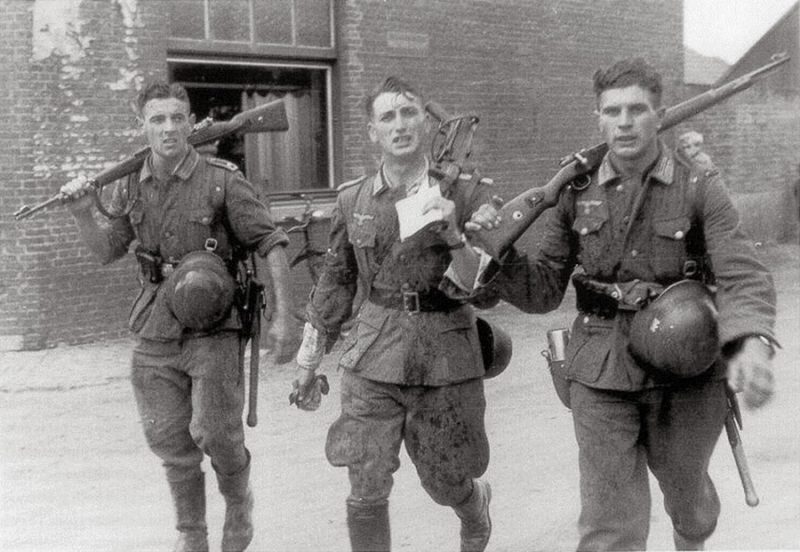
These three men obviously return from a very recent fight, in which the
officer in the middle has been wounded on his right hand or arm. Note
the blood stains over the uniforms and the very agitated look in their
eyes. They don’t seem to like being photographed at this very moment.
The men to the side are armed with K98k’s with walnut stocks and flat
buttplates, while the officer is carrying an MP38 submachine gun on his
shoulder. These are army uniforms, not SS ones, the eagle is on the
right chest, not the left upper sleeve. Location unknown.
In
this case a picture truly does tell a thousand words. Look at the
middle guy’s face, he looks so upset. Imagine almost getting killed,
being wounded and likely just returned from intense combat has him
pretty shaken. That expression is more likely indicating the loss of a
comrade in said battle.
Maynooth
Castle is mid to late 12th Century Norman castle in Ireland which
stands at the entrance to the South Campus of Maynooth University. The
Castle was built by the very powerful Fitzgerald family around the early
13th century. The Kildare Fitzgerald’s emerged as one of the most power
families in Ireland with Maynooth Castle being one of the largest and
richest Earl’s houses. The castle was a stronghold of the 16th-century
historical figure Thomas FitzGerald, 10th Earl of Kildare better known
as Silken Thomas. A great stone castle which was founded in the early 13th century. SourceThe
area covered by modern Kildare was granted by Strongbow to Maurice
Fitzgerald in 1176. The castle was built at the junction of two streams
(“The Abhann Slad” and “The Lyreen”) and became the home of the
Fitzgerald family. The Castle was constructed at the most westerly point
of The Pale and apart from the Keep which was first built in the early
1200’s the remaining ruins seen today are additional fortifications
dating from the 1400’s.
Back in March, we talked about a 3,200-year old massive battle
that took place in the cultural ‘backwaters’ of Bronze Age northern
Europe (circa 13th century BC), and how this mysterious encounter
involved over 4,000 well-armed men from different regions, including
Poland, Holland, Scandinavia and even Southern Europe. Intriguingly
enough, there also seems to be a date-oriented significance relating to
13th century BC. Within a generation of these contemporary times, the
increasing scale of warfare and over-arching political affairs seemed to
have swept through many parts of the known world, including the eclipse
of the Mycenaean Greeks, the invasion of Egypt by the ‘sea-people’ and
the concurrent downfall of the Hittites. And furthermore, there is also
the literary narrative of the Trojan War – a large scale conflict (and
possibly the proverbial ‘last hurrah’ of the Mycenaeans) that pitted the
Greeks against the mystifying Trojans. Considering all these ‘mega’
events of the ancient times, archaeologist Eberhard Zangger has alluded
to what he calls ‘World War Zero’ – a seemingly cataclysmic scenario
that severely affected and ultimately shattered the thriving nature of
eastern Mediterranean Bronze Age civilizations.
sourceWardaddy’s
veteran tankers wear the Combat Winter Uniform Jacket, aka “The Tanker
Jacket”, as part of their uniform. This would have been the
original-issue uniform that tankers at the time would have been provided
with. Norman wears the newer M1943 Field Jacket, distinguishable for
its many large pockets and greener color. The choice of uniform would
have reflected on the status of the men, with veterans wearing the
older-issue uniforms while replacements would have the newer issue.
Shia LaBeouf reportedly pulled out his own tooth and did not shower during filming.
The
cast underwent a rigorous month-long course of boot camp, in which the
final test was manning a real tank during a combat exercise. Despite
being considerably older than his cast mates, Brad Pitt made sure that
he participated in all of the physical training alongside the other
actors.
The archaeological world went into frenzy when researchers came across a medieval Viking grave ring inscribed with the word ‘Allah’.
This odd affair probably alluded to the extensive mercantile prowess of
the Vikings and the Rus, who frequently traded with (and raided) many
Mediterranean coastal towns. But as it turns out, historically the
incredible trade link between distant Scandinavia and Mediterranean was
not just limited to the middle ages. Archaeologists have recently come
across 3,600-year old bronze tools in Sweden that were meticulously
crafted from Mediterranean-sourced copper. The findings are complemented
by a depicted visual scope in Bohuslän, Sweden that possibly showcases
trading between ancient Scandinavia and the Mediterranean.
Mycenaeans and mysteries go hand in hand when it comes to the
realm of history. But fortunately, while Homeric works allude to the
vague idea of these ancient ‘Greeks’ of the Bronze Age, it is
tried-and-tested archaeology (with painstaking efforts from researchers
over the last century) that has brought forth a few surprising evidences
and clues that help in painting a ‘credible’ picture of the actual
Mycenaean culture and military. So without further ado, let us take a
gander at the ten incredible facts you should know about the Mycenaean
civilization and its warriors.
1) Mycenaean – a term ‘unknown’ to Classical authors
Mycenaean as a term was probably as much ‘mysterious’ to ancient
authors as the civilization is puzzling to modern scholars. In fact,
Classical authors was not even aware of any singular Mycenaean faction –
and given their Greek traditions, such writers often attributed the
specific geographically-limited tribes as their ancestors, like the
Achaeans and the Argives. Now of course, the greatest example of
Classical Greeks being inspired by their ‘ancestors’ comes from the epic
poetry of Homer in Iliad and Odyssey. And while the
popular historical sentiment hints at how Homer was actually talking
about the Mycenaeans, much of the Trojan War is set in a date that only
tentatively corresponds to Mycenaeans. To that end, rather than a
historical exposition of how Mycenaeans fought and behaved, the Iliad
should be viewed more as a compilation of folkloric traditions that
were passed down through generations from around 9th-8th century BC
(three centuries after the passing of the Mycenaeans).
Mycenaeans and mysteries go hand in hand when it comes to the
realm of history. But fortunately, while Homeric works allude to the
vague idea of these ancient ‘Greeks’ of the Bronze Age, it is
tried-and-tested archaeology (with painstaking efforts from researchers
over the last century) that has brought forth a few surprising evidences
and clues that help in painting a ‘credible’ picture of the actual
Mycenaean culture and military. So without further ado, let us take a
gander at the ten incredible facts you should know about the Mycenaean
civilization and its warriors.
During
the Civil War, while the Union and Confederate officers were busy
fighting a war, the women from both sides began gathering crucial
information about the enemy and served as a undercover agents. Over the
course of the war, both sides began recruiting women as operatives to
provide them with critical information on their enemy’s military
strategy.
One of the most renowned Union spys was Elizabeth Van Lew.
Elizabeth
Van Lew was born on October 25, 1818, in Richmond, Virginia to John Van
Lew and Eliza Baker, whose father was Hilary Baker, mayor of
Philadelphia from 1796 to 1798. Elizabeth’s father came to Richmond in
1806 at the age of 16 and, within twenty years, had built up a
prosperous hardware business and owned several slaves.
Her
family sent Elizabeth to Philadelphia for her education at a Quaker
school, which reinformed her abolitionist sentiments. When her father
died in 1843, Elizabeth’s brother John Newton Van Lew took over the
business and the family freed their nine slaves, despite John’s
misgivings. Many of the emancipated slaves continued as paid servants
with the family, including the young future Union spy Mary Bowser. In
the depths of the 1837-44 depression, Elizabeth used her entire cash
inheritance of $10,000 (nearly $200,000 in current money) to purchase
and free some of their former slaves’ relatives. For years thereafter,
Elizabeth’s brother was a regular visitor to Richmond’s slave market,
where, when a family was about to be split up, he would purchase them
all, bring them home, and issue papers of manumission.
The
Waterloo Helmet is one of only three Iron Age helmets found in England
and also the only horned helmet dating to the Iron Age to have been
found anywhere in Europe. However, there are several Iron Age depictions
of people wearing horned helmets from elsewhere in Europe. The
pre-Roman ceremonial horned helmet with repoussé decoration in the La
Tène style, dating to circa 150–50 BC, that was found in 1868 in the
River Thames by Waterloo Bridge in London, England.
Horned helmet found in the River Thames at Waterloo Bridge, known as the Waterloo Helmet, now in the British Museum.SourceThe
helmet was dredged from the bed of the River Thames close to Waterloo
Bridge in 1868, and in March of the same year it was given on loan to
the British Museum by Thames Conservancy.
The main part of the
helmet is constructed from two sheets of bronze, one forming the front
and one the back of the helmet, that are riveted together at the sides
and top. A separate crescent-shaped bronze piece is riveted to the
bottom of the front sheet, and two conical bronze horns with terminal
knobs are riveted to the top of the helmet. A decorative strip with a
row of rivets overlays the join between the front and back sheets, and
goes around the base of the horns. At the end of the strip, on both
sides of the helmet, is a ring fitting for a chin-strap or cheek piece.
There are a number of small holes around the bottom edge, which may have
been used to attach a lining.
Αμερικανικά μαχητικά, που απογειώθηκαν από το αεροπλανοφόρο USS Harry
S Truman το οποίο βρίσκεται στη Μεσόγειο, έπληξαν την Παρασκευή θέσεις
των τζιχαντιστών του Ισλαμικού Κράτους στη Μέση Ανατολή.
Είναι η πρώτη φορά από τον πόλεμο στο Ιράκ το 2003 που αμερικανικό
αεροπλανοφόρο βομβαρδίζει στόχους στη Μέση Ανατολή από τη Μεσόγειο.
Το μαχητικά ξεκίνησαν τους βομβαρδισμούς μόλις το αεροπλανοφόρο USS
Harry S Truman εισήλθε στη Μεσόγειο μέσω της Διώρυγας του Σουέζ, όπως
ανακοίνωσε το αμερικανικό Πολεμικό Ναυτικό, χωρίς όμως να δώσει
περισσότερες λεπτομέρειες για τους στόχους που επλήγησαν ή αν αυτοί ήταν
στο Ιράκ και τη Συρία.
Ωστόσο, το Πολεμικό Ναυτικό των ΗΠΑ δεν έδωσε στη δημοσιότητα λεπτομέρειες για τους στόχους και το αποτέλεσμα των επιχειρήσεων.
tvxs.gr
Roman
legions could become famous for their endurance or victories in war.
Though all were numbered, many also had names that recorded their
history, origins or achievements. These were often a mark of their
particular renown. Roman legionnaires were devoted to their legion and
were prepared to die to save its eagle standard.
Και
εκείνες οι φοβερές μέρες για το νησί συνεχίζονται, με βομβαρδισμούς,
φωτιές, σκοτωμούς και αίμα πολύ. 25 Μαΐου 1941 η Κάνδανος καίγεται… για
να καταστραφεί ολοσχερώς στις 3 του Ιούνη .Μια ακόμα μαύρη σελίδα στην
ιστορία της Κρήτης!
Από το βράδυ ρίχνονται χιλιάδες προκηρύξεις στα Χανιά, τους
συνοικισμούς και τα χωριά και απειλούν τον πληθυσμό, ότι θα επιβάλουν
αυστηρές κυρώσεις σ’ αυτούς που πολεμούσαν τα…γερμανικά
στρατεύματα. Οι γύρω από την πόλη φρουρές αποσύρονται σε νέες λιγότερο
κοντινές προς την πόλη θέσεις, γεγονός που οδηγεί στην αποθάρρυνση και
επιτείνει το αίσθημα της ανασφάλειας. Οι βρετανικές δυνάμεις αποσύρονται
προς τη Σούδα. Οι καθυστερήσεις όμως που συνεπάγονται οι καταλήψεις των
χωριών και οικισμών γύρω από τα Χανιά, επιβραδύνουν σημαντικά τα σχέδια
των Γερμανών να φτάσουν στα Σφακιά και να παρεμποδίσουν τη φυγή των
Βρετανών. Ύστερα από συνεχείς επιθέσεις και αντεπιθέσεις καταλαμβάνεται ο
Γαλατάς με τη γνωστή υπεροχή των όπλων του αντιπάλου. Ήρθε όμως και η
σειρά της Κανδάνου. Μετά την εξολόθρευση ενός γερμανικού λόχου από τους
κατοίκους της, οι Γερμανοί επιτίθενται με αγριότητα. Βομβαρδίζεται η
Κάνδανος και παραδίνεται στη φωτιά, στενάζοντας κάτω από τους σκελετούς
των ερειπίων. Εκτελούν όσους από τους κατοίκους της Κανδάνου ή των
γειτονικών χωριών συναντούν, ανεξάρτητα από ηλικία και χωρίς καμία
διαδικασία. Στις 3 Ιουνίου θα επιστρέψουν και πάλι για να ολοκληρώσουν
την καταστροφή. Την ίδια μέρα ο πτέραρχος Στουντέντ προσγειώνεται στο
αεροδρόμιο Μάλεμε και διαπιστώνει προσωπικά το μέγεθος της καταστροφής
του δημιουργήματός του.
Many historians,
writers and philosophers have tried to look underneath the iron
mask of the prisoner, so as to find the truth, and resolve the story of
the mysterious prison inmate from the 17th century.
Voltaire
claimed that the prisoner wore an iron mask and was the older,
illegitimate brother of Louis XIV. In the late 1840s, writer Alexandre
Dumas elaborated on the theme in the final installment of his Three Musketeers
saga: here the prisoner is forced to wear an iron mask and is Louis
XIV’s identical twin. Dumas also presented a review of the ideas about
the prisoner extant in his time (circa 1840) in the chapter “L’homme au
masque de fer” of the sixth volume of his Crimes Célèbres.
The Man in the Iron Mask or L’Homme au Masque de Fer is
the offical name given to the prisoner who was arrested as Eustache
Dauger in 1669 or 1670 and held in a number of jails, including the
Bastille and the Fortress of Pignerol (today Pinerolo, Italy). He was
held in the custody of the same jailer, Bénigne Dauvergne de Saint-Mars,
for a period of 34 years. He died on 19 November 1703, under the name
of Marchioly, during the reign of Louis XIV of France (1643–1715). The
possible identity of this man has been thoroughly discussed and has been
the subject of many books, as no one ever saw his face because it was
hidden by a mask of black velvet cloth.
The Man in the Iron Mask. Anonymous print (etching and mezzotint, hand-colored) from 1789..SourceThe
earliest surviving records of the masked prisoner are from late July
1669, when Louis XIV’s minister the Marquis de Louvois sent a letter to
Bénigne Dauvergne de Saint-Mars, governor of the prison of Pignerol,
then part of France. In his letter, Louvois informed Saint-Mars that a
prisoner named Eustache Dauger was due to arrive in the next month or
so.
Louvois instructed Saint-Mars to prepare a cell with multiple
doors, one closing upon the other, which were to prevent anyone from the
outside listening in. Saint-Mars himself was to see Dauger only once a
day in order to provide food and whatever else he needed. Dauger was
also to be told that if he, Dauger, spoke of anything other than his
immediate needs he would be killed, but, according to Louvois, the
prisoner should not require much since he was “only a valet”.
Looking
back at WWII there have been four decisions made that, in the end, did
not work out to the Axis advantage. Of course, you can argue that
starting the war in the first place was the biggest mistake made. But,
for the sake of the argument, let us look at four mistakes that were
made after the war was started.
Zentralbild,
II. Weltkrieg 19139-45 Der von der faschistischen deutschen Wehrmacht
während des Krieges entwickelte neue Panzerkampfwagen Typ "Panther".
UBz: die Verladung neuer "Panther"-Panzerkampfwagen zum Transport an die
Front (1943).
Panther Ausf. D tanks, 1943. The D model can best be recognized by the drum-shaped cupola.Via Wikipedia / Bundesarchiv
1) Over 6000 Panthers have been built by the Germans but more surprisingly, 9 were built by the British Army in 1945-1946.
2)
The full name was the Panzerkampfwagen V Panther and had the ordnance
inventory designation of Sd.Kfz. 171. But on 27 February 1944, Hitler
ordered that the Roman numeral “V” be deleted from the designation.
Nature always knows best. That dazzle did indeed work along these lines is suggested by the testimony of a U-boat captain: It
was not until she was within half a mile that I could make out she was
one ship [not several] steering a course at right angles, crossing from
starboard to port. The dark painted stripes on her after part made her
stern appear her bow, and a broad cut of green paint amidships looks
like a patch of water. The weather was bright and visibility good; this
was the best camouflage I have ever seen
U-boats
were equipped with two periscopes, one for searching out enemy ships,
the other with a more powerful lens but narrower field of vision for use
in combat. Though the use of periscopes allowed the U-boat to remain
safely underwater while carrying out an attack, looking straight out at
misty sea level, which was rarely level at all made accurate vision very
difficult. Hitting anything with a torpedo this way is as much a
testament to luck as it is to skill. Wilkinson advocated “masses of strongly contrasted colour” to confuse the enemy about a ship’s heading.Even
so there were those among the allies who thought they knew how to shift
the odds even further. Naval ships were already being painted gray to
blend in between the ocean and sky as much as possible. But a ship at
sea cannot really be camouflaged as colors change along with the light
throughout the day and when silhouetted against a blank horizon it is
impossible to hide. But since ships were almost always moving targets
U-boat commanders had to aim their torpedos at where they thought the
ship would be when it reached it, not at the point where the ship was
seen. This involved careful calculation of distance, heading, and speed
based on the coincidence principal, and this is where Norman Wilkinson
thought they could be deceived.




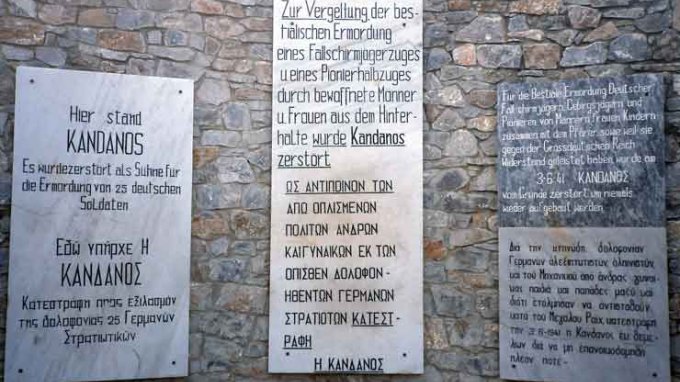 Και
εκείνες οι φοβερές μέρες για το νησί συνεχίζονται, με βομβαρδισμούς,
φωτιές, σκοτωμούς και αίμα πολύ. 25 Μαΐου 1941 η Κάνδανος καίγεται… για
να καταστραφεί ολοσχερώς στις 3 του Ιούνη .Μια ακόμα μαύρη σελίδα στην
ιστορία της Κρήτης!
Και
εκείνες οι φοβερές μέρες για το νησί συνεχίζονται, με βομβαρδισμούς,
φωτιές, σκοτωμούς και αίμα πολύ. 25 Μαΐου 1941 η Κάνδανος καίγεται… για
να καταστραφεί ολοσχερώς στις 3 του Ιούνη .Μια ακόμα μαύρη σελίδα στην
ιστορία της Κρήτης!